The Vice President of the association, historian Pierre Romain, explains why Europe is de facto already at war with Russia, why the defense of Ukrainian skies, the principle of "People First," and the confiscation of the Russian central bank's assets are key to Ukraine's victory. In an interview with Oksana Melnychuk, he openly discusses the fears of European politicians, mistakes in formulating the goals of the war, and insists: the only honest and realistic outcome of this war is Ukraine's victory, not an abstract "peace." For the Ukrainian community in France, this association has become a true "emergency service" in the fight against Russian propaganda—from publications in Le Monde to legal initiatives against Putin and his entourage.
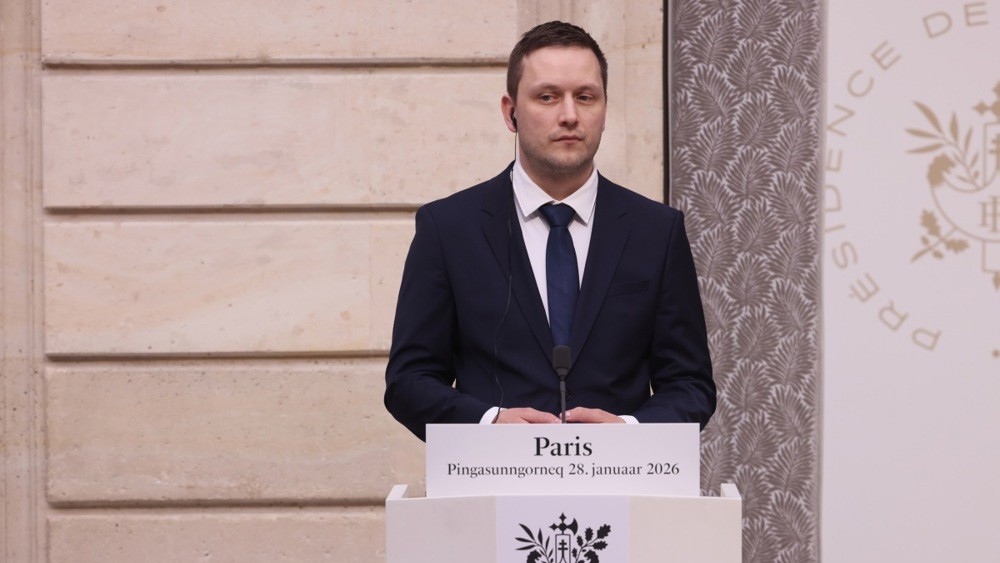
Who is Pierre Romain and what is the "For Ukraine" association?
Oksana Melnychuk: Good day, my dear friends. Pierre is a great friend of Ukraine. He is the person who managed to mobilize the entire French intellectual world—thinkers, philosophers.
Pierre is the vice president of the association called "For Ukraine, for its freedom and for ours."
This association brings together 150 professors, philosophers, and university lecturers. It unites representatives from 50 of the largest universities in France.
This is precisely the mobilization of people who continue to stand by us, who do not disappear from the battlefield; it is just a different battlefield—intellectual, legal, moral.
The association is engaged in preparing the legal dimension of this war. And it is thanks to this association that Putin received an arrest warrant and became the subject of accusations.
Currently, the association is working to ensure that not only Putin but also his entire entourage, this whole team, are held accountable for war crimes against Ukraine.
We see one of the key figures in France who mobilizes this important French community.
I want to remind you that it was France that inspired us during all Ukrainian Maidans with its slogan: "Liberty, equality, fraternity."
Ukraine also has its own slogan. Today I would say it is—"Freedom and the will of Ukraine."
We are still at the stage of informing, enlightening our citizens and our children. International law, law in general—is the foundation on which democratic states exist.
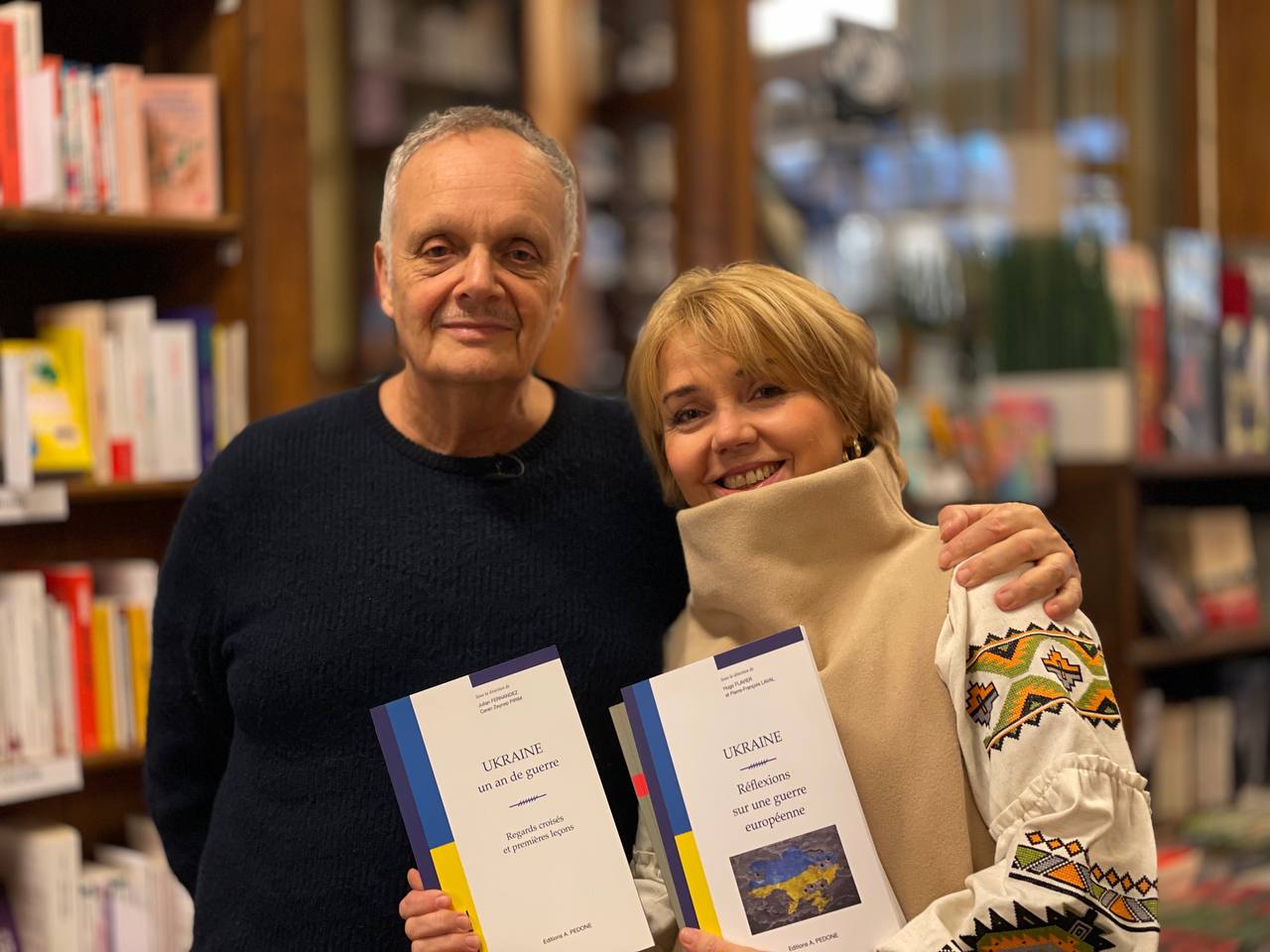
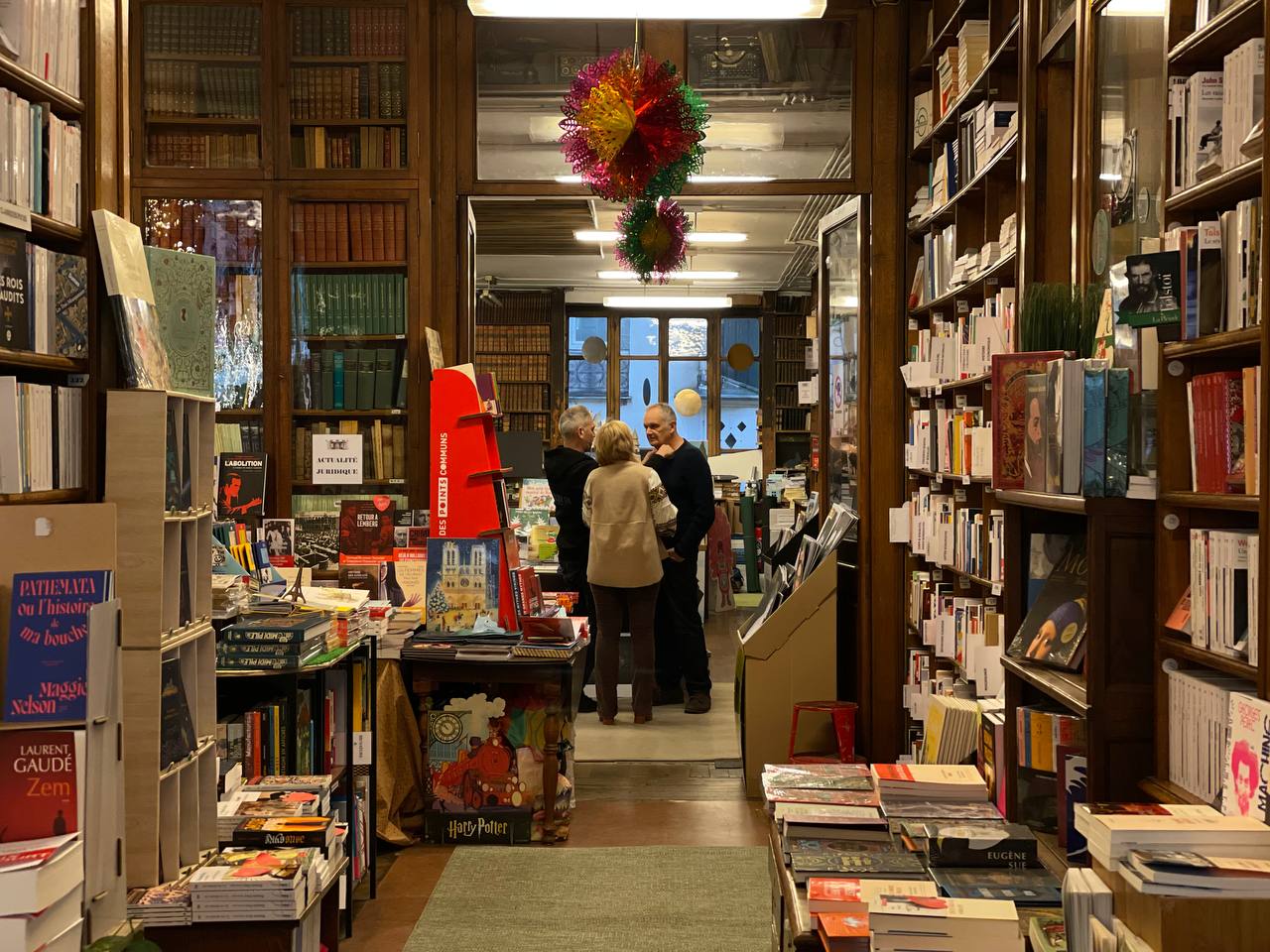
Right now, we are in one of the oldest publishing institutions in France, founded in 1837. This publishing house, in the 19th century, dealt with what was then called "human rights." Later, this evolved into modern "human rights." Today we are talking about international law.
It is here in France that publications related to international law, particularly concerning Ukraine and the history of the Russian-Ukrainian war, are produced. All of this is concentrated in this environment that works with legal issues in France.
Next to this publishing house, with this library, is the law faculty of Sorbonne. There is also another faculty—the history faculty.
And our guest today, Pierre Romain, is a doctor of history. He has researched how cinema and mass media influence the formation of dictatorships and authoritarian regimes, as well as the victory over these horrific phenomena of our era.

How the association was born
Oksana Melnychuk: So now I would like Pierre to tell us how you mobilized. What prompted you to do this? Pierre, tell us how you organized yourselves in your wonderful association? What was your goal? What motivated you? Why did you mobilize so actively and continue this work?
Pierre Romain:
We mobilized from the very first days of the second aggression. Some of us were already very involved since 2014.
And, in fact, what compelled us to mobilize was the feeling that here in France, we simply had to act.
That's how it all started: we met over coffee and decided to prepare an appeal to the university community—to lecturers, university professors. Very quickly we gathered 130 signatories, and from that moment the history of our association began.
Then there was a second very important moment—in May, when we, reading President Zelensky's appeal, began to realize the scale of the deportation of Ukrainian children. It seemed something incredible, horrifying.
We decided to make this issue the first major fight of our association—and it has remained so to this day.
French media and mobilization of society
Oksana Melnychuk: Pierre, I know that you constantly publish your columns, appeals, open letters—the ones we often sign together—in publications like Le Monde and Libération. What is your relationship with the French media? How do you feel this mobilization? Can you say that the media is also part of the mobilization? Does it help your public activities?
Pierre Romain:
Yes, of course, to a certain extent—yes.
The French media have been quite active… At least part of the media, as well as some television channels, have indeed shown activity.
But at the same time, in my opinion, we cannot overestimate this.
When we publish columns or appeals, it is done to set a certain vector, a certain idea, a guideline. But we do not believe that the texts in the press alone will change the situation. We see them as one of many elements, not as a decisive factor.
Oksana Melnychuk: I know that besides mobilizing French intellectuals, you have another important goal—to work with society, to mobilize ordinary people. In your opinion, is the level of mobilization of French society sufficient? Because in the eyes of Ukrainians, we often consider France one of the best countries in supporting Ukraine. How do you see the situation?
Pierre Romain:
I do not think so.
I believe that the majority of the French population sympathizes with Ukraine.
But this sympathy has not taken the form of a constant, strong, priority position.
If we put it positively: yes, the majority of the population supports Ukraine. If we look at it "from the other side," unfortunately, this is not an important daily concern for most people.
In our association, there are currently about 3,000 participants, and almost every city in France has active people—doing something, raising funds, mobilizing others, addressing public opinion in their region.
That is true. It is not a small group, but it is still not enough.
"Europe is already at war, but does not want to acknowledge it"
Oksana Melnychuk: For the viewers, it is very important to hear your assessment of how French intellectuals, your association, the university environment you communicate with, see the current situation. I know you organize many conferences, constantly engage in discussions; I myself have participated in several of your online events, Zoom meetings. What is your vision, what is your analysis of today's war?
Pierre Romain:
I have a very clear opinion on this.
This war concerns both Ukraine and Europe.
And to some extent, Putin is already waging war against Europe, against France. We see this in the drone attacks, in the hacker attacks on hospitals, in all these subversive operations: when the Holocaust memorial is vandalized, when heads of pigs are left near mosques.
All of this is part of a whole across Europe. This is already a form of war, even though it is not a "classic" military war. It is a continuation of the war in Ukraine, it is inextricably linked to it.
And this activity has a goal—to make the French, primarily the leadership, but also society, think like this: "Even if you do not agree with Russia, that is fine, but you must accept our way of thinking, our claims, our 'rights' to this or that."
"Europe is already at war with Russia; the problem is that it cannot realize this because it is a different form of war—not classical, but still a war: with killings, assassination attempts."
We recently saw a Russian opposition figure, whose assassination attempt in the French town of Biarritz was stopped at the last moment thanks to police work.
So there are many such cases, constantly.
And even when Europe realizes some of this, it does not draw logical conclusions: if this is true, then support for Ukraine must be much stronger.
You know this, and many have already said: today the defense of Ukrainian skies, which Ukraine has been asking for from the very beginning, is what Europe could do with its air forces.
It can do this. Maybe not 100%, but together with the Ukrainians, we would be very close to achieving this.
But it does not do this because it fears "escalation" with Russia and does not want to see the obvious: since 2022, it is Russia that has been constantly escalating.
The three main directions of the association's work
Oksana Melnychuk: Pierre, I know that you have several clearly formulated areas of work, and these are topics that are really at the center of events right now. If we talk about the first sections, the first "chapters" of this struggle, can you tell us a bit about your campaign, your votes, your efforts right now?
Pierre Romain:
Of course. Today, in my opinion, we are focused on three key things.
First—I have already mentioned this—this is the defense of the sky over Ukraine, what has been called Sky Shield. We believe that this is what Europe must do right now.
Second—the protection of people under Russian control, prisoners of war, and civilians.
There are several aspects here:
- the issue of children, which is very important to us,
- the issue of torture in Russian prisons, which today is a phenomenon whose scale is often not realized from the outside, but it concerns thousands of people.
Not long ago, we launched an appeal for the rescue of Ukrainian journalist Anastasia Lukhovska, who has been arrested, partially disappeared, and is likely being tortured. We believe that she needs to be urgently rescued today.
Here we come to what is very important for us and corresponds to the call of Nobel laureate Oleksandra Matviichuk—her concept of "People First."
This is extremely important in itself, but there is also a political aspect: Russia's war is not a war for territories; it is a war for control over people, for the humiliation and destruction of the Ukrainian people.
And therefore, for us, this "People First" direction, formulated by Oleksandra Matviichuk, is something we fully believe in.
The third dimension, which is extremely important in the coming days and weeks, is the issue of the assets of the Central Bank of Russia.
We have already shown a few months ago that it is possible to confiscate these assets according to international law, according to the norms of law on reparations.
This has not yet been done because Europeans are afraid of Russia.
But in recent weeks, European Commission President Ursula von der Leyen proposed a very important initiative: if we do not confiscate these assets right now, we can provide Ukraine with a loan for an equivalent amount, secured by these assets—money against frozen Russian funds that will go to Ukraine.
We underestimate how crucial this issue is: it is
- financing for Ukraine,
- the ability to make recoveries, reparations,
- the ability to buy weapons for defense.
And this is a colossal blow to Putin and his economy, which is already far from being in the best shape.
Today, as sad as it sounds, the war is, on one hand, the courage of the people and soldiers of Ukraine, and on the other hand, money.
Therefore, this is extremely important.
"If Europe wants to stop the scandalous plan of Witkoff-Putin-Trump, it can do so with one decision. Just say: 'We are providing a loan to Ukraine.' Then one of the main parts of Trump's plan simply collapses."
Europe can do this today, tomorrow, any day next week.
The credit mechanism is already ready. It has essentially been agreed upon by the European Commission. It just needs a political decision.
Yes, there are doubts; for example, Belgium wants guarantees—but let them get any guarantees they need, but this loan is possible.
If it is granted in the coming days, the Witkoff, Trump, etc. plan will collapse, and