What was offered specifically
The prime ministers of Sweden and Belgium said in posts on X that they are prepared to provide parts of the elements of future security guarantees for Ukraine. Key components:
- Air surveillance — Swedish Gripen fighters to monitor airspace over Ukraine;
- Maritime capabilities — resources for mine‑clearing operations in the Black Sea and for securing sea lanes;
- Personnel training — continued training of Ukrainian officers and forces for the control and management of security operations.
“A necessary condition, of course, is reaching a peace agreement, a clear definition of the rules for the use of force by multinational troops, and official parliamentary approval. Sweden is ready to make its contribution to establishing peace in Europe.”
— Ulf Kristersson, Prime Minister of Sweden
“Our contribution will be focused, in particular, on providing air and maritime capabilities, as well as on training efforts, where Belgium can achieve a tangible and significant impact.”
— Bart De Wever, Prime Minister of Belgium
Context and conditions
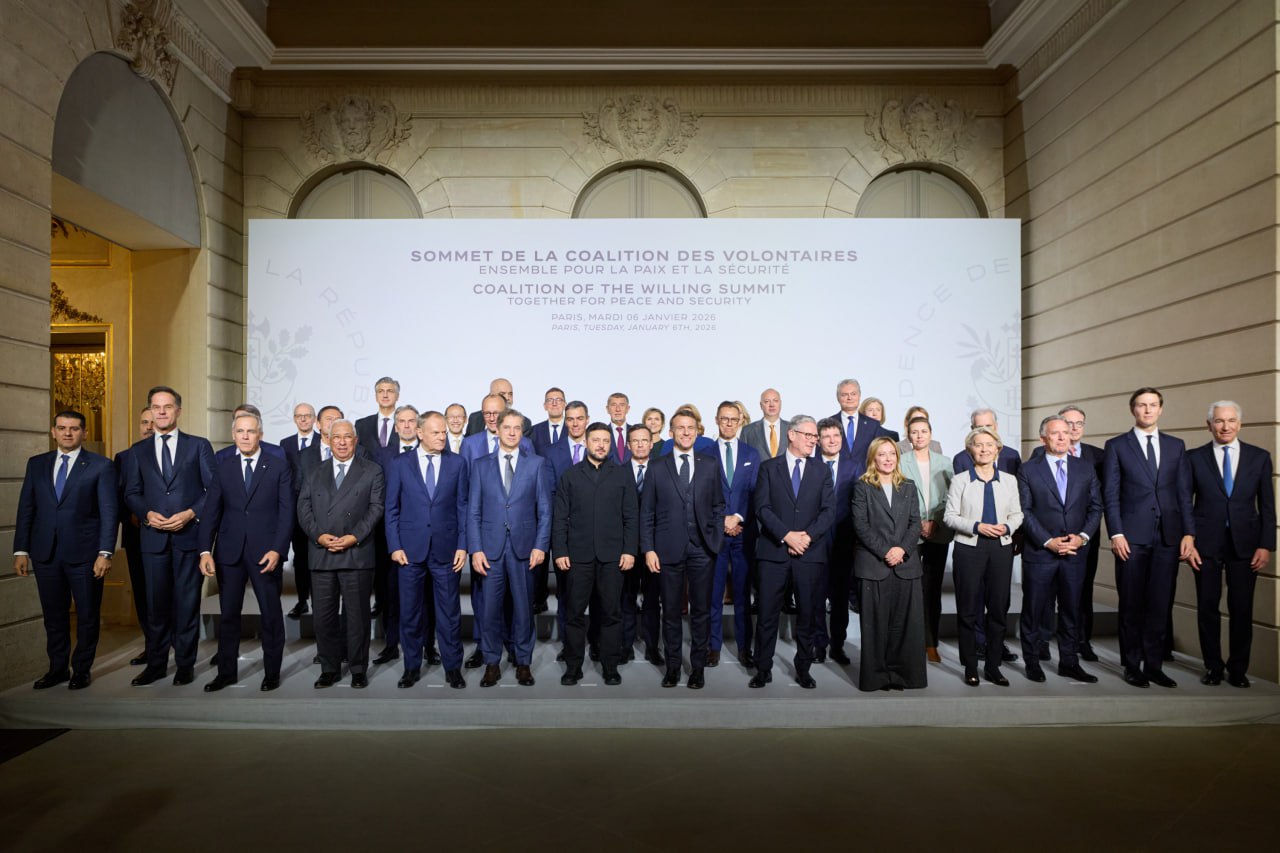
The announcement came against the backdrop of the signing on 6 January 2026 of a declaration of intent on the deployment of multinational forces, signed by Volodymyr Zelensky, Emmanuel Macron and Keir Starmer. On the same day the Office of the President published a joint declaration of the countries of the “coalition of the willing” following the meeting in Paris.
An important caveat — these guarantees are conditional: they presuppose the reaching of a peace agreement, clear rules for the use of force and parliamentary approval in donor countries. Without these legal and political foundations, the technical capabilities will remain declaratory.
Why this matters for Ukraine
First, air surveillance and reconnaissance reduce the risks of sudden attacks and make it possible to more effectively protect civilian infrastructure. Second, demining the Black Sea is key to restoring shipping and economic activity in the region. Third, systematic officer training enhances the Ukrainian armed forces’ ability to integrate into multinational formats and to maintain defense at a modern standard.
Analysts at international centers, including IISS and ECFR, note that the combination of technical means, training and transatlantic monitoring makes the future system of guarantees more viable, but only with a clear mechanism for oversight and financing.
The role of the US and next steps
The Belgian prime minister emphasized that the effectiveness of such guarantees will largely depend on American support and monitoring. The question now is how the declarations will be turned into legally formalized agreements, deployment mechanisms and budgetary commitments.
Conclusion. The components announced by Sweden and Belgium are not a complete solution to the security problem, but they are important building blocks of the future architecture of guarantees. The next stage is to detail the rules for the use of force, financing and the role of the US as guarantor of monitoring. Whether political will will translate into operational capabilities is the key question for Ukraine’s security in the coming months.





