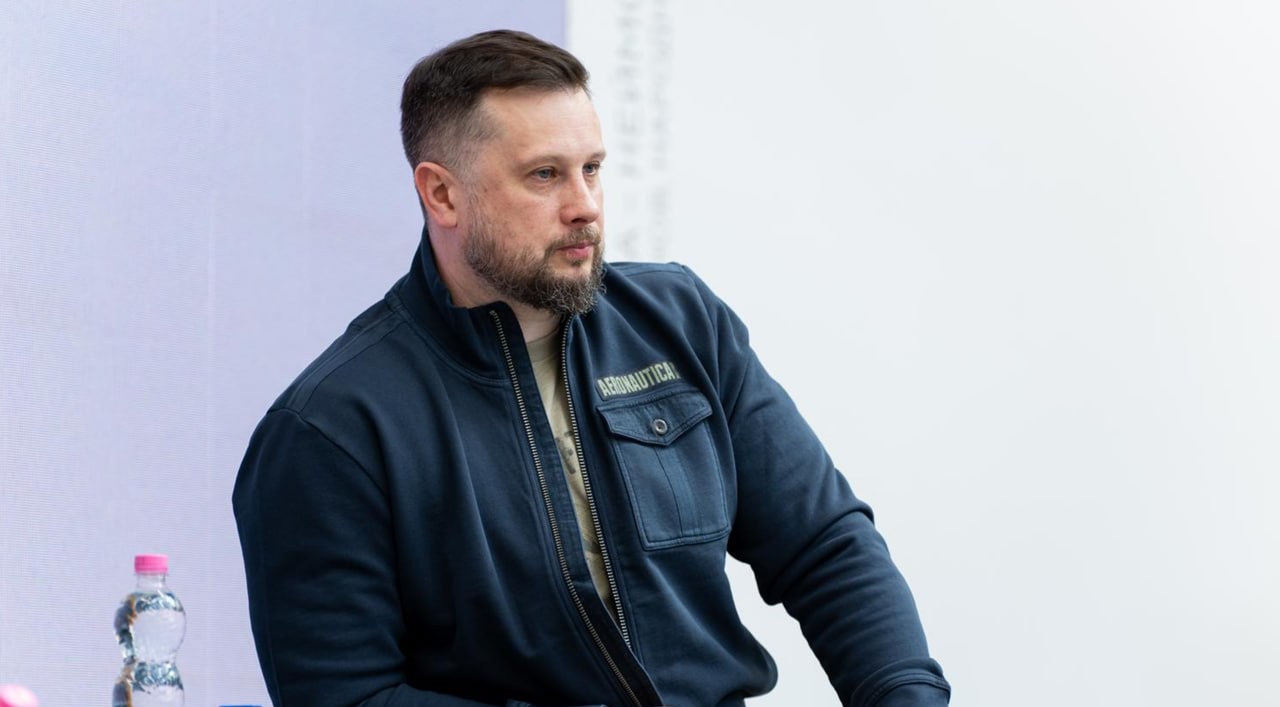
Two English letters — "not no" — and Ukraine's political field received a new topic for translation games. Brigadier General Andriy Biletsky, commander of the Third Army Corps, answered a question about presidential ambitions not to a Ukrainian journalist and not in Ukrainian media, but to MAGA-blogger Lori Loomer. This is precisely the detail worth unpacking before discussing the elections themselves.
Loomer is a figure from Trump's orbit who speaks the language understood by conservative American voters. An interview with her is not a coincidence, but a communication channel with a specific audience across the ocean — the one on which the continuation of military aid depends. If Biletsky is truly thinking about his political future, he is already now building an image not for Kyiv, but for Washington's ear.
What "not no" really means
The general's phrasing is impeccable from a political management perspective: he didn't say "yes" to avoid looking like someone thinking about power during combat operations. But he also didn't say "no," which would have closed the topic forever. "Not no" is a deferred option that requires no commitments today, but leaves room for maneuver after victory.
Biletsky reinforced this with an argument about polarization of society — both Ukrainian and American — drawing a direct parallel. The logic is simple: elections during wartime risk splitting the home front the same way they are splitting America. This is a rare case when a military man speaks in the language of a political analyst rather than the language of orders.
"It could seriously affect our defense capability. I'm not playing games, but I made myself a promise that until the end of the war I am a soldier and focused only on results and victory"
The company the general found himself in
A week earlier, a similar question was posed to Oleksandr Usyk — and he answered with a direct refusal: I have no plans to run. Meanwhile, a Rating Group poll showed that Ukrainians trust the boxer at 54%, and in hypothetical elections he could receive almost 6% of votes. Biletsky took a different route: instead of a categorical "no" — an ambiguous "not no".
The difference in rhetoric is telling. Usyk closes the topic; Biletsky leaves it ajar. Both are working with the same fact: elections during martial law are prohibited by law, so any answer now is not about 2026, but about positioning on the eve of future political competition, once the war is over.
The question is not whether Biletsky will run. The question is how many more public figures with military status will have to answer such questions — and whether "not no" will become the standard formula for those who don't want to risk their reputation now, but also don't want to close the door on themselves later.







