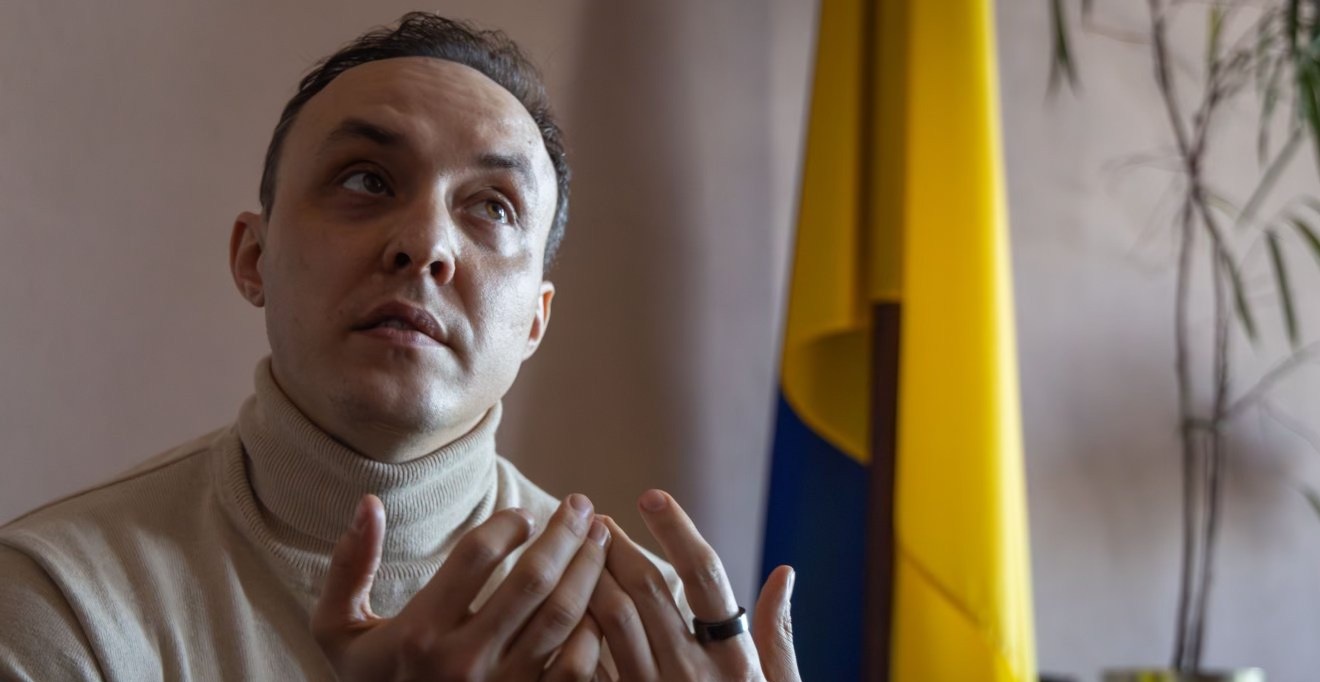
A single Kh-101 cruise missile contains up to 250 foreign components. A single drone contains up to 400. And among them, according to Vladislav Vlasiuk, the presidential representative on sanctions policy, components from American, Japanese, German, and Swiss manufacturers predominate. The figure he cited to the Kyodo News agency seems almost unbelievable: approximately 90% of the cruise and ballistic missiles and unmanned aerial vehicles that Russia uses contain Japanese components.
Civilian Microchips in Military Missiles
This is not about specialized military electronics — Russia has long been cut off from those. The discussion is about civilian dual-use components: microcontrollers, navigation chips, communication modules. They are manufactured for consumer and industrial equipment, do not fall under strict export restrictions — and that is precisely why they effectively circumvent sanctions barriers.
According to Vlasiuk, the route is simple: Japanese manufacturer → official distributor in a third country (Turkey, UAE, Central Asian countries) → Russia. The logistics are so well-organized that delivery from Europe to Russia takes only days, as investigators documented during several separate investigations.
13 Companies — and No Admissions of Guilt
Ukraine provided Tokyo with a list of 13 Japanese companies whose components have been identified in debris of Russian weapons. The reaction turned out to be telling: five of them told journalists that they cannot confirm the fact that their specific products were used — due to lack of information. One more suggested that it might be parts from a subsidiary. Another claimed it was a product of a different manufacturer altogether.
«Russia is trying to replace Western components with Chinese ones — but so far cannot. Japanese parts remain critical for the accuracy of missiles».
Vladislav Vlasiuk, presidential representative on sanctions policy, — to Kyodo News
What Japan Has Already Done — and What Is Missing
Formally, Japan is taking action: in January 2025, the government froze the assets of 11 individuals and 29 entities from Russia, and also introduced an export ban on goods capable of enhancing Russian industrial potential to 22 Russian companies. The relevant Ministry of Economy, Trade and Industry (METI) publishes detailed lists of «priority banned goods» and warns against circumvention schemes through third countries.
But there is a gap between a ban on paper and actual control of the supply chain. As Chatham House documents, parallel imports through Belarus, the UAE, and Central Asia allow Russia to consistently receive banned components. Dutch microchips disappeared from the debris of «Shaheds» after sanctions pressure — but American, Japanese, and Swiss ones are still there.
Tactical Context
Missiles of the Kh-101 series, which Russia uses massively to strike Ukrainian cities, are being manufactured in 2025 — with components imported after the full-scale invasion. This is confirmed by Zelenskyy after the strike on Kyiv on May 14: preliminary analysis pointed to production in the second quarter of this year.
- Up to 250 foreign components — in a single cruise missile
- Up to 400 — in a single unmanned aerial vehicle
- Main suppliers by origin: USA, Japan, Germany, Switzerland
- Route for circumventing sanctions: primarily through Turkey, UAE, Central Asia
Vlasiuk called on Tokyo not only to expand the list of banned goods, but to introduce an end-use verification mechanism — that is, to oblige Japanese manufacturers to verify where their products actually end up after the initial sale. This mechanism does not currently exist.
The question is not whether Tokyo knows about the problem — it does, and has for a long time. The question is whether Japan will introduce end-use control for civilian dual-use electronics: if not — the next debris over Ukrainian cities will again contain Japanese microchips, manufactured after this conversation.







