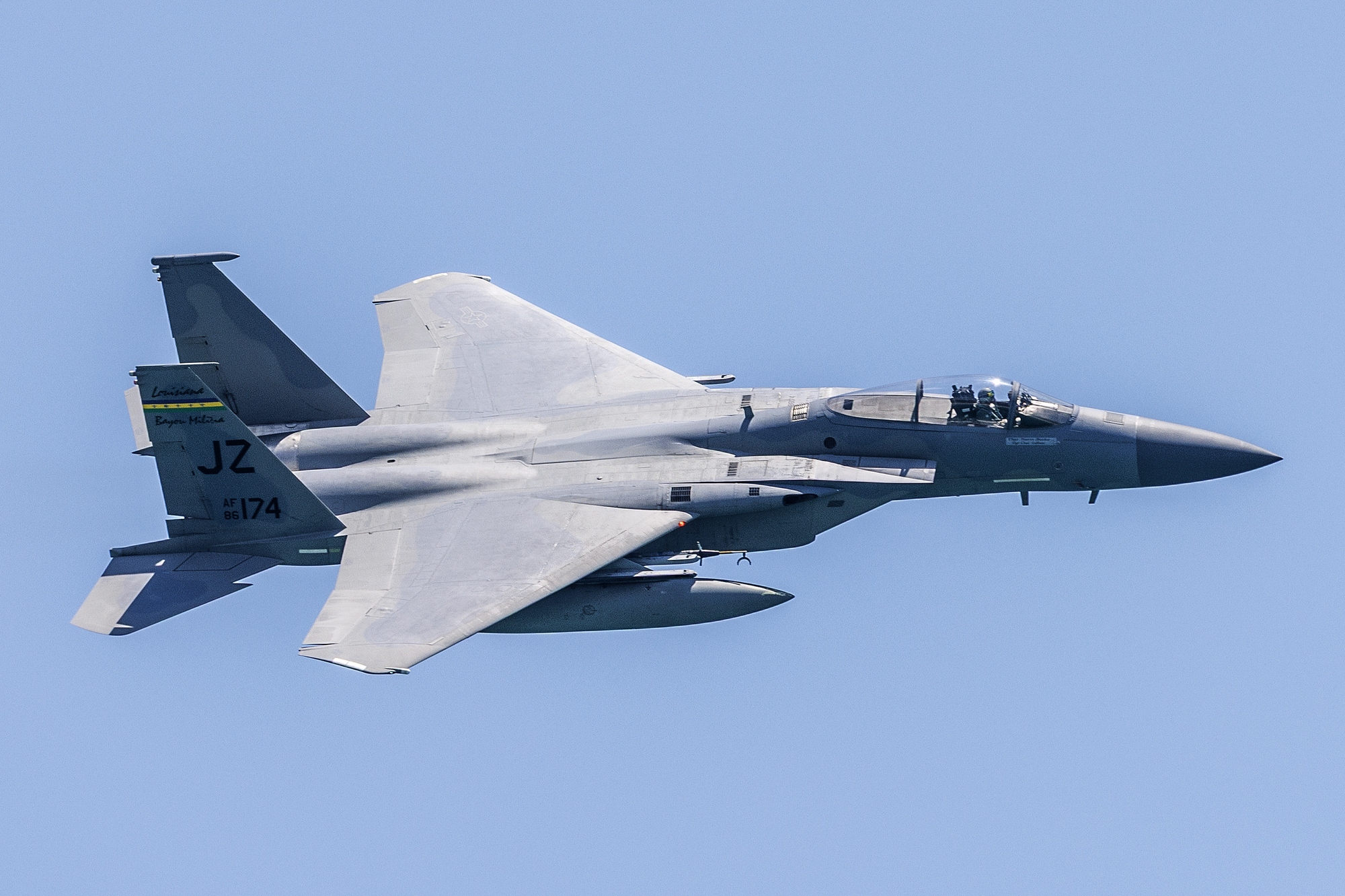
At the end of last week, American special operations forces extracted a navigator officer from a downed F-15E Strike Eagle from the mountains of Iran's Kerman province. The operation lasted nearly 48 hours, involved dozens of aircraft and helicopters — and concluded with something barely discussed publicly: the US intentionally destroyed six of its own aircraft to prevent them from falling into the hands of the Islamic Revolutionary Guards Corps.
What Exactly and Why
According to CBS News and ABC News, two C-130 Hercules transport aircraft became stuck on an improvised airstrip inside Iran — apparently due to soft ground. Evacuation proved impossible, so commanders made the standard decision: demolition. Separately, according to ABC News, four MH-6 Little Bird helicopters were destroyed — they had been used to transport troops between landing zones.
"Two transport aircraft that were supposed to evacuate the rescuers could not take off from a remote base in Iran. They were destroyed to prevent enemy capture."
CBS News, citing two American officials
The commandos departed on three additionally sent aircraft and crossed Iranian airspace shortly before midnight. The entire mission exited the hostile zone without US casualties.
Context That Changes the Scale
Destruction of equipment is not an anomaly but a precedent. In 2011, during Operation Neptune Spear, SEAL Team 6 operatives detonated their own stealth Black Hawk helicopter that had crashed in Osama bin Laden's compound courtyard in Abbottabad — the aircraft contained classified radar-evasion technology. That became a sensation. Now American media are recording the fact with almost no analysis.
The fundamental difference: then — Pakistan, a de facto ally. Now — an active combat zone with a state that simultaneously shot down an F-15E, an A-10 Thunderbolt, and two Black Hawks flying in support of the same rescue mission. According to NBC News, Iran also offered rewards to civilians for helping capture American pilots.
What the Pilot Did During 48 Hours
The navigator officer — his rank remains undisclosed — ejected over Iran and climbed several thousand meters up a mountain ridge slope, where he hid from Iranian search groups. According to two American officials cited by CBS News, his only weapon was a pistol. Communications — an encrypted device and a beacon. The CIA meanwhile conducted a disinformation campaign inside Iran to throw Iranian forces off the trail.
The Iranian IRGC claimed it was their units that destroyed the American aircraft on the ground — a version Washington does not officially comment on.
What This Means for the Narrative About "Complete Air Dominance"
CENTCOM Commander Admiral Brad Cooper said Thursday that Iranian aviation "does not fly" and air defense systems are "mostly destroyed." Within a day of that statement, Iran shot down an F-15E and an A-10 — and this is at least the fourth and fifth American aircraft lost in the conflict (three F-15s previously fell victim to friendly fire from Kuwaiti air defense). Trump, meanwhile, stated that the complete rescue of both pilots proves "America's superior air superiority."
These are two different definitions of victory — and they are both being applied to the same events.
If the coming weeks show an increase in the number of downed American aircraft, the question will become inevitable: can the public narrative of "five weeks of success" hold — and what will be the price of the next rescue operation if the US does not even control the airstrips it uses itself?





