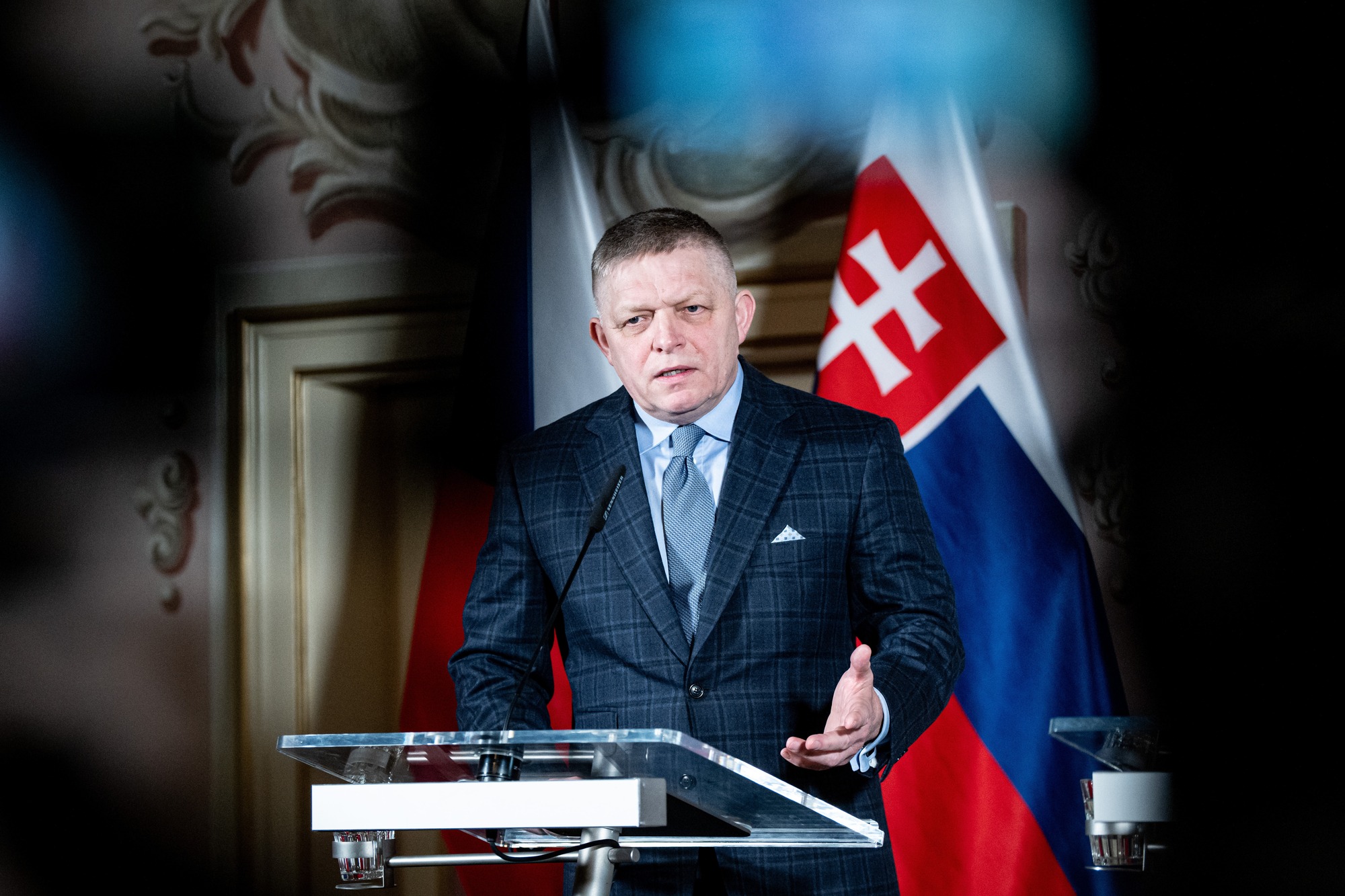
If Viktor Orbán loses the 2026 parliamentary elections in Hungary, Robert Fico will most likely stop blocking a 90 billion euro loan to Ukraine from the G7. According to Bloomberg, several EU officials directly involved in the negotiations have voiced this assessment.
The logic is straightforward: Fico plays on contradictions within the bloc, but does so in tandem with Budapest. Without Hungarian cover, the Slovak prime minister finds himself alone against 26 member states — a politically disadvantageous position even for him.
What's at stake
The 90 billion euro loan is a loan that the G7 provides to Ukraine against future revenues from frozen Russian assets. Hungary and Slovakia have not yet joined the mechanism, which technically does not block the deal but creates legal complications regarding repayment guarantees.
Bratislava officially appeals to "neutrality" and "peace initiatives," but in practice synchronizes its steps with Budapest at the level of vetoes in the EU Council. This synchronization is tactical rather than ideological, according to Bloomberg's interlocutors in Brussels.
Why Orbán is a variable, not a constant
In the 2026 elections, Hungarian opposition led by Péter Magyar is genuinely competitive for the first time in years. If Fidesz loses power, the main architect of the Eurosceptic tandem within the EU disappears. Fico without Orbán is a prime minister of a small country with a population of 5.5 million, who continues to block the position of the entire bloc alone.
According to EU officials, this very scenario will force Bratislava to reconsider its position — not pressure from Brussels, not sanctions, but a change in the political landscape in a neighboring country.
What this means for Ukraine
The G7 loan is already technically agreed upon among those who signed it. The question is about the legal sustainability of the structure without full participation of all EU members. The longer Slovakia remains on the sidelines, the more difficult it becomes to structure guarantees and the greater the legal risks borne by participating countries.
Brussels's optimism about Fico is based on pragmatism rather than trust in him. And if the Hungarian elections do not deliver the expected result, this entire logic falls apart.
Is the EU ready for a scenario where both leaders remain in power after 2026, and what then happens to the loan mechanism?





