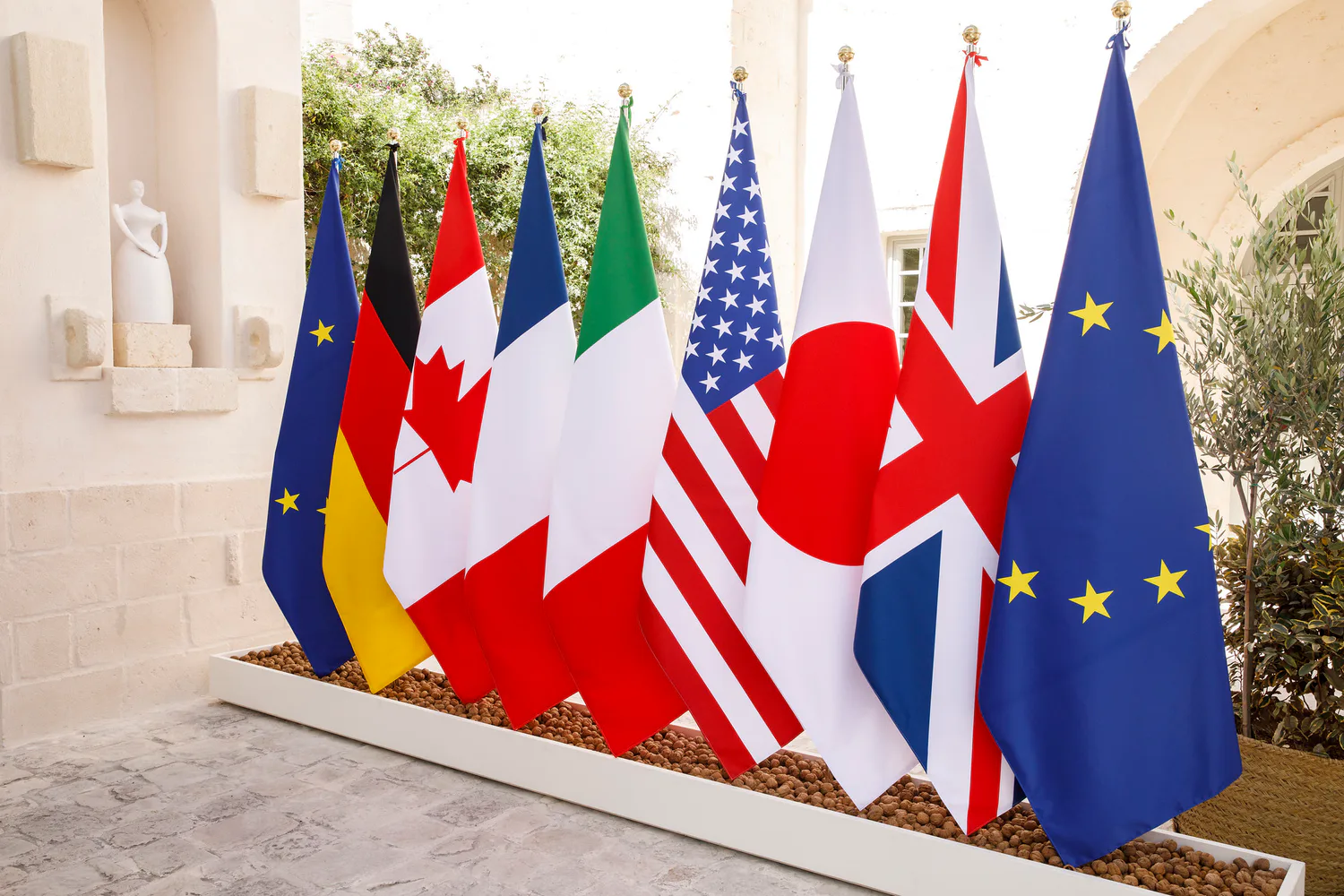
On June 15–17, leaders of the seven largest democracies are gathering in Evian-les-Bains. But before the summit even begins, one key fact is already known: for the second year in a row, there will be no joint communiqué — neither on Ukraine nor on other key agenda items.
How it works — and why the difference is fundamental
Instead of a single concluding document, France, as the chair, is preparing separate declarations on narrow topics — critical minerals, migration, drug trafficking. Issues regarding the war in Ukraine, the situation in the Middle East, and global economics will be set forth exclusively in a statement by the French presidency — that is, in a document that the United States does not formally sign.
The difference between a communiqué and a presidency statement is not technical. A joint communiqué establishes consensus among all seven countries and becomes a diplomatic precedent. A presidency statement is the position of the organizer. Washington may agree with its content, but has no obligation to cite it.
«G7 has struggled to reach consensus since Donald Trump began his second presidential term»
Nippon.com, citing diplomatic sources
A precedent already exists — and it is not encouraging
The summit in Canada in June 2025 demonstrated what G7 looks like without a communiqué in practice: support for Ukraine was mentioned only in a statement by Prime Minister Carney as chair, and Trump left the meeting early — due to escalation between Iran and Israel — without ever meeting with Zelensky. Support for Kyiv appeared in the context of «President Trump's efforts toward a just peace» — that is, already within the American narrative about negotiations, not frontline support.
The Evian format reproduces the same logic: France is attempting to maintain the appearance of unity and avoid public confrontation with Washington by choosing a more flexible format instead of risking a blocked communiqué.
What this means for Ukraine
- There is no legal binding. A presidency statement does not obligate other countries — particularly the United States — to follow its formulations in subsequent negotiations or aid decisions.
- The narrative has been captured. If support for Ukraine is formulated in the French text through the frame of «supporting Trump's peace efforts,» this diplomatically strengthens Washington's position, not Kyiv's.
- A precedent is being cemented. Two summits without a communiqué is no longer an exception but a new norm for G7 under Trump's second term.
Zelensky is invited to the summit and has confirmed his participation. But the key question is not whether he will come to Evian — but rather what exact formulations regarding Ukraine will make it into the French statement and whether the word «support» will remain in them without being tied to the American peace plan. If not — Evian will become yet another step toward reformatting G7 from a coalition supporting Ukraine into a platform for «neutral» mediation.