Poland has analyzed the reasons why the Air Force failed to shoot down a Russian X-101 cruise missile that penetrated approximately 100 km deep into the country and exploded in the Lublin Voivodeship. This is reported by Defense Express.
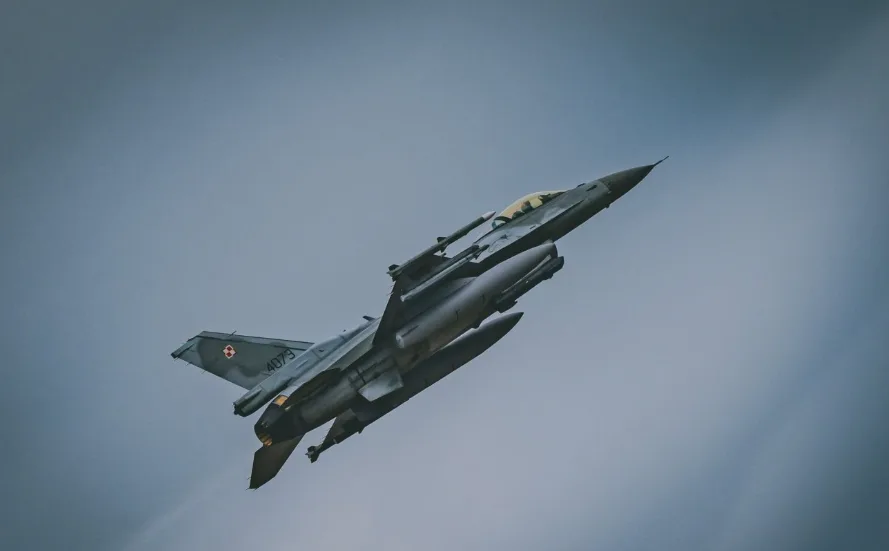
During the incident, Poland deployed two F-16 fighter jets, two MiG-29s, a Saab 340 AEW airborne early warning aircraft, and an Airbus A330 MRTT aerial refueling tanker to ensure sustained patrol.
Fighter jets launched preemptively
Operational Commander of the Polish Armed Forces Ireneusz Nowak reported that due to the threat of a massive Russian strike on Ukraine, fighter jets were launched before Polish airspace was breached. Military personnel tracked two Russian cruise missiles, one of which approached the border and another subsequently crossed it.
Legal requirement for visual identification
According to Nowak, he was ready to order the destruction of the missile, however, current Polish legislation requires mandatory visual identification of the target before opening fire. An exception is provided only for combat aircraft that directly conduct the attack.
The Defense24 publication notes that the necessity for visual confirmation was also related to the fact that Ukrainian fighter jets were operating near the border, not equipped with an identification friend-or-foe system compatible with NATO standards.
Questions about official timeline
Defense24 drew attention to a possible discrepancy in time calculations. According to the publication's assessment, the missile could not physically have covered 100 km in 5.5 minutes while moving at its cruising speed of approximately 830 km/h. This may indicate that Polish surveillance assets detected the X-101 only after it had already traveled about 30 km over the country's territory.
According to the publication's version, Polish fighter jets may have initially received a task to intercept another missile approaching the border, and after detecting the X-101, did not have time to position themselves to destroy it.
A question that remains open: whether Warsaw will make changes to weapons use rules for cases where the target is identified by radar, but without visual contact.







