A paradox of recent months: between May and July, the Ukrainian army achieved real gains on the front, but trust in then Commander-in-Chief Oleksandr Syrskyy did not grow during this time—it fell. This was shown by polls conducted by KMIS during the height of protests against the president's personnel decisions. Anton Hrushetskyy, executive director of the institute, sees in this a symptom that will have consequences for Syrskyy's successor—Mykhaylo Drapaty.
"This means that our evaluation of the commander-in-chief's activities is based on emotional reactions, rather than on a balance of gains and losses," says Hrushetskyy.
Trust that doesn't depend on results
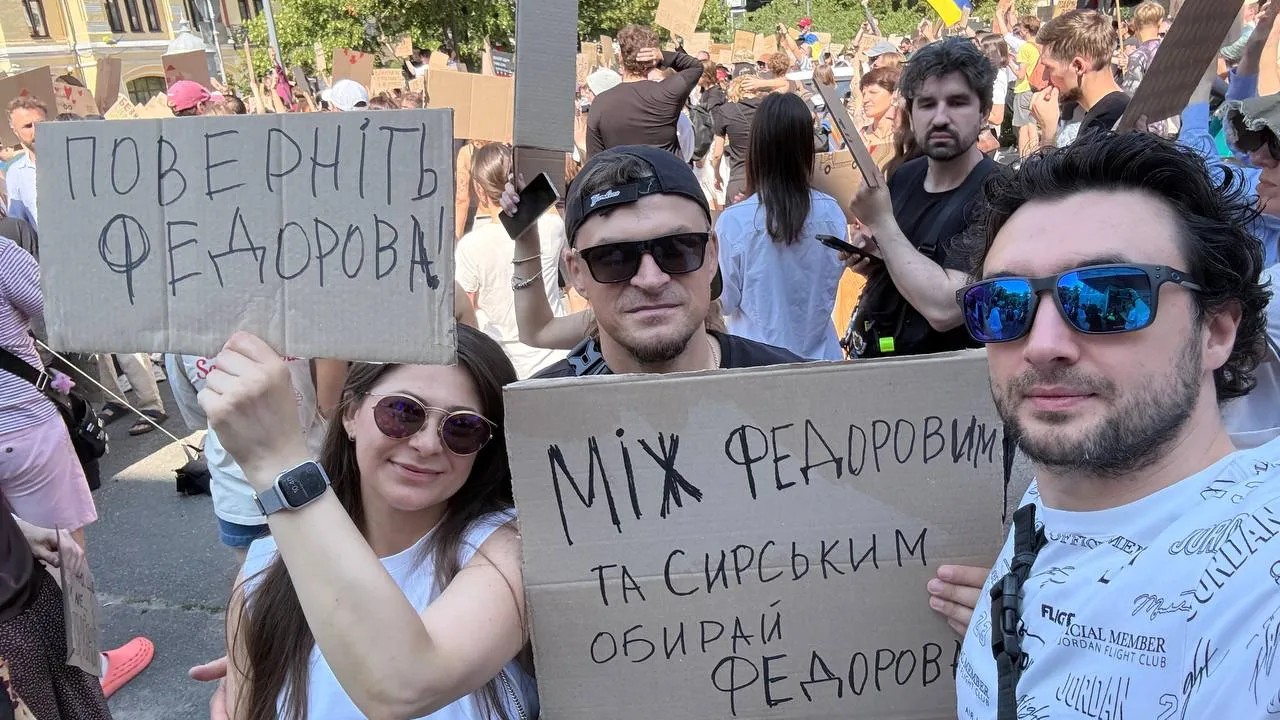
Protests in Kyiv and other cities began on July 16 over the decision not to return Rustem Umerov, or more precisely—over Zelenskyy's refusal to appoint Fedorov as defense minister, as well as over demands to dismiss Syrskyy. A week later, the president signed decrees: Syrskyy—dismissed, Drapaty—new commander-in-chief.
The sociologist formulates an unexpected practical conclusion from this story: any military leader in Ukraine now works under conditions where his rating can collapse not due to a battlefield failure, but due to an "emotional-media reaction" of society, weakly connected to the actual dynamics of combat operations.
"Any military officer now can become a target of emotional-media reactions," notes Hrushetskyy, calling this an alarming signal.
An advance difficult to work off
Drapaty received the position on the wave of protests, which essentially formed a demand for a "new savior." According to Hrushetskyy, this creates unhealthily inflated expectations—and at the same time transfers onto the new commander-in-chief the entire burden of complaints that were previously directed at Syrskyy, particularly regarding mobilization.
"The main focus of criticism of Syrskyy—the issue of mobilization—will now be directed at him. I sincerely wish Drapaty success. His success is our collective success," says the sociologist, adding that society should react more calmly.
Fatigue without willingness to surrender
A separate and equally practical point is the nature of public fatigue. Current KMIS polls show: Ukrainians are determined to continue the struggle, capitulation is not considered an option. But fatigue manifests differently—in a reduced ability to rationally evaluate events and specific individuals.
"There is a certain fascination when an easy idea is sold—one to turn the tide of war," explains Hrushetskyy.
This very "easy idea"—a simple personal culprit or savior—is, according to the sociologist, the main risk for any future commander: if society evaluates him not by the front lines, but by an emotional wave, the next dismissal may repeat the July scenario regardless of actual results on the battlefield.