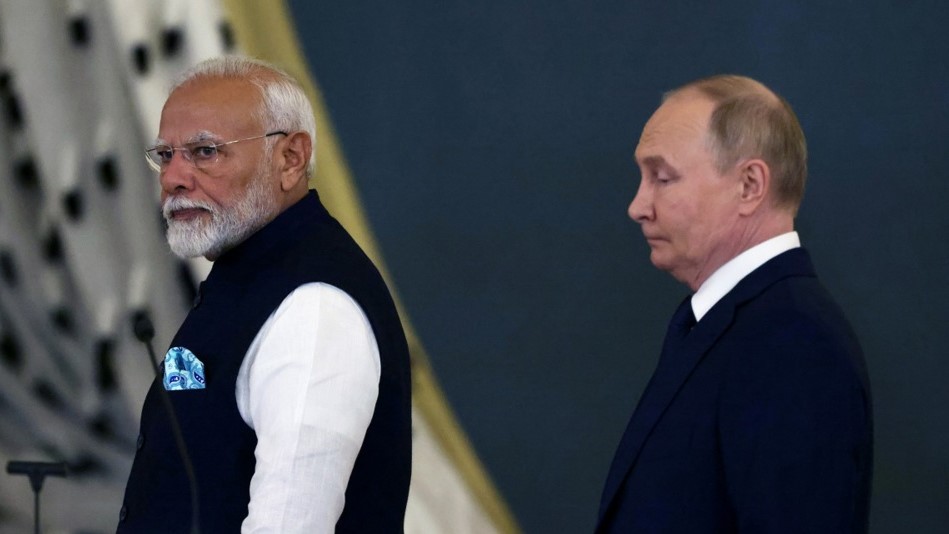
When discussing foreigners in the Russian army, people usually mention captured Chinese or North Koreans who fought near Kursk. India stands out differently in this list: according to the GUR of the Ministry of Defense, Russia is no longer recruiting Indian citizens into its armed forces — Delhi raised this issue categorically. But that's precisely where a more interesting story begins: military cooperation between the countries has not declined, it has simply changed form.
Why recruitment disappeared, but training remained
For the Kremlin, recruiting foreigners is a way to compensate for losses without a new wave of mobilization within Russia. A cheap and politically insensitive resource. But India is not Botswana or Indonesia, whose citizens fell into war through deception via employment agencies. It is a partner with whom Moscow has been trading weapons for decades and does not want to damage relations through diplomatic scandals surrounding dead or maimed Indian citizens.
So when Delhi drew a line, the Kremlin accepted it. But not where it hurts most — military-technical cooperation remained untouched.
What exactly continues
The GUR identifies three directions that survived the restrictions:
- joint measures of operational and combat training;
- training of Indian officers in Russian Ministry of Defense educational institutions;
- India's participation in Russian military exercises.
A clear example is the "Indra-2026" exercises taking place from August to early September: India is deploying about 500 military personnel and 100 units of equipment. In parallel, Indian military personnel have been invited as observers to the strategic exercises "Tsentr" — this is no longer about cannon fodder, but about the exchange of operational experience and demonstrating that Russia remains a significant military partner to Delhi despite the war in Ukraine.
Practical angle: why this matters right now
India buys Russian weapons and trains officers in Moscow not out of sympathy for the Kremlin, but because the alternative — a break in decades of military-technical dependence — costs more than diplomatic inconveniences.
This dependence became acute after July 21, 2026, when India's Foreign Ministry summoned the Russian charge d'affaires over a missile strike on the vessel MV Golden Leo near Odesa — four Indian citizens were killed. This shows the limit of Delhi's patience: civilian casualties are a red line, while joint exercises and purchases are not.
The difference between "recruitment for war" and "military-technical cooperation" is the difference between what Delhi is willing to condemn publicly and what it is willing to live with silently. The question is whether this line will hold after another incident with Indian casualties, or whether Delhi will ultimately question training and purchases as well — that is, the very foundation of relations with Moscow during wartime.