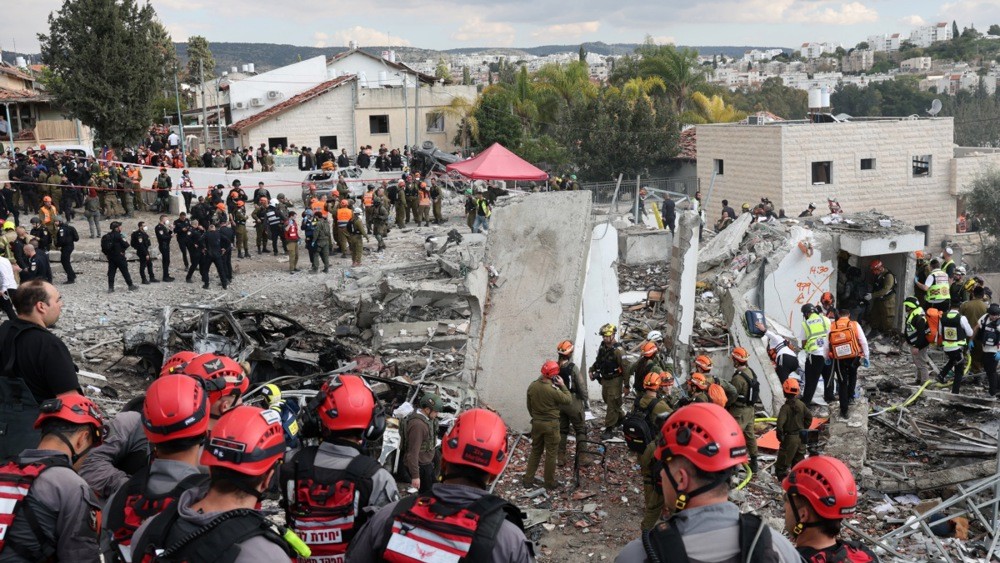
What happened
According to The Times of Israel, on March 1 Iran launched a ballistic missile at the Israeli city of Beit Shemesh. The strike killed at least nine people, and more than 20 were wounded; among the injured is a 4-year-old child in moderate condition.
"As far as I know... it was likely a direct hit on a shelter, and most, if not all, of the dead were there [in the public shelter]"
— Avshalom Peled, chief of the Jerusalem District Police
Numbers and sources
In addition to the local victims in Beit Shemesh, the BBC reports more than 450 injured in Israel as a result of the Iranian strikes overall. American-Iranian human rights organizations (HRANA) cite data on at least 333 civilian casualties and wounded in Iran after strikes by the U.S. and Israel (133 killed and 200 wounded).
These events were part of a wider escalation that began with a joint U.S.-Israeli operation on February 28; as a result, reports indicated damage to the residence of Iran's Supreme Leader and subsequent statements from the parties.
Why this matters for civilian safety
The key conclusion of official security forces is that existing public shelters and "safe rooms" are not designed to withstand a direct hit by a ballistic missile. This changes priorities: whereas shelters were previously designed to protect against cluster munitions and tactical rockets, now planning must account for incoming, more powerful strikes.
For the reader, this has a straightforward meaning: effective urban defense is not only air defenses, but also standards for municipal shelters, reserves of emergency medical services, evacuation routes, and engineering reinforcement of key facilities. These lessons directly resonate with Ukraine's experience, where during the war they have already gone through similar challenges and where politicians and communities have gradually adapted to the new reality.
What's next
With such a strike tactic the risk of escalation and civilian casualties increases. The practical consequences include the need for accelerated funding of protective infrastructure, mobilization of international assistance for the technical modernization of shelters, and strengthening medical readiness. In diplomatic terms—this is a test of partners' ability to turn declarations of support into concrete contracts and deliveries.
Question for reflection: will this case force allies to accelerate the modernization of civil defense and the build-up of air defense capabilities, or will the escalation remain a series of local strikes with long-term humanitarian consequences?
Sources: The Times of Israel, BBC, HRANA; comments from the Jerusalem District Police.





