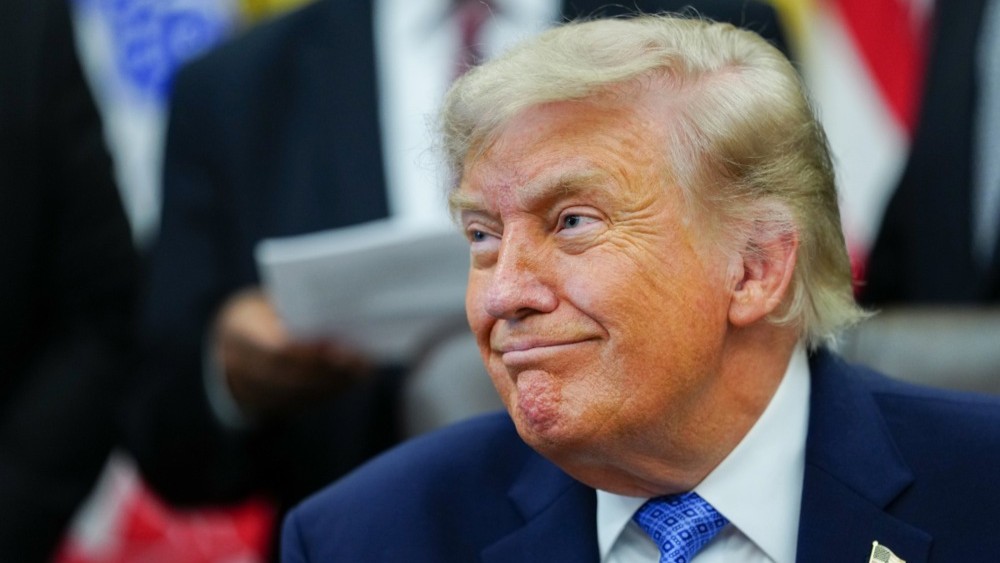
US President Donald Trump announced on Truth Social that Iran itself requested a meeting: "IRAN HAS REQUESTED A MEETING. IT WILL TAKE PLACE TOMORROW IN DOHA!" According to White House Press Secretary Karolina Leveitt, the US delegation will be led by Special Envoy Steve Witkoff. Hours earlier, a senior Iranian official denied that talks were scheduled.
How escalation broke the previous format
A round scheduled for June 28 in Geneva was supposed to focus on Iran's nuclear program. Instead, the weekend exploded with a series of mutual strikes. According to Axios, the US CENTCOM conducted strikes on Iranian coastal facilities after Iranian forces attacked the Panama-flagged tanker M/T Kiku near the Strait of Hormuz. In response, Iran struck American bases in Kuwait and Bahrain with ballistic missiles and drones — both countries condemned the attacks.
Due to the escalation, Iran withdrew from the June 28 meeting, canceling the session at the last moment. As NBC News reports, one of Tehran's public arguments was verification of access to unfrozen assets: "If there is no access — the condition is not fulfilled," stated Mehdi Fazaeli, a representative of the Supreme Leader's office.
What the memorandum fixed and what remained open
The Memorandum of Understanding signed on June 17 consists of 14 points. According to Al Jazeera, the first point provides for immediate and permanent ceasefire; the eighth confirms Iran's renunciation of nuclear weapons with IAEA control mechanism over enriched uranium. The document launches a 60-day negotiation process, but is not a final peace agreement.
The Strait of Hormuz remains the main node of contention. Iran's chief negotiator Ghalibaf stated that the strait "will not return to its pre-war state" and Iran will receive payment for the passage of vessels. The US insists that the strait is an international waterway and supports an alternative management mechanism involving Oman and Persian Gulf countries. The memorandum frames this as a compromise — future management of the strait will be determined "in dialogue with Oman and other Gulf countries, but in accordance with international law" — however, it contains no enforcement mechanism.
"Technical negotiations will continue on all aspects of the memorandum. Both sides are currently suspending activity, and vessels can move freely [through the strait]."
Senior American official, quoted by RFE/RL, June 28
Why Doha, not Geneva
Moving the talks from Switzerland to Qatar is not merely a logistical decision. Doha serves as a neutral platform for crisis contacts between the US and actors that Washington officially does not recognize as partners. According to Axios, the session's focus has shifted from Iran's nuclear program to maritime safety in the strait — precisely the point where the memorandum is least specific.
Meanwhile, Reuters recorded market reaction: Brent crude rose to $72.49 per barrel after the weekend strikes — a reminder that approximately 20% of world oil and liquefied natural gas trade passes through the Strait of Hormuz.
What's next
The 60-day countdown of the memorandum is already underway. If the talks in Doha fail to agree on an operational mechanism for controlling the Strait of Hormuz — in particular, the issue of a "service fee" and third-country participation — the next incident with a vessel in the strait could reset diplomatic progress before the parties reach a final agreement.







