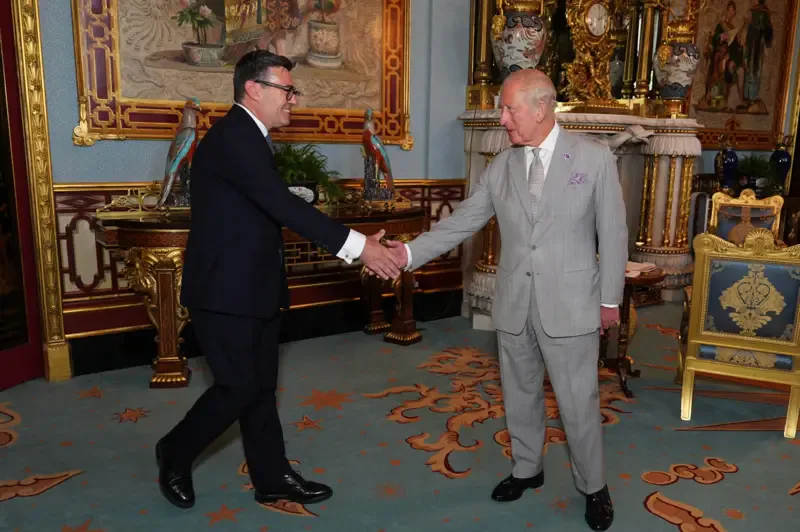
On July 20, 2025, Andy Burnham entered Buckingham Palace as the Mayor of Manchester and left as Prime Minister. King Charles III received him at a closed meeting, after which Burnham officially received the authority to form a government. Thus, Britain gained its seventh prime minister in a decade.
"Seventh in ten years" — this is already a brand
In his first speech, Burnham acknowledged this fact and promised to "rise to the new challenge" so that Britain would "regain its stability." Before him, Keir Starmer left Downing Street — the shortest-serving Labour prime minister in modern British history.
Burnham won the Labour leadership election unopposed — no other candidate gathered the required 20% of nominations from the faction. For a man whom the London party leadership rejected three times, this is an ironic triumphant return.
First promise — and first question
Before heading to the palace, Burnham stopped at a night shelter in central London. Everyone read the signal: homelessness would be the first priority.
"I will soon go through those doors and give my first order — to end rough sleeping in our country."
Andy Burnham, first speech at Downing Street, July 20, 2025
The government will allocate an additional £340 million to support at least 3,000 people across England. But it is precisely here that an awkward context emerges.
The Manchester precedent
In his pre-election manifesto as Mayor of Manchester in 2017, Burnham promised to eliminate homelessness by 2020 — and in 2019 admitted he would not achieve the goal. Official monitoring recorded 197 people sleeping rough in autumn 2025 — twice as many as in 2021.
At the same time, there is an opposite fact: in 2019, the number of homeless people in Greater Manchester fell by nearly 40% — from 241 to 151 people. The "Bed Every Night" scheme launched by Burnham in 2018 was intended to be extended nationwide. Now he is doing it — but from the position of prime minister, not mayor.
Cabinet and external context
- Several senior government members, including the deputy prime minister and finance minister, announced their departure from the cabinet on the first day.
- Burnham promised to fulfill defense obligations to international partners — a signal important against the backdrop of allies' pressure regarding defense spending.
- Among the first congratulations — from Chancellor Merz, Prime Minister Albanese, NATO Secretary General Rutte, and European Commission President von der Leyen.
Burnham also promised new measures on cost of living — already the day after his appointment. But the main test remains the first promise itself: if £340 million and the new government cannot do what failed in Manchester, "stability" will turn into yet another empty slogan.
The question is not about intentions — they have been documented since 2017. The question is whether the scale of the task changes its feasibility: if Burnham fails to address homelessness in the first year, will this become the very moment that defines his entire tenure?







