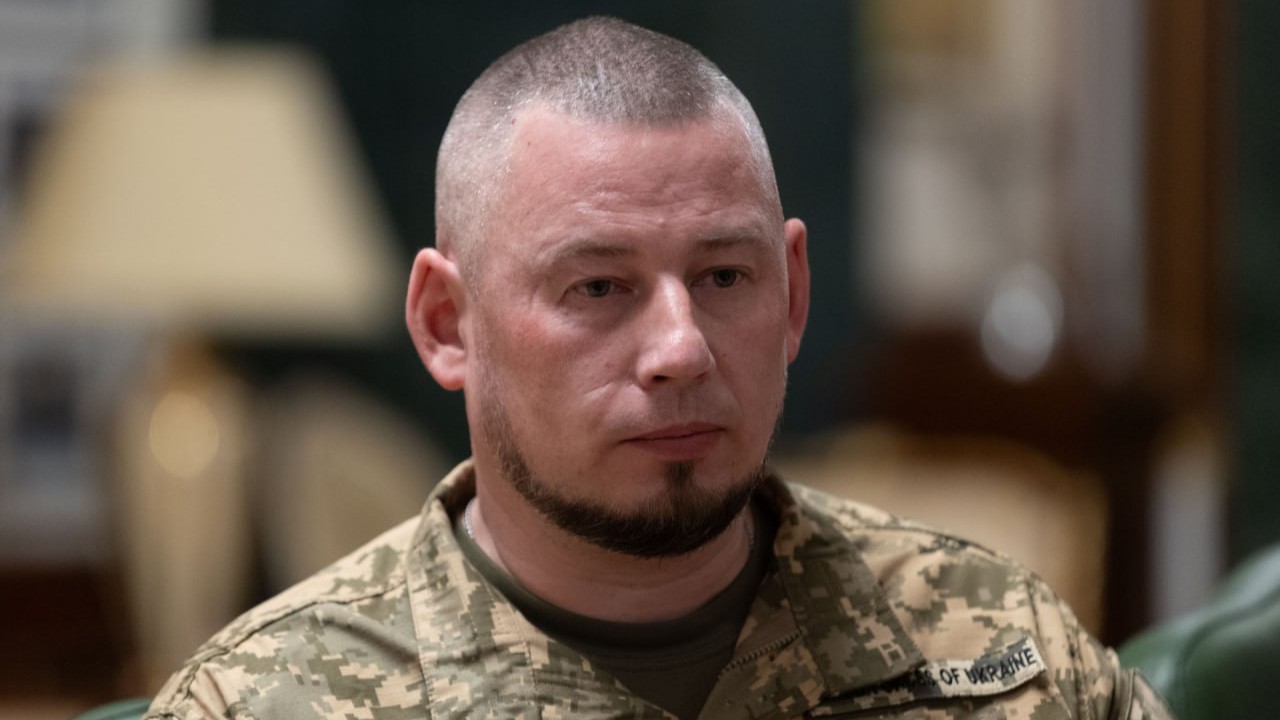
The Office of the President has registered a clear position: lowering the mobilization age from 25 to 18–22 years old, restricting the travel of young men abroad, and forced conscription of women are not currently being considered — they are not even being discussed at the level of risk assessment. This was stated by Pavlo Palisa, Deputy Head of the OP, in an interview with 24 Channel.
«Currently, the question of lowering the mobilization age and restricting travel abroad is not being considered. Everything will depend on the situation at the front, but as of now this issue is not being considered, not even discussed at the level of risk assessment».
Pavlo Palisa, Deputy Head of the Office of the President
Thus, the only publicly named condition for reconsidering — the dynamics of the front. No specific threshold: neither casualty figures nor the pace of enemy advance. This gives the authorities flexibility in rhetoric, but does not give society clear guidelines.
Women — only by contract, but the Ministry of Defense is preparing an «attractive» program
Regarding women, Palisa was more specific: there is no forced conscription and none is planned. At the same time, he confirmed that the Ministry of Defense is preparing a new contract program.
«The conscription of women is not being discussed now. This is a voluntary matter. Women, just like men, can sign a contract on general terms».
Pavlo Palisa
When asked about simplified or shorter contracts for women, he responded that the conditions will be uniform for all — and «quite attractive». He did not disclose the details of the program.
Earlier, in April 2025, Palisa had commented differently on this topic in an interview with Bihus.Info: he allowed for the possibility of considering Israeli experience in the future — where women undergo mandatory military service. Now the emphasis has shifted to voluntariness.
Budanov — in the same direction, but from a different angle
Office of the President Head Kyrylo Budanov formulated the position more harshly. According to him, mass conscription of young men aged 18–25 through a forced mechanism «will destroy the future of the state and an entire generation». This thesis explains why the OP is keeping its distance from the topic of youth conscription even amid prolonged war of attrition.
What was not said aloud
- In August 2025, the authorities already allowed men aged 18–22 to leave the country — a move in the opposite direction from restrictions.
- Palisa also confirmed positive dynamics in voluntary mobilization over the past four months — this is one of the arguments against expanding forced mechanisms.
- A new system of guaranteed monthly replenishment of brigades on the front line, which Palisa announced separately, is designed to reduce the demand for «quantity» by providing predictability of the «flow».
The OP's position remains stable: expanding the circle of conscripts — an extreme option, not the current plan. But «it depends on the situation at the front» — this is not an answer, but a postponement of an answer. If the pace of losses and rotations cannot be covered by voluntary recruitment, the question will return — and then the authorities will have to name not only the condition, but also a specific threshold.





