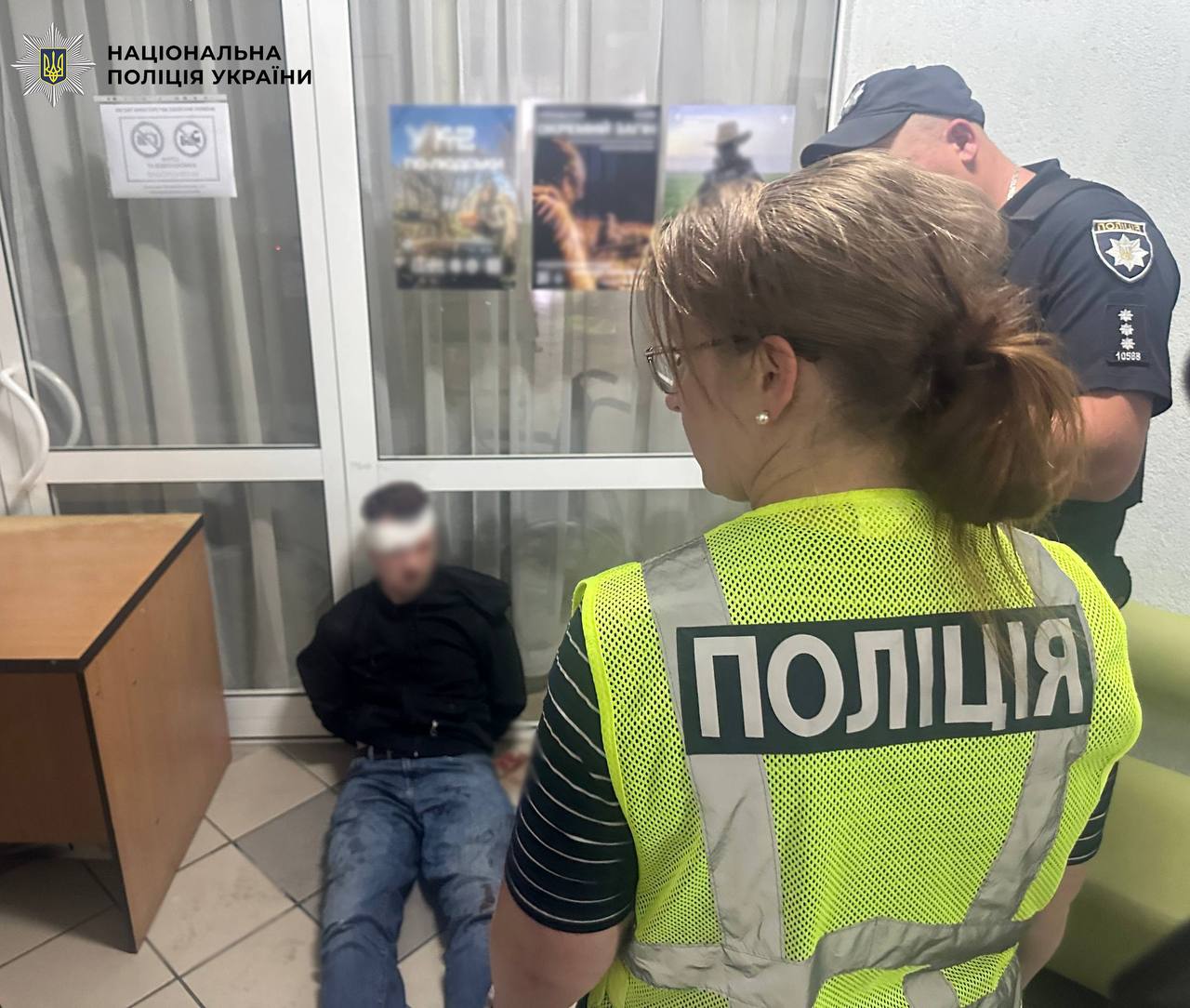
A 31-year-old Kyivan has been charged with the intentional murder of a doctor from a military medical commission — according to the investigation, he carried a knife in a bag past security at the Podil TCC, and after a decision on fitness for service, inflicted approximately 17 stab wounds to the chest, neck and arms of the surgeon. The woman died at the scene. Formally, this is a case of a specific crime punishable by 10 years to life imprisonment. But behind it lies a question that for some reason has still not been answered: why is there no basic screening of items that people bring into an institution where decisions are made daily that can trigger strong emotional reactions.
A military medical commission is not a bank or an airport — there are no metal detectors or routine bag searches. The logic is understandable: it is a medical facility, not a high-risk facility. But after July 29, this logic ceased to be self-evident. The prosecution states that the man came with a knife deliberately — he complained of toothache, asked to be released for a few days, and when he realized that the commission deemed him fit, he used the weapon. This means the attack was not a pure flash of affect — there was premeditation.
A security issue caught between departments
TCCs are subordinate to the Ministry of Defense, military medical commission doctors are often civilian medics recruited through the healthcare system. Who is responsible for physical security at the intersection of these two systems — a question without a clear answer. Police guard the perimeter, but do not search every visitor. Installing metal detectors at the entrances of TCCs and military medical commissions is technically straightforward and relatively inexpensive solution that is already being discussed in medical circles after the tragedy, but for now it remains at the level of proposals rather than an order.
This is the second case in a short time when confrontation between civilians and the mobilization system results in physical violence: on July 8 in Lviv, a conflict between approximately 200 people and servicemen ended with an overturned TCC service vehicle. The difference in scale is obvious, but the common denominator is escalating tension around mobilization procedures, which finds no outlet in legal procedures for appeal or dialogue.
"He wanted to be examined thoroughly, complained of toothache and asked to be released for a few days," — the Kyiv City Prosecutor's Office cites the words of the suspect.
In parallel, another line of reform is underway: on July 30, the SBU conducted searches in more than 100 TCCs across the country as part of the "Honest Conscription" operation — this concerns corruption schemes of draft evasion, the opposite pole of the problem. Reforming the mobilization system remains a task for Acting Defense Minister Yevhen Khmarа and Commander-in-Chief Mykhaylo Drapatyi, and it is clearly not limited to fighting corruption — it must also include the physical safety of those who work within this system every day.
The military medical commission doctor was performing her official duty when she died — and this legal fact alone determines the severity of the charge. But beyond the legal qualification remains a practical question: how many more doctors and TCC employees will work without any barrier between themselves and a person who came with a knife in a bag before metal detectors appear at the entrances?







