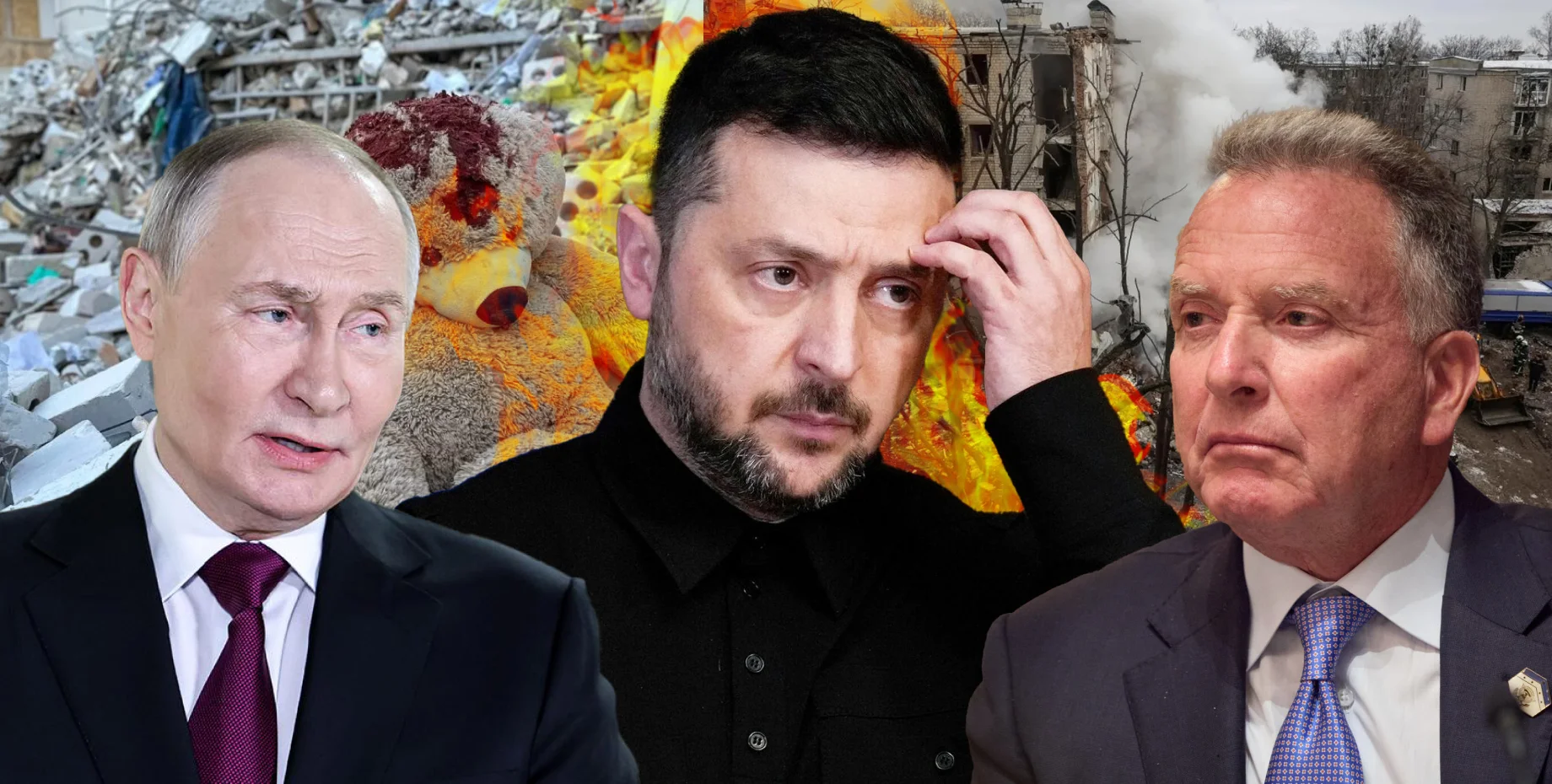
More than five hours of talks between U.S. special envoy Steve Witkoff, adviser Jared Kushner and Russian dictator Vladimir Putin at the Kremlin produced no breakthrough. According to media reports, after the Moscow consultations the American delegation was due to travel to Europe for a meeting with President Volodymyr Zelensky, but the visit was unexpectedly cancelled.
As a result, the revised “peace plan,” which was supposed to become a potential framework for negotiations between Washington, Moscow and Kyiv, was left without follow-up — with no agreed points and no clear next trajectory.
Witkoff and Kushner returned to Washington: what went wrong
Political analyst Ihor Reiterovych explains the cancellation of the meeting with the Ukrainian leader by the absence of even minimal progress in negotiations with Putin. In his words, there is no point in informing Kyiv only that “the positions of the parties remain opposed.”
“If there were anything to convey to Zelensky — he would have learned about it immediately. Witkoff returned to Trump empty-handed, and for now the U.S. is simply thinking about what to do next,”
— notes Reiterovych.
Political analyst Stanislav Zhelikhovskyi adds that the very fact of protracted talks at the Kremlin and the lack of a clear response from Moscow on the key issue — territories — indicate that the discussion has reached a dead end.
The territorial issue blocks any progress
According to analysts, the question of territories became the main obstacle. Russia is not backing down from its demands, and the U.S., even considering possible compromises regarding NATO or other political aspects, understands that without movement from Moscow on this point any agreement is impossible.
At the same time, discussions have already raised the idea of creating a demilitarized zone on part of Ukrainian territory — without an official transfer of sovereignty, but without Ukrainian troops. Similar models have existed in history: the Ruhr region after the First World War or the “Free City” of Danzig under international control.
However, experts warn that such a scheme generates dozens of complex questions — from citizenship and legislation to the tax system and the functioning of courts.
Delaying tactics and risks for Ukraine
Zhelikhovskyi believes that Washington may try to push Kyiv toward “painful decisions,” including concessions on parts of Donetsk region not yet occupied. However, such a scenario will not create stable peace — only a temporary and dangerous truce.
“This will not be a compromise, but coercion. And at any moment Russia can go on the offensive again, putting forward new demands,”
— the expert emphasizes.
The situation is complicated by the fact that the Kremlin continues to claim the “capture” of Pokrovsk, even though the city is devastated and remains a battlefield. Analysts see this as a sign of a time-stalling strategy: Putin may be counting on being able to seize territory by force if talks reach a dead end.
What next for the “peace plan”
For now, Trump’s initiative is suspended between stages: after the meeting in Moscow there are neither updated proposals nor an agreed continuation. Further steps will be determined in Washington — after analysis of what Witkoff heard at the Kremlin.
Ukraine, meanwhile, states clearly: no plans that contain concessions to the aggressor can guarantee real security. And without guarantees, peace will turn into a pause before a new aggression.