On April 18, in the Holosiyivskiy district of Kyiv, a 58-year-old man opened fire on his neighbors — six killed, eight wounded, including a child. Two patrol officers who were the first to arrive at the scene turned around and left. Interior Minister Ihor Klymenko called this a "disgrace for the entire system." The head of the Patrol Police Department Yevhen Zhukov resigned the same day.
But resignation is a reaction to a scandal. The question that remains: what is changing systematically?
Rotation instead of one-time training
Alexei Biloshytsky, First Deputy Head of the Patrol Police Department, explained the logic of the new training program to LIGA.net:
"We must understand one extremely important thing: we cannot remove all patrol officers from the line at once and send them to training grounds. Training sessions at the training grounds will be conducted by all personnel in stages, according to the rotation principle."
Alexei Biloshytsky, First Deputy Head of the Patrol Police Department
According to Biloshytsky, it is expected that by the end of 2026, all patrol police officers in the country will complete systematic training. The first 200 law enforcement officers are already at the training grounds — the Interior Ministry confirmed this.
What is being practiced
The program includes four areas:
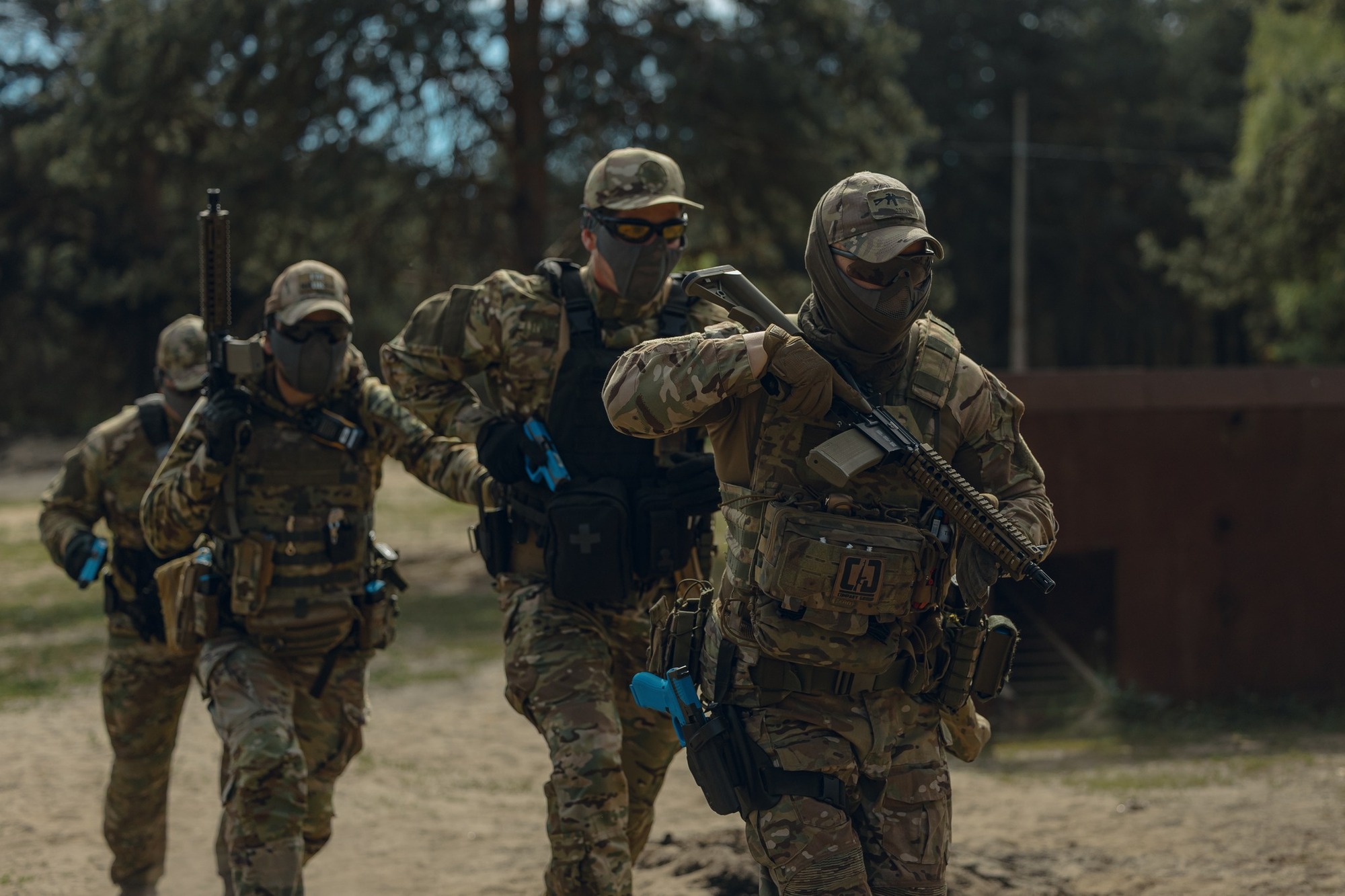
- Firearms training — shooting under conditions close to real-world scenarios
- Tactics — scenarios for neutralizing an attacker in a public place, civilian evacuation, work in confined spaces
- Tactical medicine — providing assistance to the wounded directly at the scene
- Psychological resilience — practicing actions under the sounds of explosions and gunfire, fear control in critical situations
According to the Interior Ministry, the instructors are servicemen from the 1st and 2nd Army Corps of the National Guard — people with real combat experience at the front. This is a fundamental difference from previous formats of internal departmental training.
The problem that training grounds do not solve
Criminologists and former officers interviewed after the incident noted: the flight of patrol officers was not only a lack of skills, but also the absence of a culture of responsibility. Training on an obstacle course forms an action reflex. But the reflex to stay is different: it depends on how the system responds to cowardice and how it encourages bravery in peacetime.
So far, there is no public mechanism for evaluating the new program: neither criteria for unit readiness nor reporting on the results of rotations.
If by the end of 2026 the Interior Ministry does not show measurable results — the number of units that completed the full cycle and statistics on incidents after training — the program risks remaining a response to a scandal rather than a real reform of training procedures.





