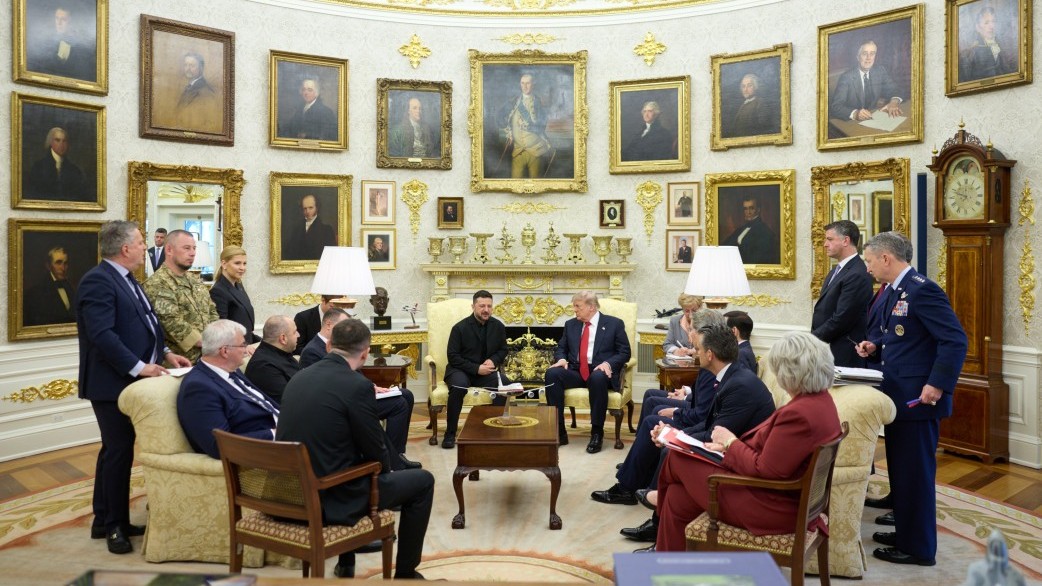
Three meetings between Zelensky and Trump in one summer—this is already a statistic that speaks for itself. Vladimir Dubovik, visiting professor at American Tufts University, noted in a comment to LIGA.net that the dynamics of these meetings are positive, and the "chemistry" between the presidents has noticeably improved.
"First and foremost, I would highly appreciate the positive dynamics of the meetings and better chemistry between Zelensky and Trump," Dubovik said.
Less Kremlin in Washington
The main change, according to the professor, is not in rhetoric but in approach. Washington has begun to understand that mechanically transmitting Russian demands to Kyiv does not bring an end to the war any closer.
"Trump's team finally has a more adequate understanding of how the war is unfolding and relies less on Russian narratives," Dubovik noted.
This is the difference between a mediator who relays Moscow's position as neutral and a mediator who sees that this position is one of the sides of the conflict, not an arbiter.
Putin Won't Stop on His Own
Dubovik holds no illusions about the Russian dictator's motivation. Hoping that Vladimir Putin will voluntarily end the war is futile, according to the professor. The real leverage is asymmetric responses from Ukraine, which require external support, not declarations of peace.
Patriot and Time That Doesn't Exist
One of the key practical issues now is missiles for Patriot systems. Even if Ukraine receives a license to manufacture interceptors, establishing mass production could take several years. This is a case where political will runs up against production capacity—and years on the assembly line cannot be canceled by any meeting at the White House.
Sanctions Bill as a Reserve Lever
An additional tool to pressure Moscow could be legislation to strengthen sanctions against Russia and countries helping it. Whether Trump will use it remains an open question.
"Whether he'll want to use it is unknown. But he will definitely have it in reserve, and Congress will remind him about it," Dubovik added.
Zelensky met with Trump at the White House on July 28 and called the conversation "good." Trump himself, after the meeting, stated that he urged both Zelensky and Putin to end the war—a formulation that still puts both sides on equal footing. Bill Cole, founder of the conservative Peace Through Strength institute, believes Trump's interest in Kyiv has grown precisely because of Ukrainian military technology, particularly drones.
The question for autumn: will the "better chemistry" between the leaders translate into concrete missile deliveries and real use of sanctions leverage, or will it remain mere rhetoric after the third summer meeting?







