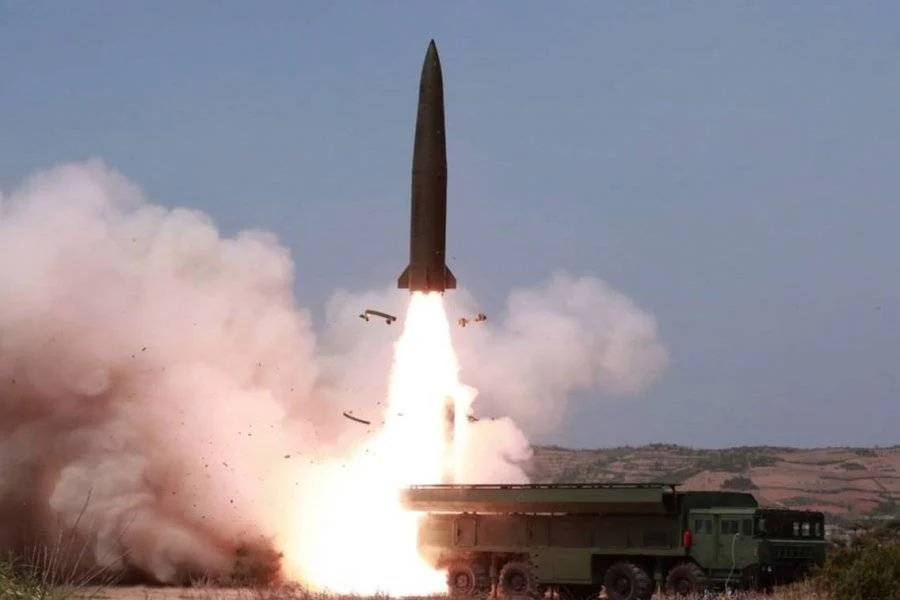
The enemy attacked with Zircon/Onyx missiles from the Kursk region, and with six Iskander-M/S-400 ballistic missiles from the Bryansk region. Drones — Shahed (including jet-powered variants), Gerber, Italmas, and Parody-type decoys — came from six directions: Kursk, Orel, Millerovo, Primorsko-Akhtarsk, temporarily occupied Crimea, and Donetsk.
According to the Air Force of the Armed Forces of Ukraine, as of 08:30, air defense intercepted or suppressed one Zircon/Onyx anti-ship missile, all six Iskander-M/S-400 ballistic missiles, and 125 enemy UAVs — along with units from aviation, air defense missile forces, electronic warfare, and mobile fire groups.
Why "100% ballistics" is not a reason for optimism
The success is real, but the structural problem remains. Patriot remains essentially the only system in Ukraine capable of intercepting ballistic targets, and the shortage of interceptors — both older PAC-3 CRI and newer PAC-3 MSE — is chronic.
"Even if Washington sharply increased deliveries, it would not close the gap with Russian production"
Defence Express, analysis of Patriot shortage
The arithmetic is grim: Russia manufactures up to 113 ballistic, aeroballistic, and hypersonic missiles per month that require interception by Patriot-class systems. Lockheed Martin will produce 620 PAC-3 MSE missiles in 2025 — that is 51-52 per month. And this is a global volume, not just for Ukraine.
Over three years, Ukraine received approximately 600 Patriot missiles in total, while Russia alone fired 250 ballistic missiles in just one winter. Hence the tactic of single interceptions rather than staggered volleys, which are used, for example, in Qatar or Israel.
Composition of the strike: what's new
- Zircon/Onyx from Kursk region — anti-ship missiles adapted for land strikes; one intercepted, the fate of the second being clarified.
- Iskander-M/S-400 — six ballistic missiles from Bryansk region, all neutralized.
- 142 UAVs — the largest component of the strike; 125 intercepted or suppressed by electronic warfare means, the rest hit their targets.
The attack lasted from the evening of June 27 to the morning of June 28 — a two-wave structure characteristic of strikes where drones exhaust air defenses before the missile salvo.
If Washington does not increase monthly PAC-3 MSE deliveries to levels exceeding Russia's ballistic production rate, will Ukraine be able to maintain today's result — "100% ballistics intercepted" — after the next massive attack?







