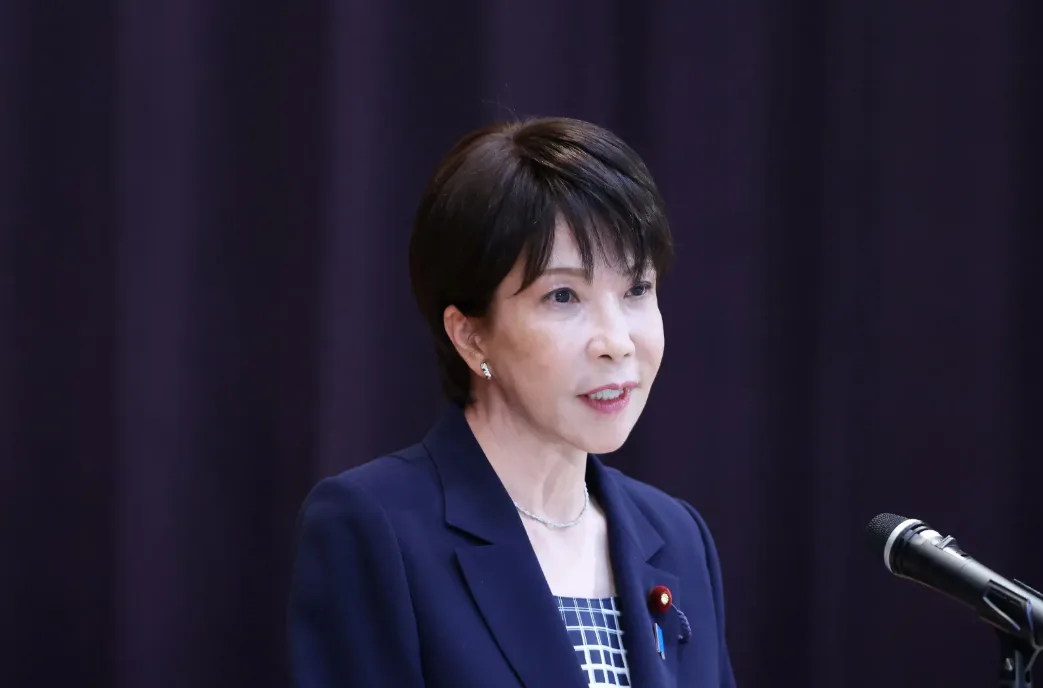
Sanae Takaichi became Prime Minister of Japan only a few weeks ago, and her meeting with Volodymyr Zelensky on the sidelines of the UN General Assembly in New York was her first in this role. For Tokyo, this is not just a protocol episode, but a public test: will the new conservative prime minister change the country's course regarding the war in Ukraine, which previous governments have kept unchanged for over three years.
The answer came immediately and without reservations.
Japan supports Ukraine. This policy will not change. We will continue to work with the international community to support Ukraine and maintain sanctions against Russia.
Why Now
Takaichi is known as a representative of the conservative wing of the Liberal Democratic Party, and her rise to power was observed with caution by many in the West: such politicians in Japan traditionally focus on confrontation with China and North Korea, rather than the European war. The first meeting with Zelensky precisely at the UN forum is a way to quickly settle the question of a possible policy reversal and show G7 partners that a change in prime minister does not mean a change in foreign policy.
Zelensky, for his part, took the opportunity to move the conversation from symbolism to practice. The Ukrainian president thanked Japan for sanctions decisions, energy packages and humanitarian projects, and also discussed with Takaichi the possible strengthening of air defense. Japan has strong technologies to protect lives, especially in air defense, which could help Ukraine survive the next winter if Russia once again rejects negotiations — this is how the Office of the President conveyed the essence of Zelensky's arguments.
Who Benefits
For Ukraine, the benefits are obvious: confirmation from the new Japanese government eliminates the risk that a change of power in Tokyo will become a reason for reviewing sanctions policy or reducing aid. Additionally, Zelensky invited Takaichi to visit Ukraine, including the Kyiv-Pechersk Lavra, which Japan helped restore after a Russian drone strike in June of this year — an invitation that transforms abstract support into a concrete visit and likely new agreements.
For Takaichi herself, this is also a calculated move. Demonstrating reliability before the G7 strengthens her position as a prime minister who can combine tough conservatism on regional issues with predictability on the global arena. This is also important for Japanese business: Kyiv directly invited Japanese companies to participate in reconstruction, and this is a market where Tokyo wants to get ahead of competitors from South Korea or European countries.
Opponents' Reaction and Limits of Support
However, words about policy continuity should not be confused with willingness to expand its format. Tokyo, due to its own legal restrictions, still does not supply lethal weapons to Ukraine, limiting itself to non-lethal equipment, generators and participation in post-war reconstruction planning. This very limit is the main argument of skeptics within Japan, who believe that rhetorical solidarity should not automatically translate into military-technical obligations, especially when the country's main security policy focus is directed at China and Taiwan, not Europe.
An additional political risk is energy-related: Japan has long balanced between sanctions pressure on Russia and its own dependence on imports of liquefied gas, part of which historically came from Russian projects. Any escalation of this issue within the country could turn a loud statement in New York into a subject of internal discussion within just a few months.
Zelensky thanked Takaichi personally and repeated the invitation for Japanese business to participate in Ukraine's reconstruction. The question is only whether the new prime minister's first meeting will be transformed into the first concrete contract for air defense or reconstruction — or will it remain a protocol confirmation of the course that Tokyo has been declaring for over three years.