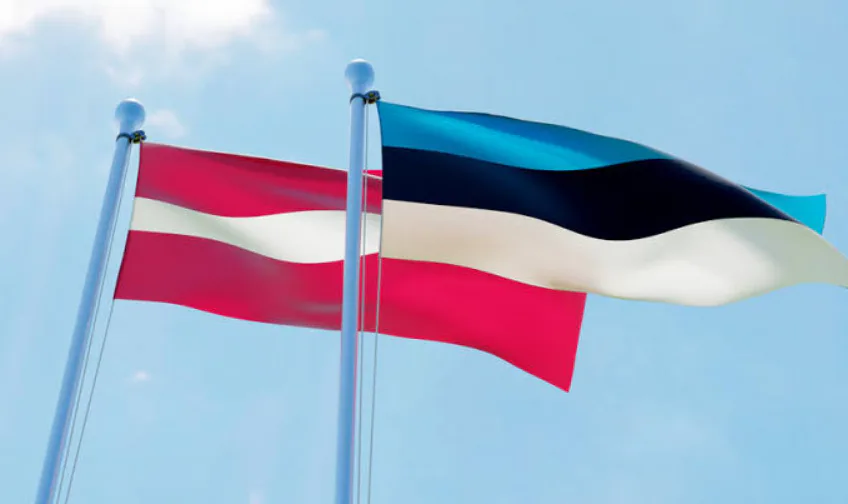
When the European Union renewed sanctions against Russia but removed oligarchs Alisher Usmanov and Mikhail Fridman from the list, it appeared to be a technical detail in updating the register. In reality, however, the decision exposed a weak point in the entire EU sanctions architecture: restrictions that depend on the consensus of 27 countries can disappear not because of changes in Russia's behavior, but due to legal disputes or lobbying pressure. Latvia and Estonia responded to this not with statements, but with concrete actions at the national level.
Ukraine's Foreign Minister Andrii Sybiha announced the decision of the two countries. According to his words, Latvia has already introduced its own sanctions against Usmanov and Fridman, while Estonia is preparing a similar step — Tallinn's intention was announced by Foreign Minister Margus Tsahkna.
A practical mechanism, not a gesture of solidarity
National sanctions are not a symbolic addition to EU decisions, but a separate legal tool that allows a country to block assets, ban entry, and restrict operations of specific individuals regardless of what was decided in Brussels. For Latvia and Estonia, which border Russia and have experience with direct economic pressure from Moscow, this is not a question of abstract principle, but of controlling who uses their financial and legal infrastructure and how.
Usmanov and Fridman are not random figures. Both are among the wealthiest Russians whose assets have long been linked to the Kremlin's political influence in the West. Their exclusion from the EU list opens the way to unblocking real estate, accounts, and corporate stakes in European jurisdictions — precisely what sanctions were meant to prevent.
A call that tests the EU's willingness to act beyond consensus
Sybiha called on other EU member states not to abandon pressure on Russian oligarchs and to introduce national sanctions where pan-European restrictions are being lifted.
We call on all others to follow this example. Russia has not changed its course. We must not change ours either, by continuing pressure on Moscow.
Ukraine's foreign minister separately thanked Latvia's Foreign Minister Baiba Braze and Estonia's Foreign Minister Margus Tsahkna for the decision on national restrictions.
The precedent set by Latvia and Estonia raises a practical question for the rest of the EU: are countries like Germany or France, where Russian oligarchs' assets are traditionally larger in scale and more deeply rooted in the local business environment, ready to follow suit, or will national sanctions remain a tool only for Baltic countries that are most sensitive to the Russian threat.