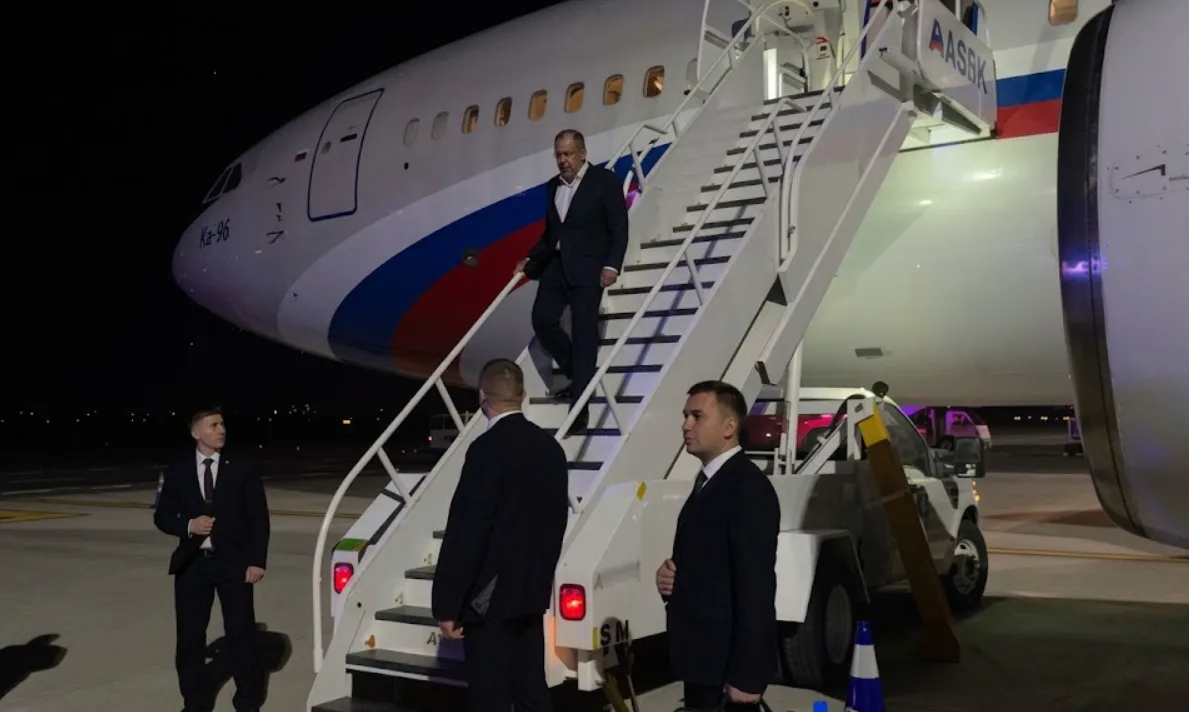
Sergei Lavrov has arrived in New York for the high-level week of the UN General Assembly and will sit down at the negotiating table with US State Secretary Marco Rubio today, September 23, at 09:00 local time. Formally, this is a routine diplomatic meeting on the sidelines of the annual session, where heads of a hundred states cross paths every year. But this time, the timing speaks louder than protocol.
The conversation takes place a day after Donald Trump's meeting with Volodymyr Zelenskyy, at which the Ukrainian side raised the topic of a possible energy truce and asked the Americans to pass this proposal to Russia. In other words, Lavrov will sit down with Rubio not in a vacuum, but effectively right after Washington received a specific directive from Kyiv.
Why Now
The UN high-level week is a rare window when foreign ministers from around the world are physically in one city and can meet without separate visits and protocol complications. For Russia, it is a convenient pretext to organize contact with Washington without appearing as the side that first asks for negotiations. The Russian Foreign Ministry explained the meeting in purely technical terms: Lavrov and Rubio will discuss the interaction of the two countries within the UN, not the peace process as such.
But this very emphasized "technicality" is Moscow's advantage. Russia obtains a bilateral channel with the US amid active diplomatic efforts to end the war, and at the same time can claim that it is only about working issues of the organization, not concessions. This allows Lavrov to keep room for maneuver: to discuss Ukraine without calling it negotiations about Ukraine.
Who Benefits from Keeping Kyiv Out of the Room
The key fact of this week is that Russia has publicly ruled out any three-sided format. Deputy Head of the Russian Foreign Ministry Alexander Alimov stated that no negotiations with Ukraine are planned on the sidelines of the General Assembly and refuted information that Kyiv supposedly proposed such a meeting.
This is a fundamental difference from Trump and Zelenskyy's meeting a day earlier. Moscow clearly prefers to speak directly with Washington, leaving Ukraine in the role of a side whose proposal is simply passed through an intermediary. For Russia, such a structure is advantageous in two ways: it maintains the image of direct dialogue between "great powers" and at the same time deprives Kyiv of the opportunity to voice its own position in the same room.
Such a meeting is being worked on.
Russian Foreign Ministry spokeswoman Maria Zakharova described the likelihood of contact between Lavrov and Rubio on the eve in these words—cautiously, without commitments, leaving Russia the opportunity to withdraw the agreement at any moment if it becomes politically advantageous.
What's Really on the Table
There is currently no confirmation that Rubio will directly pass Lavrov the Ukrainian proposal on energy truce at this particular meeting. The Russian Foreign Ministry officially emphasizes a different agenda—the state of Moscow and Washington relations and cooperation at the UN, where, according to the ministry, there is untapped potential.
This discrepancy is worth noting: Kyiv and Washington spoke about a concrete practical step—a pause in strikes on energy infrastructure, while Moscow frames the meeting as general dialogue about bilateral relations. If these two frames do not converge in one conversation, the truce proposal risks remaining a topic for the next round rather than the subject of this meeting.
Lavrov will remain in New York for the entire high-level week—the general debate of the 81st session of the General Assembly runs from September 22 to 26, and the session concludes on September 28. This means that even if today's meeting does not produce a breakthrough, the parties have several days for repeat contacts without new foreign trips.
The question for the coming days is simple: will Russia agree to discuss a specific pause in strikes on energy infrastructure, or will it confine itself to general words about "cooperation potential" at the UN, leaving the practical solution for later.