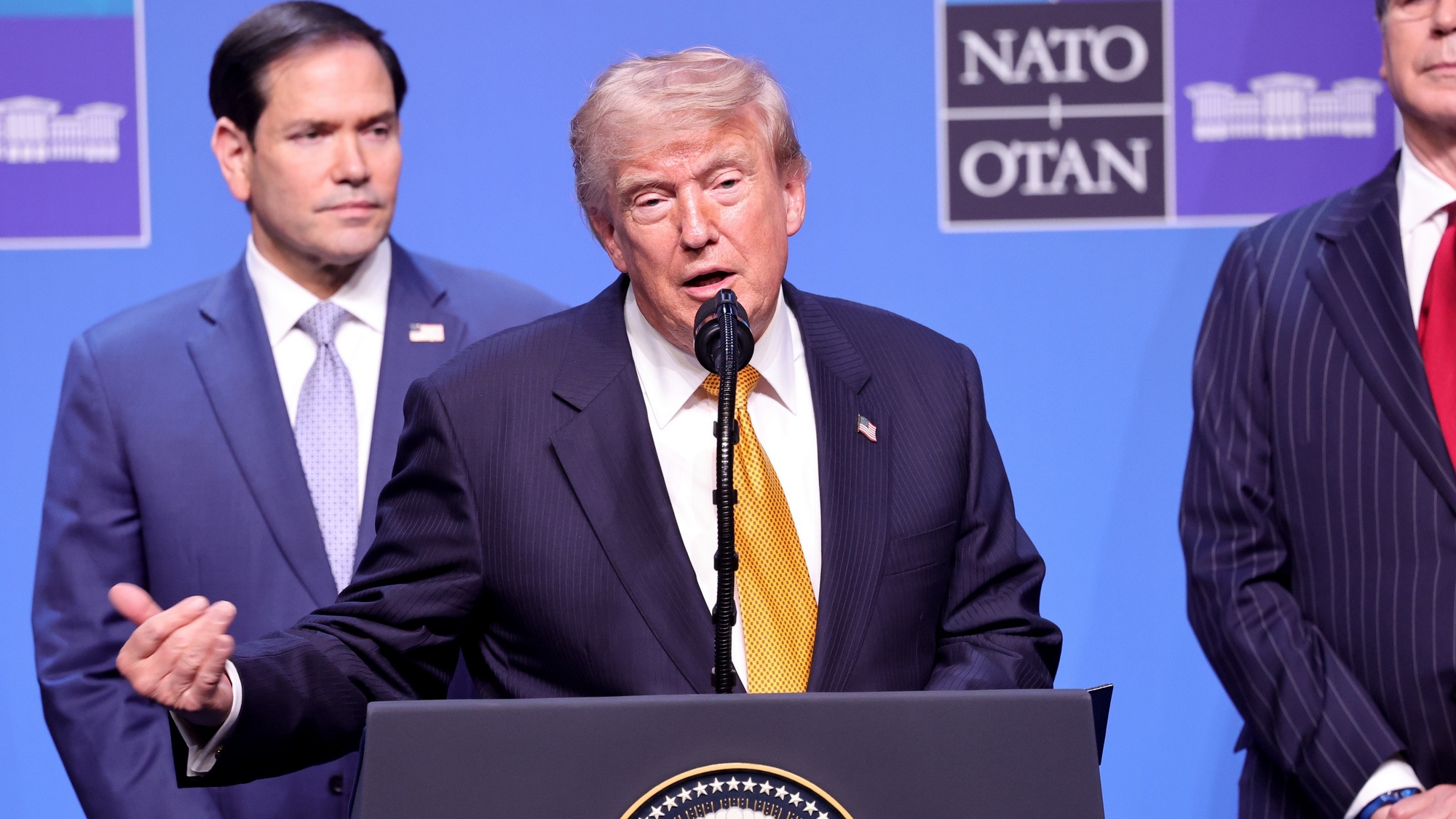
A tanker captain at the entrance to the Strait of Hormuz doesn't ask politicians whether the passage will open "very soon" — he waits for a specific answer from the dispatcher about whether he can enter the gulf. It is precisely at this level of detail that Donald Trump's and Marco Rubio's statements diverge: one talks about a deal in the near future, the other says there is no deal yet.
Two statements in one day
In a Fox News commentary, Trump described the negotiations as "very good" and promised the strait would open "very soon," adding that he was ready to "strike hard" in response to Iran backing away from agreements. Rubio, speaking on CNN, chose a different tone: talks are progressing, but there is no final agreement yet on free passage for vessels, and both sides merely hope to conclude one in the near future.
This is not a contradiction, but a difference in genre. Trump speaks in the language of intention — a signal to markets and Tehran. Rubio speaks as a negotiator for whom an agreement exists only at the moment of signature, not at the moment of announcement.
What the agreement is missing
The Secretary of State separately emphasized that the issue of safe passage for vessels and Iran's denuclearization are formally different tracks, although connected in the overall dialogue. This split is the main technical knot: if Tehran ties the opening of the strait to concessions on the nuclear issue, while Washington tries to separate the topics, the agreement risks getting stuck at the intersection of two agendas.
Previously, the parties had already tried to resolve the issue of vessel passage through a separate mechanism — a special "hotline" between the United States and Iran that was supposed to guarantee safe passage of ships without a formal treaty. At that time, CNN recalled, the Strait of Hormuz was one of Tehran's main leverage points throughout the negotiation process, and on June 20, Iranian military command threatened to completely block this important maritime route.
There is also a purely financial snag: according to U.S. Finance Minister Scott Bessent, the key question now is whether Iran will be allowed to charge a fee for passage through the strait. Until there is an answer to this, "free passage" remains a formulation, not a tariff in a contract.
A history of broken promises
The cycle of "talks are progressing — a deal is close — the deal isn't signed" has been repeating for more than a month. After Trump's two-week campaign of airstrikes on Iran ended, Tehran refused to even acknowledge the need for new talks: Iran claimed it had not asked the U.S. to resume negotiations and continues to control the Strait of Hormuz. Only later did the position soften — Iran has already demonstrated flexibility and no longer demands full control over traffic in both directions through the strait.
The material also notes that Trump previously named a specific date for full opening — August 4, which passed without confirmed results. This is the same pattern: a loud presidential announcement, then silence about implementation, then a new date.
What this means for the market and for fact-checking
Participants in oil and gas markets respond not to rhetoric, but to the fact of tankers passing through without escort and without incidents over a certain period — this is the only measurable indicator of compliance. Until such a confirmed period exists, any "agreement" remains on paper as an expression of intent, not in the port.
The question for the coming weeks is simple: will a public document appear with a specific mechanism — who guarantees passage, whether a fee is charged, how compliance is verified — or will another "very soon" dissolve again in a new round of negotiations.







