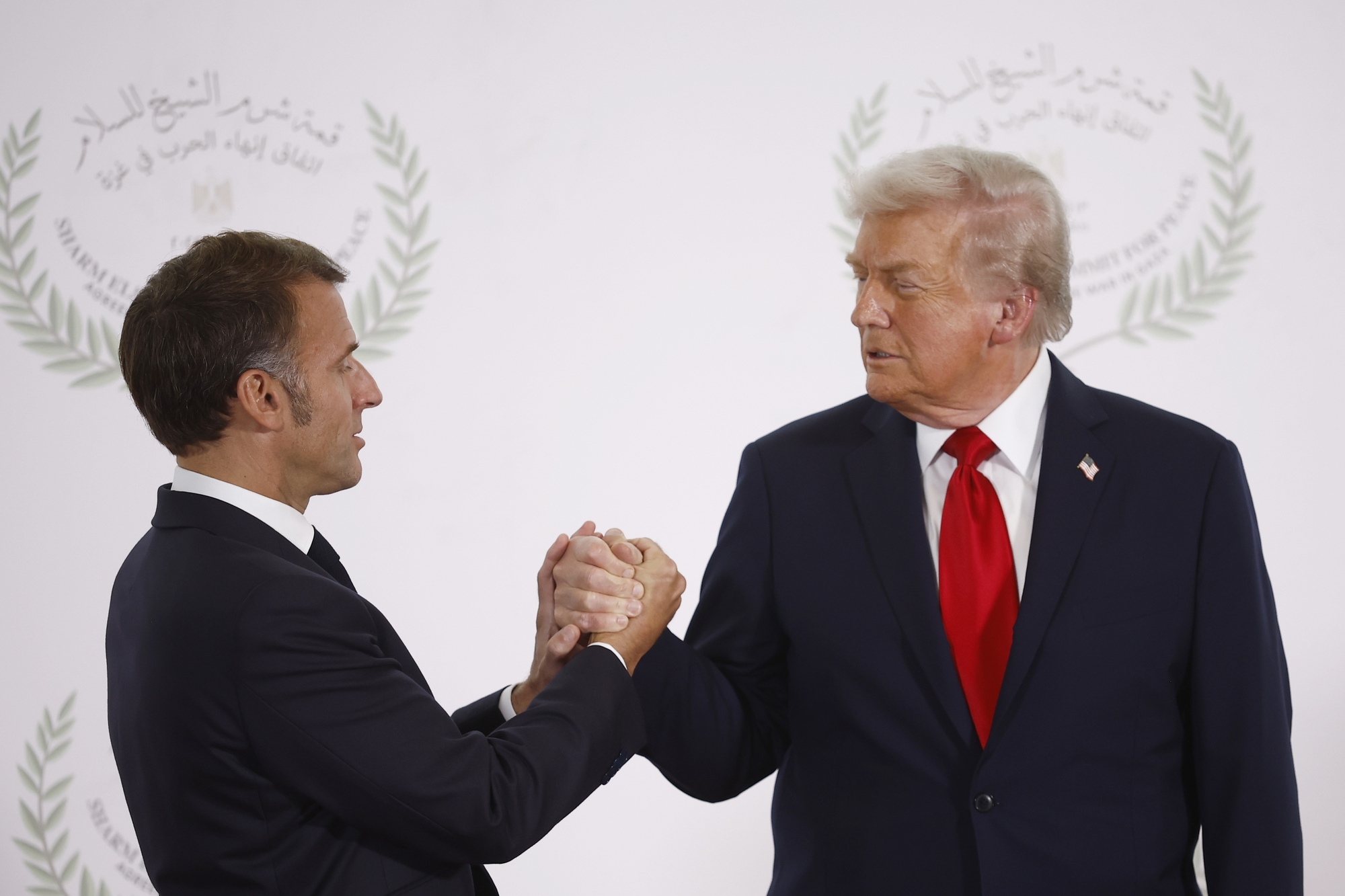
The date of the G7 summit in Evian-les-Bains has already been changed once — from June 14–16 to June 15–17. The reason is mundane: Trump is organizing a UFC fight at the White House for his 80th birthday on June 14, and Paris decided not to compete. Now, according to Reuters, Macron has gone further — inviting the American president to a private dinner at the Palace of Versailles the day after the summit, on June 18, and without other G7 leaders.
Diplomacy Through Symbolism
According to two Reuters sources, the invitation was meant to emphasize shared Franco-American history ahead of the 250th anniversary of the United States on July 4. Versailles is the place where the Peace Treaty was signed in 1783, cementing America's independence from Britain. The symbol was chosen deliberately.
"Macron very much wants Trump to go, he is begging him to go"
— a senior White House official, cited by Reuters
But the same official added: Trump has not yet decided whether to participate even in the G7 summit itself — let alone Versailles.
What Lies Behind the Symbolic Dinner
The diplomatic courtship is taking place against a backdrop of real numbers. In July, Trump announced the introduction of 30% tariffs on European goods from August 1 — higher than both the initial 20% and the temporary pause at 10%. EU Trade Commissioner Maroš Šefčovič called such a rate "absolutely unacceptable": "This is a level that effectively prohibits any trade."
European Commission President Ursula von der Leyen responded by announcing preparations for "proportional countermeasures" on American goods worth up to 93 billion euros — if no deal is reached by the end of August.
What This Costs Ordinary People
The ECB cut rates for the seventh consecutive time in June — to 2.0%, directly naming trade uncertainty as a key factor. The eurozone growth forecast has been revised downward: 0.9% in 2025 instead of the previously expected 1.1%. According to estimates by economists from the Bruegel Institute, a no-deal scenario results in a reduction of EU GDP by 0.3 percentage points — Germany is down 0.4%. For comparison: COVID cost Europe 5.6% of GDP, the energy crisis following Russia's invasion — 2.4%. The tariff war so far looks less destructive, but only if it doesn't escalate into a full-scale one.
At a mini-summit of G7 trade ministers in Paris, U.S. Trade Representative Jamieson Greer already signaled Washington's approach: "The United States views trade policy primarily as a domestic matter." In other words, no multilateral compromise within G7 should be expected — only bilateral agreements, as has already happened with Britain.
Macron's Bet
French strategy is built on the assumption that personal contact with Trump matters more than institutional mechanisms. Versailles is not diplomacy, but attention management: to ensure the U.S. president comes, feels the grandeur, and leaves in a mood favorable for negotiations on tariffs and security. Previous experience — inviting Trump to the Paris military parade in 2017 — once worked.
If Trump doesn't make it to Evian, the summit will turn into a forum of seven countries without the most influential participant — and Macron will find himself in a situation where his bet on personal diplomacy has lost to the bet on being ignored. The question is whether the EU will sign a bilateral agreement with the US by August 1 — or next time it will have to negotiate with 30% tariffs as the new normal.





