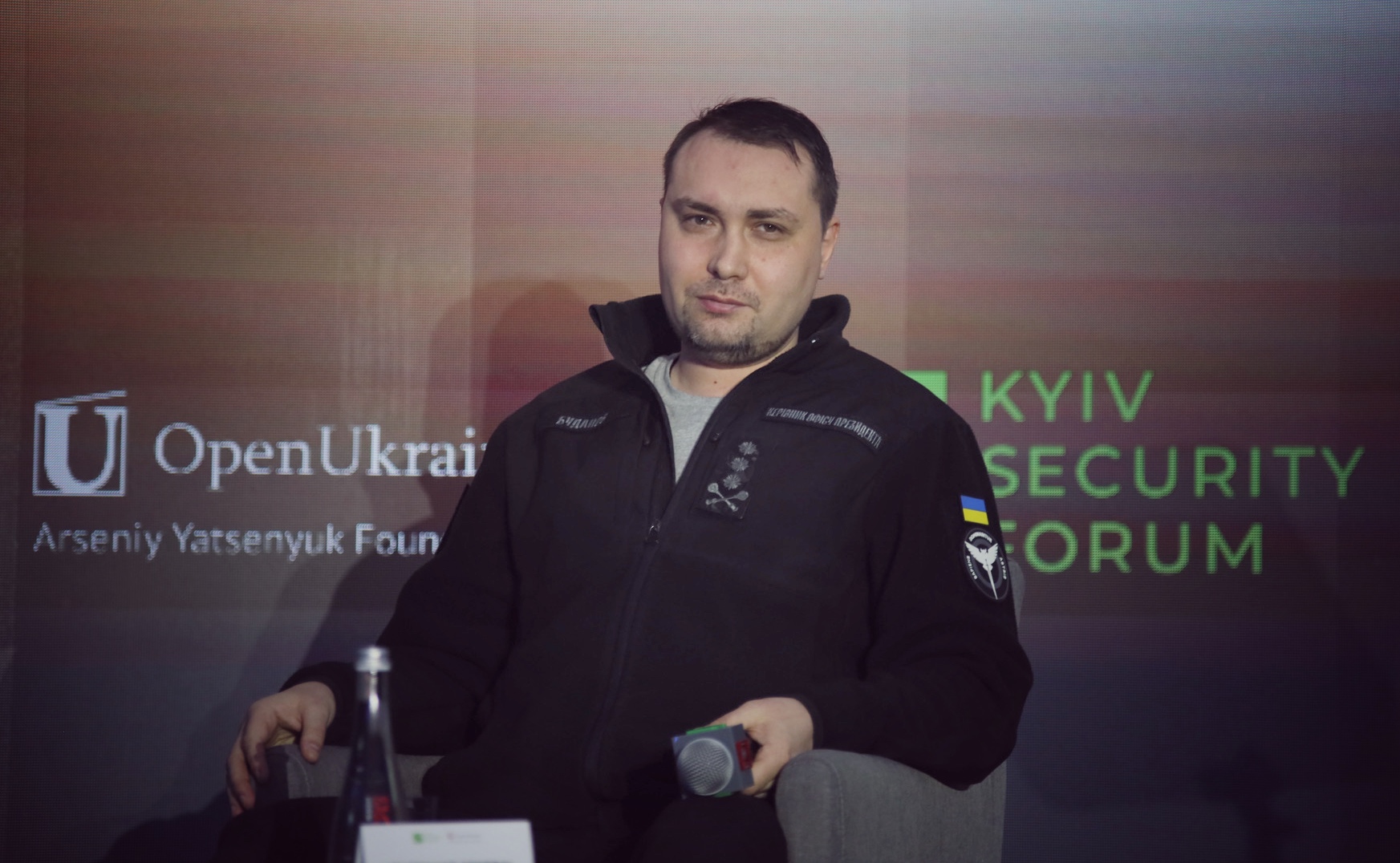
In March 2022, a Russian delegation came to negotiations in Istanbul with a full list of demands: "denazification," "demilitarization," recognition of Crimea, independence of the "LPR/DPR," state status for the Russian language. Three years later, at the Kyiv Stratcom Forum on May 21, Head of the Presidential Office Kyrylo Budanov articulated the Kremlin's current "minimum": Ukraine's non-alignment and non-nuclear status.
How Moscow packages retreat as "victory"
Budanov described the mechanism, not merely stating a fact. According to him, each setback on the battlefield forces the Kremlin to seek a new rhetorical framework for its own society.
"Time passes, and under the influence of the unpleasant reality they face, they have to find answers for their society. And each time this bar is lowered. Everyone sees this."
Kyrylo Budanov, Kyiv Stratcom Forum, May 21
The new demand—non-aligned and non-nuclear status—appeared approximately a week ago, he noted. According to Budanov, this is how Moscow prepares its own citizens to perceive it as a partial success: "We will achieve that they will be non-aligned. That's also a victory."
Front lines: slowdown that is not a halt
The rhetorical retreat coincides with real difficulties on the battlefield. According to analysts at Black Bird Group, Russian advance rates over the past three months represent the worst performance since 2023. ISW has documented that in April, occupiers lost some previously captured territory for the first time since August 2024 following Ukrainian counteroffensives.
However, the picture is ambiguous. Russian command, according to Financial Times reports, informed Putin of plans to capture the Donbas by autumn—based on the thesis of Ukrainian army exhaustion. Both sides are currently relying more on military pressure than on diplomatic concessions.
- March 2022: Russia demands "denazification," "demilitarization," recognition of annexations, state status for Russian language
- May 2025: Kremlin through American intermediaries demands remainder of Donbas + control over four regions
- May 2025 (new framework): non-alignment and non-nuclear status as "sufficient outcome"
Why this is more than just propaganda
The shift in rhetoric has a practical dimension: if Moscow publicly "settles for" Ukraine's neutral status, it creates pressure on international mediators—primarily the USA—to legitimize precisely this framework as the basis for negotiations. Budanov emphasized that Ukraine's very functioning as a state already represents a failure of the original Russian plans.
The Istanbul negotiations in May 2025 concluded without results—the Ukrainian side called Russian demands "unacceptable." According to Radio Free Europe, the demands involved withdrawal of Ukrainian forces from four partially occupied regions.
If Russian advance rates remain minimal through the end of summer, the next question will be whether another "lowered minimum" from the Kremlin emerges by autumn, and whether it will be minimal enough for one of Ukraine's allies to recognize it as an acceptable basis for pressuring Kyiv.





