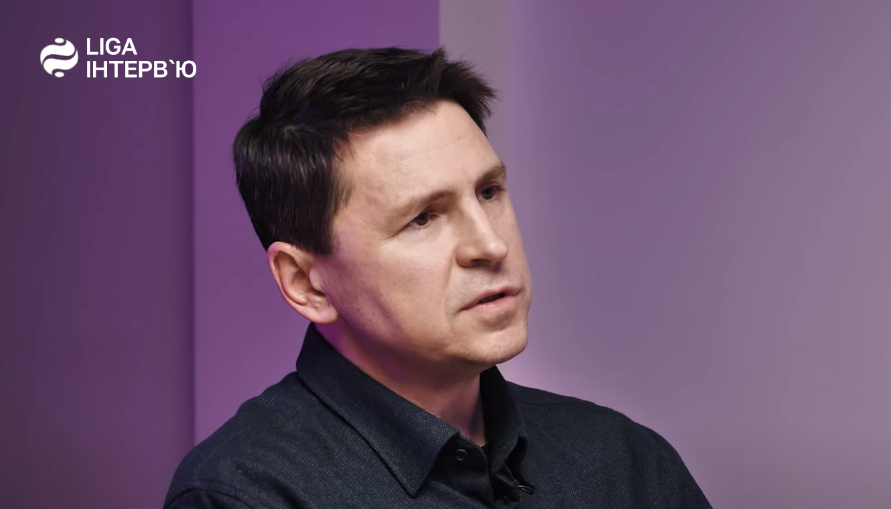
Mykhaylo Podoliak, advisor to the Office of the President, gave an interview to LIGA Editorial, where he openly acknowledged for the first time an unpleasant pattern for the authorities: leaders who win wars typically lose the first post-war elections. Churchill in 1945 is the most striking example. De Gaulle, Roosevelt (posthumously replaced by Truman) — the logic is the same. The electorate switches from the question "who saved us?" to "who will rebuild?" after victory.
When — and under what conditions
Podoliak outlined the earliest realistic horizon: spring 2027 — and only if three consecutive conditions are met.
- Stable ceasefire. Not a "pause" or "quiet regime," but a fixed armistice: an election campaign is incompatible with rocket strikes.
- Three months of technical preparation after the ceasefire — registration, logistics, millions of internally displaced persons and refugees abroad.
- External financing. Podoliak considers the cost of elections under wartime logistics an unacceptable burden on the state budget.
"This is only possible three months after a stable ceasefire. But this is only under conditions of systemic pressure on Putin."
Mykhaylo Podoliak, advisor to the Office of the President, comment to Apostrophe TV / LIGA Editorial
Why now — and who benefits
The statement did not appear in a vacuum. In December 2025, the Rada began preparing a draft law on elections during wartime, and Zelensky publicly appealed to parliament to work on constitutional amendments. Pressure on the legitimacy of the president after the expiration of his formal term is mounting — especially from some Western partners and internal opposition.
Podoliak's acknowledgment of the "Churchill effect" is not weakness, but a preventive frame. It normalizes in advance the possible defeat of Zelensky in the elections, removing the stigma of catastrophe from it: "this happens after great wars." At the same time, it is a signal to potential competitors — Zaluzhny, Budanov, regional politicians — that the OP is fixing electoral risk and preparing for it publicly.
Zelensky, for his part, has repeatedly stated his readiness for elections — in February 2024, he predicted victory; in September 2025, he spoke of readiness to leave office after the end of the war. But each time he returned the conversation to the same point: no elections under fire.
Locked variable
The entire structure rests on one thing — ceasefire. Podoliak directly links it to pressure on Russia: if Ukraine systematically increases strikes on Russian export infrastructure, Putin, by his logic, will seek a way out himself. If not — the "window of opportunity" that Moscow opened for itself in 2026 will continue.
There will definitely be no elections in 2026, according to Podoliak. Spring 2027 — only if a stable armistice emerges by the end of 2026. Until then, the date remains a conditional marking on the map, not a schedule.
The question that the OP is avoiding for now: if the "Churchill effect" is truly inevitable, does the authorities have a plan for defeat — and who will then conduct negotiations about post-war reconstruction?





