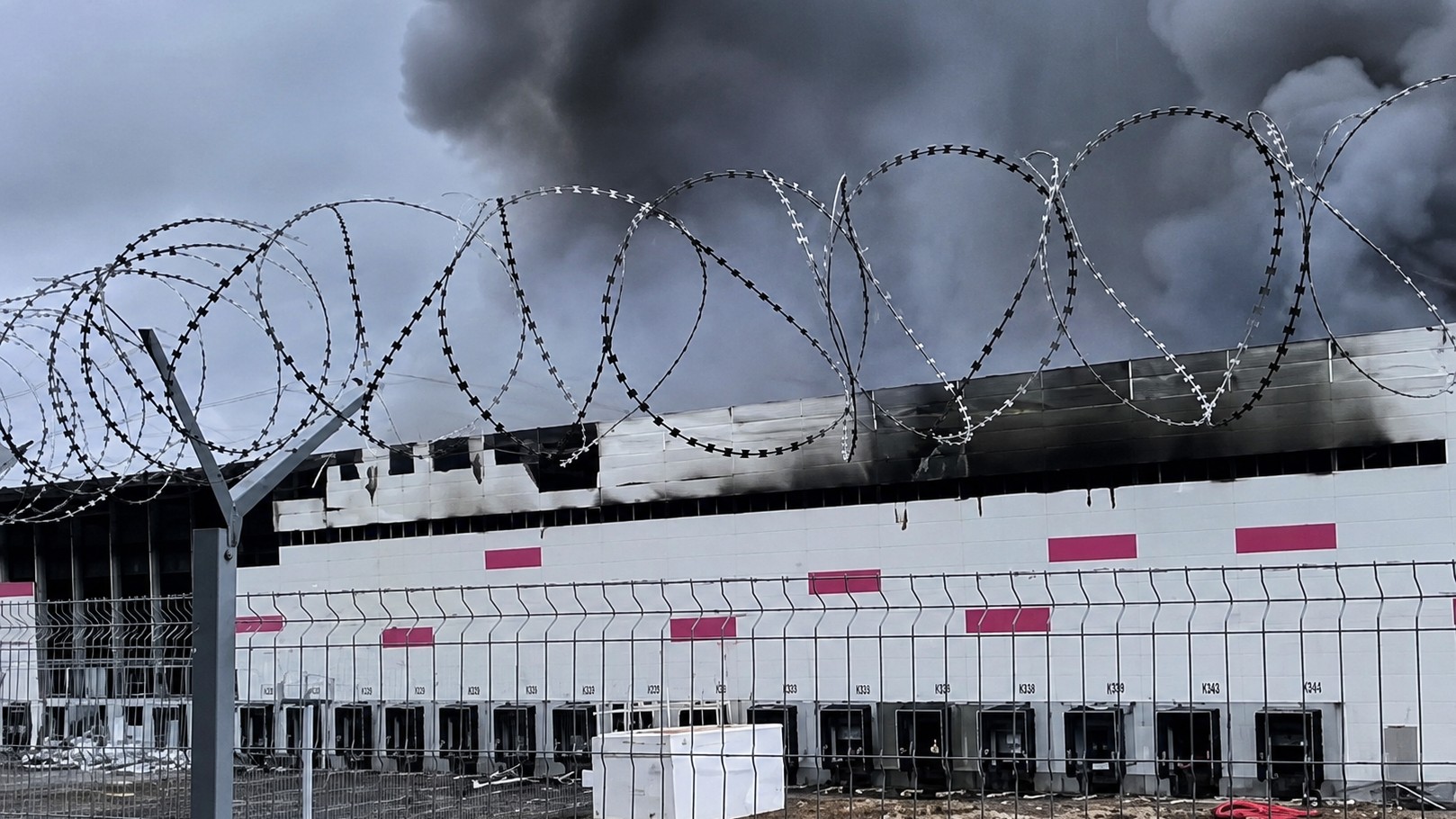
On the night of July 30, drones flew once again to where Russians had become accustomed to receiving packages. Udmurtia, Penza, Perm Krai – three regions, three burning Wildberries logistics centers in a single night. Robert "Madyar" Brovdi, commander of the Unmanned Systems Forces, commented on this with characteristic dark humor: "The package won't arrive. Neither by drone nor by vibrator".
But behind the joke lies a thoroughly pragmatic calculation. Why has Russia's largest marketplace become a target for long-range drones for the third consecutive month, when it would seemingly make more sense to strike refineries or military factories?
Dual-Use Logistics
Wildberries is not simply a package pickup point. It is an extensive network of sorting centers, warehouses, and transport hubs covering almost the entire territory of Russia. Such infrastructure is the ideal foundation for military logistics: fast delivery, regional coverage, ready-made routes, and established capacity.
The company and its founder Tatiana Kim have been under Ukrainian sanctions since 2021 – long before the full-scale invasion. The Ukrainian side insists: the strikes are not directed at civilian business, but at nodes used to supply the army.
One Strike – Multiple Effects
The practical benefit of such a strike is twofold. First, it causes real damage to logistics capabilities that could theoretically serve military supplies. Second, it creates psychological pressure on tens of millions of ordinary Russians for whom Wildberries is an everyday part of life, like Russian Post or the subway.
When a package doesn't arrive not due to a system malfunction but because of a burning warehouse thousands of kilometers from the front, war ceases to be a television picture and becomes a personal inconvenience. This is precisely the type of impact aimed at by the 40-day operation announced by Zelenskyy on June 25.
Not a One-Time Action, But a Systemic Campaign
Notably, this is the second strike on Wildberries in two days – the previous night, July 29, drones attacked the company's warehouse and an oil refinery near Ryazan. On July 26, Zelenskyy updated the list of priority targets for long-range strikes, and the marketplace's logistics centers apparently made that list not by chance.
Military analyst Alexei Kopytko sees broader logic in this: according to his assessment, the Kremlin is willing to "sacrifice" logistics around Moscow in order to continue the war, and as winter approaches, energy facilities may come under fire.
What's Next
The question is not whether such strikes will be repeated – judging by the dynamics of recent weeks, this has already become regular practice. The question is whether the accumulation of such "everyday" losses will force Russian society to ask its authorities uncomfortable questions about the price of war that it is paying even while simply waiting for a package.