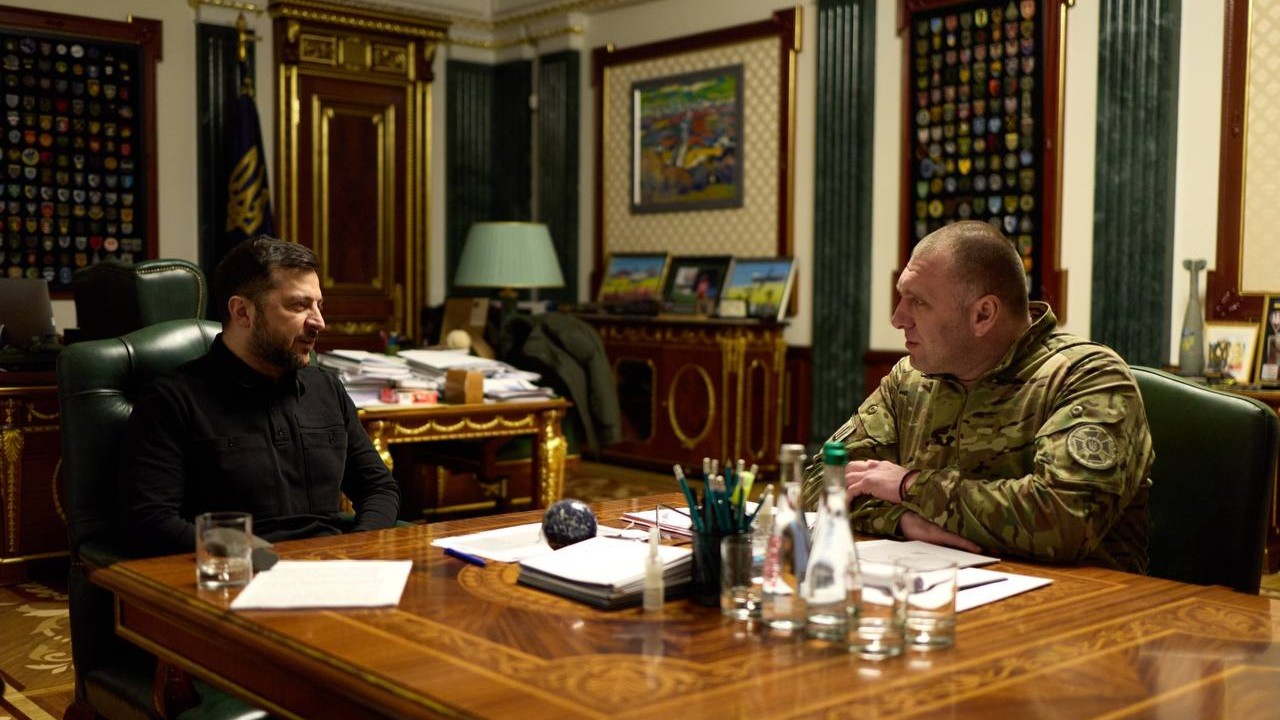
What happened
President Volodymyr Zelenskyy held meetings with the former head of the SBU (Security Service of Ukraine), Vasyl Malyuk, who "continues to work in the agency," and with the acting head of the SBU, Yevhen Khmara. According to the head of state, reports were heard and new combat operations were approved.
"Report from Vasyl Malyuk. We continue preparing our asymmetric operations against Russia"
— Volodymyr Zelenskyy, President of Ukraine
"The internal transformation of the Service continues as well — precisely so as to strengthen our state"
— Volodymyr Zelenskyy, President of Ukraine
In addition, the SBU's first deputy head Poklad reported the capture of an occupier suspected of executing Ukrainian prisoners of war in the Kursk region — this was also discussed during the meeting.
Why it matters
Asymmetric operations are not only high-profile actions; they are a set of measures aimed at undermining an opponent's logistics, arms infrastructure and ability to operate without security intervention. For the reader, this means the state is focusing on measures that can produce effects with relatively lower resource expenditure and in a shorter time frame.
The statement that the SBU and other agencies are "fully resourced" is a two-level signal: internal (support for operations) and external (strengthening positions in talks with partners and deterring the enemy).
Consequences and risks
Approval of new operations increases effectiveness at the front, but may heighten geopolitical tension. Security analysts note that such decisions require high coordination with defense and diplomatic instruments to avoid risks to civilian infrastructure or escalation directed at Ukraine.
What next?
It is now important to monitor two vectors: how these operations will affect the operational situation at the front and how partners will respond in the form of additional support or diplomatic steps. This is a moment when declarations must turn into concrete resources and procedures.
Without unnecessary pomposity: the decision shows that leadership is betting on a combination of intelligence, operational action and internal transformation of the services — part of our strategic advantage will depend on this.





