On July 17, Volodymyr Zelensky held a meeting with diplomats and officials from the Office of the President and announced five concrete steps to restore Ukrainian-Polish relations. Among them are the disclosure of all archives of the Security Service of Ukraine and the Foreign Intelligence Service regarding tragic events of the 20th century in Volhynia, expansion of permits for search and exhumation work jointly with the Polish side, new diplomatic decisions, and expansion of the capabilities of the Ukrainian Institute of National Memory.
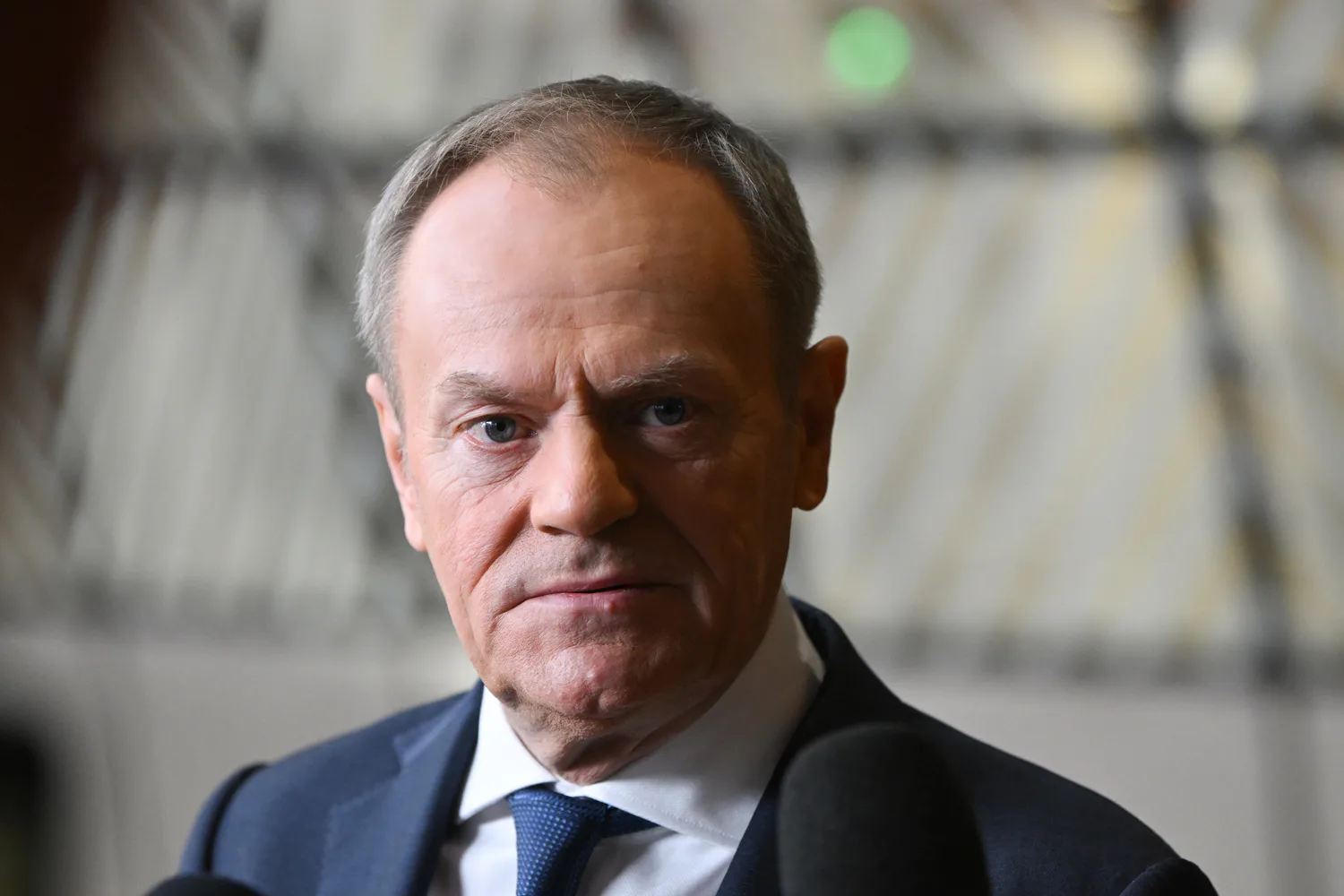
Donald Tusk's reaction was not long in coming.
I receive the words and decisions of Volodymyr Zelensky regarding relations between our states with satisfaction and hope, which should be based on mutual respect and truth. We are ready for serious and friendly dialogue on issues that unite us and those that divide us today.
— Donald Tusk, post on X network
Why now
Polish-Ukrainian relations fell to their lowest point during the full-scale war after Zelensky signed a decree in May assigning the SSO unit the honorary name "in the Name of the Heroes of the UPA." Polish President Karol Nawrocki responded by stripping Zelensky of the Order of the White Eagle — Poland's highest state decoration. Ukrainian officials responded by returning their Polish awards. On July 11, on the anniversary of the Volhynia tragedy, anti-Ukrainian marches took place in Warsaw, and polling showed that 59.7% of Poles oppose Ukraine's accession to the EU.
Against this backdrop, Zelensky's steps are not a spontaneous gesture. This is an attempt to stop the erosion of support at a time when Poland, as a neighboring country and EU member, is capable of actually influencing the pace of negotiations over Ukraine's accession to the European Union.
Two poles of Warsaw
Tusk and Nawrocki represent different political camps, and their divergence on the "Volhynia question" is not accidental but structural. Nawrocki, supported by the PiS party and connected to Poland's Institute of National Memory, consistently escalates the conflict — up to statements that Poland may block Ukraine's accession to the EU. Tusk, meanwhile, has publicly warned that the Polish-Ukrainian conflict is a "strategic mistake that will cost both sides," and is trying to minimize losses in talks with European partners.
Polish Foreign Minister Radosław Sikorski took a middle position: criticizing both Zelensky for the UPA decision and Nawrocki for "personal humiliation of the President of Ukraine."
What exactly Kyiv proposed — and what it didn't say
- SBU and SZR archives on Volhynia — the most sensitive point: documents could change or confirm existing narratives from both sides.
- Expansion of exhumation work — a practical step that the Poles have long demanded as a condition for normalization.
- New diplomatic decisions — deliberately vague wording: no details about what exactly and on what timelines.
- Expansion of inter-societal dialogue — the format is not specified.
- Strengthening of UINP — an institutional step, without specific metrics.
The Ukrainian Foreign Ministry, meanwhile, issued a caveat: Kyiv is ready to respond if Poland takes unilateral actions capable of damaging bilateral relations. In other words, opening the archives is not an unconditional concession, but a proposal for a symmetrical step.
Who benefits and why
For Zelensky, restoring relations with Warsaw is primarily a matter of European integration: Poland is one of the key advocates for Ukraine in the EU, and its passivity or hostility directly slows down the negotiation process. For Tusk — an opportunity to consolidate the image of a pragmatic European leader while at the same time weakening the position of Nawrocki, who is building his own electoral capital on anti-Ukrainian rhetoric. For Nawrocki and PiS, any "reconciliation" without harsh Polish conditions is a defeat they are not ready to admit.
Notably, former Prime Minister Mateusz Morawiecki was quick to call Tusk's response "sycophantic politics" and demanded refusing to support talks on Ukraine's EU accession without agreement on "historical truth."
If the Polish side responds to the opening of archives with a concrete permit to expand exhumations by the end of summer — this will become the first measurable test of whether the current warming is a technical restart or just another exchange of signals in front of the cameras.







