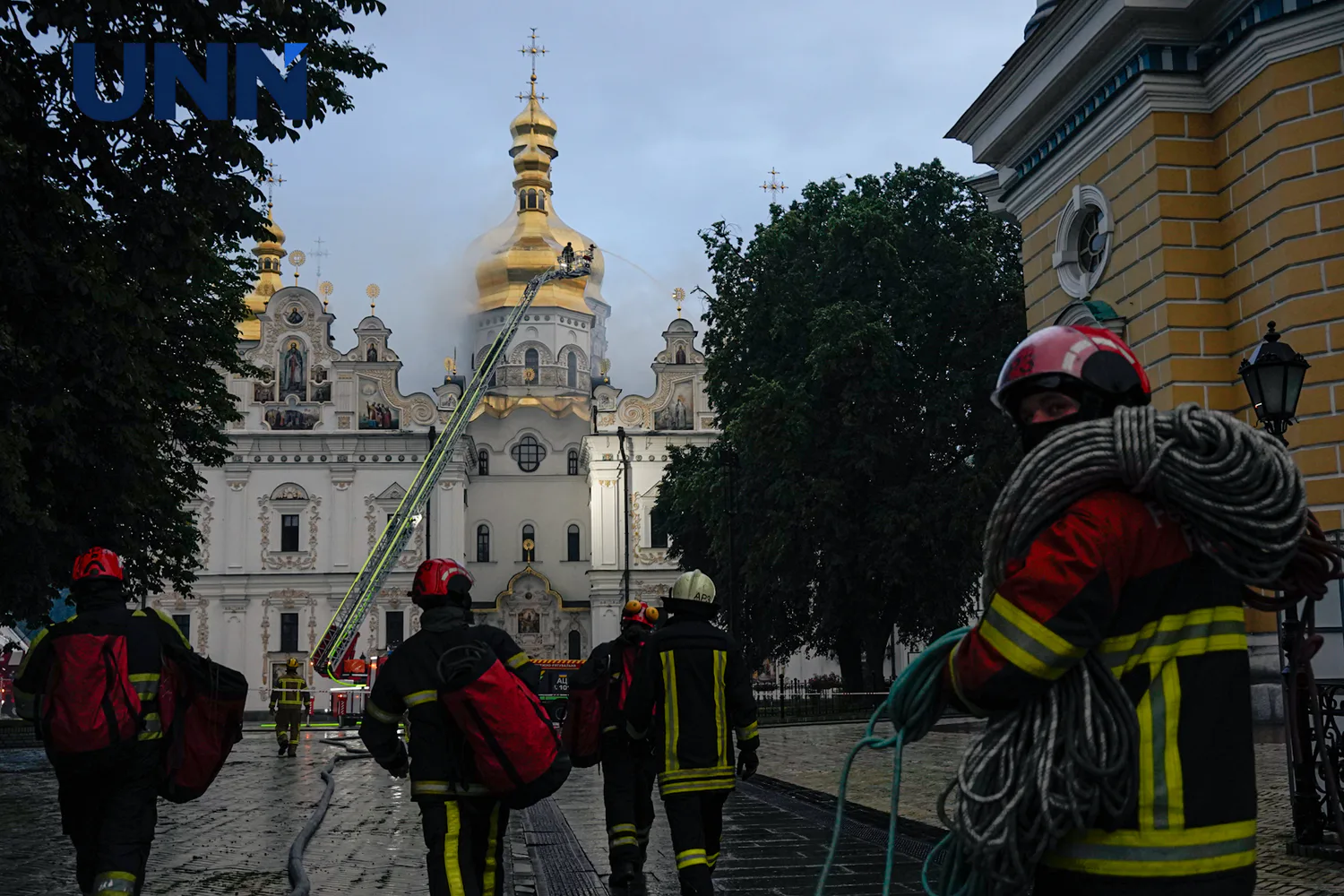
Following a Russian attack on the Kyiv-Pechersk Lavra, Ombudsman Dmytro Lubinets appealed to international organizations demanding a response to the systematic destruction of Ukraine's religious heritage. "The truth about faith is measured not by words, but by deeds," he wrote, directing this message primarily at those international structures that have so far limited themselves to statements.
This is not an isolated incident. As of now, 742 destroyed or damaged religious sites have been documented — churches, monasteries, mosques, synagogues across the country. The Lavra is one of the most symbolic, but far from the only one.
What is happening to cultural centers
Strikes on religious sites are not random. Human rights defenders are recording a pattern: attacks are concentrated in cities with dense historical construction and active cultural life. The Lavra as a UNESCO World Heritage site sends a direct signal — international status is not protection.
Lubinets emphasizes that appeals to international organizations are not rhetoric, but an attempt to establish the responsibility of specific states and structures that have signed conventions on the protection of cultural values during armed conflicts. The 1954 Hague Convention directly prohibits attacks on cultural sites, yet the mechanism for holding perpetrators accountable remains essentially non-functional.
A scale that is hard to imagine
742 sites — that averages to more than one destroyed or damaged place of worship for each day of full-scale war. Behind this figure lies not just architecture: communities that have lost spaces for gathering, funeral rites, and psychological support in the conditions of war.
A separate dimension is the occupied territories, where according to testimonies from local residents and monitoring mission data, religious communities face pressure, and clergy who refuse to come under the jurisdiction of the Moscow Patriarchate are persecuted.
An appeal without guarantees
Lubinets sent an appeal to UN and OSCE structures. The problem that he himself acknowledges: international organizations have tools for documentation, but not enforcement. Resolutions are adopted, reports are published — concrete sanctions for the destruction of cultural heritage have yet to be applied to any of those responsible.
This raises a practical question: if 742 documented cases have not become grounds for concrete legal consequences, what quantity is sufficient — and does a mechanism exist at all that could determine it?