On August 5, 1914, at an intersection in Cleveland, Ohio, a device appeared that would forever change city streets — an electric traffic light with two signals, red and green, that sounded loudly when switching. Today, when automated intersections manage the movement of billions of people daily, it is hard to imagine that once traffic regulators stood on every corner manually raising "stop" and "go" signs.
But the traffic light has an unexpected competitor for attention on August 5 — Croatia, for which this date means not technical progress, but the end of war. Victory and Homeland Gratitude Day is celebrated in honor of Operation Storm in 1995, when the Croatian army liberated Knin and ended the separatist Republic of Serbian Krajina. This is a state holiday with military parades and official speeches — an example of how a country transforms the date of the end of hostilities into an annual reminder of the price of restored territorial control.
The practical side: why a traffic light is about life, not technology
According to official WHO statistics, compliance with traffic signals remains one of the simplest and cheapest ways to reduce road fatalities. In cities where traffic lights are synchronized and functional, the number of accidents at intersections falls several times compared to unregulated areas. So August 5 is not just a date for reference books, but an occasion to check: whether the traffic lights in your area are working, whether they are lit during power outages, and whether your city has backup power for critical intersections.
Two calendars, one land
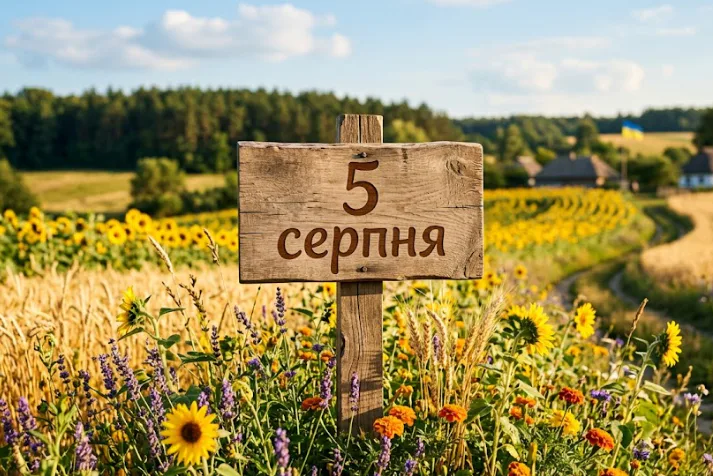
In Ukraine, this day is divided between two traditions. According to the new calendar, believers prepare for the Transfiguration of the Lord, and in folk tradition August 5 was called "Eustignei the Harvester" — a time when peasants went to the fields to "call the stubble," begging the earth to preserve its strength for the next harvest. The traditional dish was bread with salt and raw onion — a simple remedy that was believed to protect against autumn colds.
According to the old calendar, August 5 is the feast of the Pochaiv Icon of the Mother of God, one of the most venerated miracle-working icons in Ukraine, traditionally considered a symbol of protection from enemies. This same day was called "Trokhy the Sleepless" — because of the heaviest phase of harvesting, when people worked from dawn to dusk, and "Kalinnyky-Malinnyky" — because of the season for gathering berries for winter stores.
When Croats on this day recall how they liberated Knin, and Ukrainians — ask the earth for harvest and the protection of the icon from enemies, the difference in scale fades: both peoples on the same day speak of one and the same thing — the right to preserve their land.
The question is simple: how many more pairs of holidays — military victories and agrarian prayers — will Ukrainians have to add to their own calendar before the word "victory" becomes a date rather than an expectation?