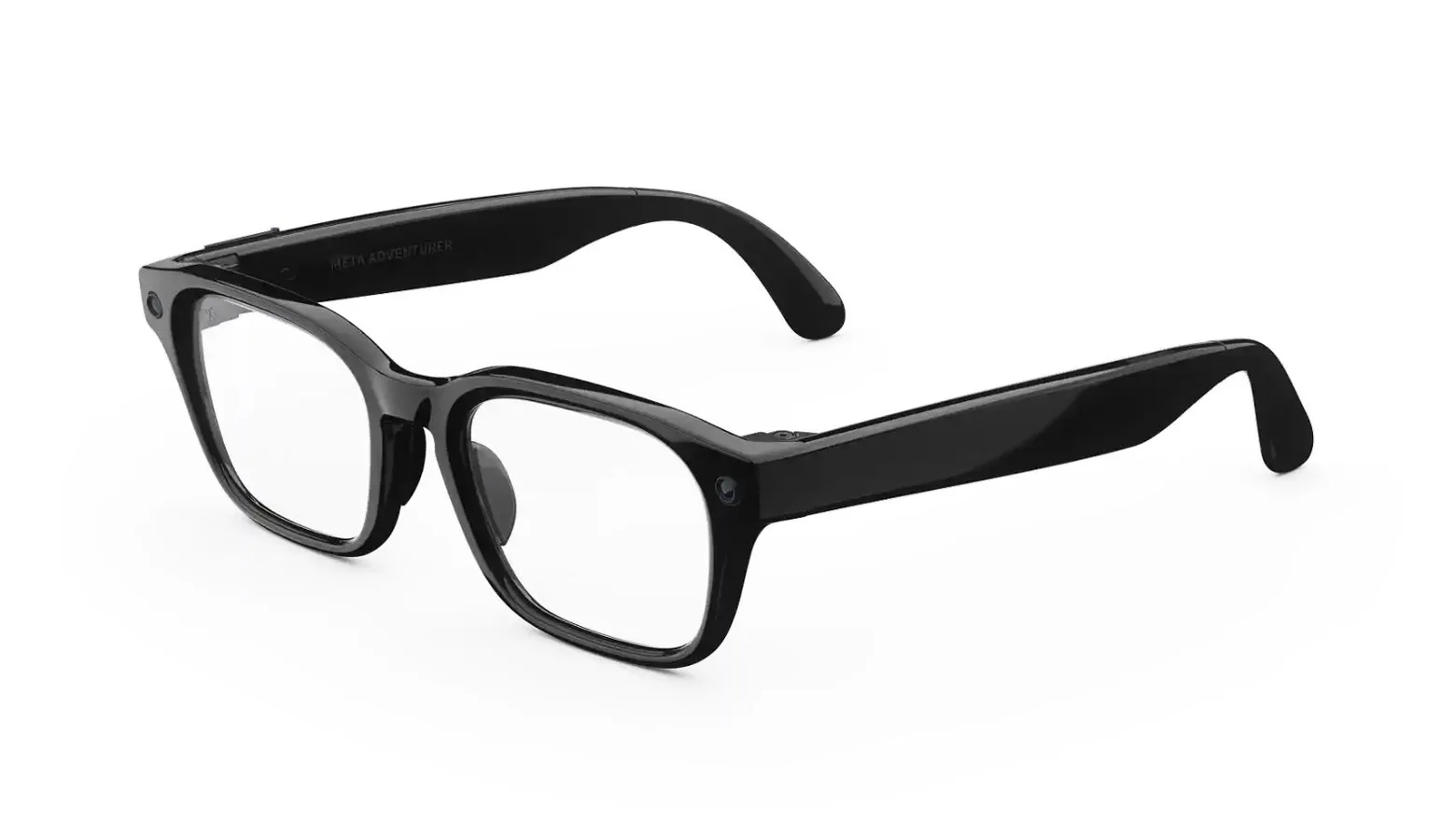
In October 2024, two Harvard students, AnhPhu Nguyen and Caine Ardayfio, connected ordinary Ray-Ban Meta glasses to the PimEyes facial recognition system and demonstrated that a few seconds of looking at a stranger is enough to obtain their name, address, and phone number. The project was called I-XRAY. Meta responded that this was a misuse of third-party software — not their responsibility.
Now Financial Times reports on a prototype called Super Sensing — Meta's own glasses that take photos every few seconds and continuously record sound. AI processes the stream, extracts metadata, and sends it to the company's servers — raw video and audio, by design, are not stored. However, there is a detail that changes the entire picture.
"If the LED were blinking all the time, people might stop noticing it"
— from Meta's internal policy paper, 2025, cited by Tom's Guide
This is the argument the company uses to explain the decision to not enable the recording indicator during Super Sensing operation. In other words, the physical signal that has so far been the only way for those around you to understand that they are being recorded — is simply turned off.
What this means outside the laboratory
A key detail emphasized by Tom's Guide: the function can be activated through a software update on already sold devices. In 2025, Meta sold over 7 million pairs of Ray-Ban Meta. So this is not about a future gadget — but about the possibility of changing the behavior of devices that people already have on their faces right now.
That same year in 2025, Meta opened an SDK for developers — third-party applications can now access the camera and microphone of the glasses. An ecosystem around face-mounted sensors is already being built.
- Legal risk zone: In several U.S. states, recording a conversation without the consent of the other party is a violation of wiretapping laws. As MacRumors reports, citing FT, it is unclear whether the glasses owner or Meta will be held responsible.
- Biometric data: Rights advocates point to potential conflicts with biometric protection laws — notably BIPA in Illinois and analogues in the EU.
- Metadata as a euphemism: The company insists it does not store "raw" content. But metadata from a continuous stream of photos and audio is essentially a reconstruction of the day: where you were, who you spoke to, what you bought.
Meta positions Super Sensing as a tool for personal memory and productivity — "an AI assistant that saw everything you saw." This is an honest description of the feature. But the same architecture, without any code changes, turns every glasses owner into a mobile data collection point about those around them — people who gave no consent and won't even know they're being recorded.
If Meta does launch Super Sensing without a mandatory visual indicator — the question is no longer whether a new I-XRAY will emerge. The question is whether regulators in the U.S. and EU will manage to formulate rules before 7 million devices receive the update.