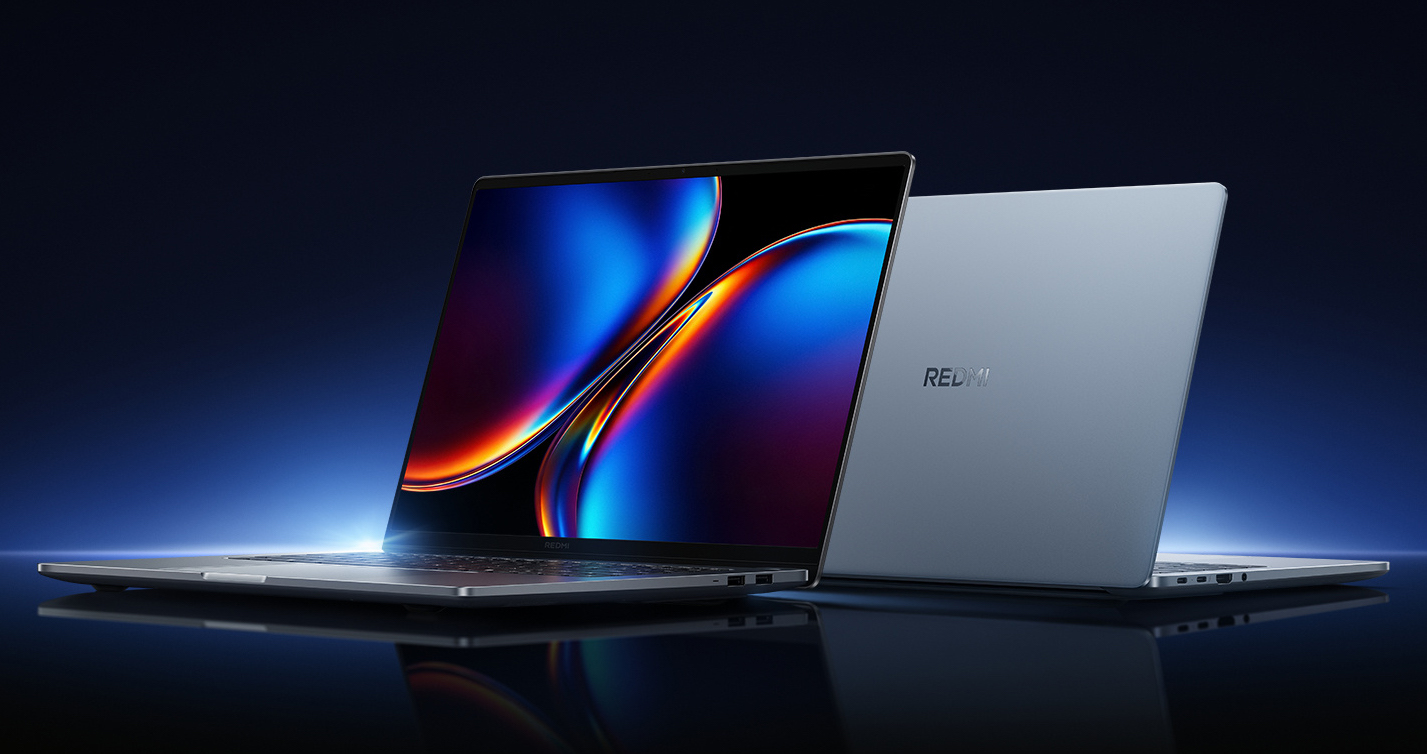
On March 19, Xiaomi launched the Book Pro 14 2026 in China — the first mass-produced machine on Intel Panther Lake. The Redmi Book Pro 16 will follow in April. Both will receive up to the Intel Core Ultra X7 358H — a chip that Intel is manufacturing for the first time on its own 18A process after outsourcing Lunar Lake production to TSMC.
What's Inside
The 14-inch version weighs 1.08 kg — lighter than the MacBook Air M4 (1.24 kg) — thanks to a magnesium alloy chassis and carbon fiber lid. Thickness is 14.95 mm. The display is a 14.6-inch OLED 3.1K at 120 Hz. The battery is 92 Wh with 90W charging; Xiaomi claims 37 hours of video playback — if independent tests confirm this, it would be a record for Windows ultrabooks.
The 16-inch model will get a 99 Wh battery — close to the regulatory maximum for air travel (100 Wh).
Panther Lake vs. Apple: Numbers Without Celebration
Intel won in two of three Cinebench 24 categories: multi-threaded performance and graphics — but the flagship Core Ultra X9 388H still loses to the older Apple M4 Pro in all benchmarks.
WIRED / Tom's Guide, March 2026
The Core Ultra X7 358H in the Redmi Book Pro is the junior version compared to the top-tier X9. This means: in performance per watt, Apple M4 remains ahead. Panther Lake consumes up to 25W compared to 15W in Apple's M-series — and this directly affects thermal management in a thin chassis. The key question is whether Xiaomi can deliver the claimed 37 hours of battery life under real workloads, not just video playback at minimum brightness.
Why This Matters Beyond China
Redmi Book Pro is the first mass-market laptop on Intel's 18A process. If performance and battery life are confirmed by independent tests, this will change the argument for buyers who avoid Windows machines specifically because of battery concerns, not Apple's ecosystem. Pricing has only been announced for the Chinese market; Xiaomi has not confirmed global launch timelines.
Panther Lake gives Intel a chance to reclaim the ultrabook segment — but only if real battery life matches the marketing claims. If independent tests show 20–22 hours instead of 37, the "MacBook competitor" narrative will collapse as quickly as it was built.