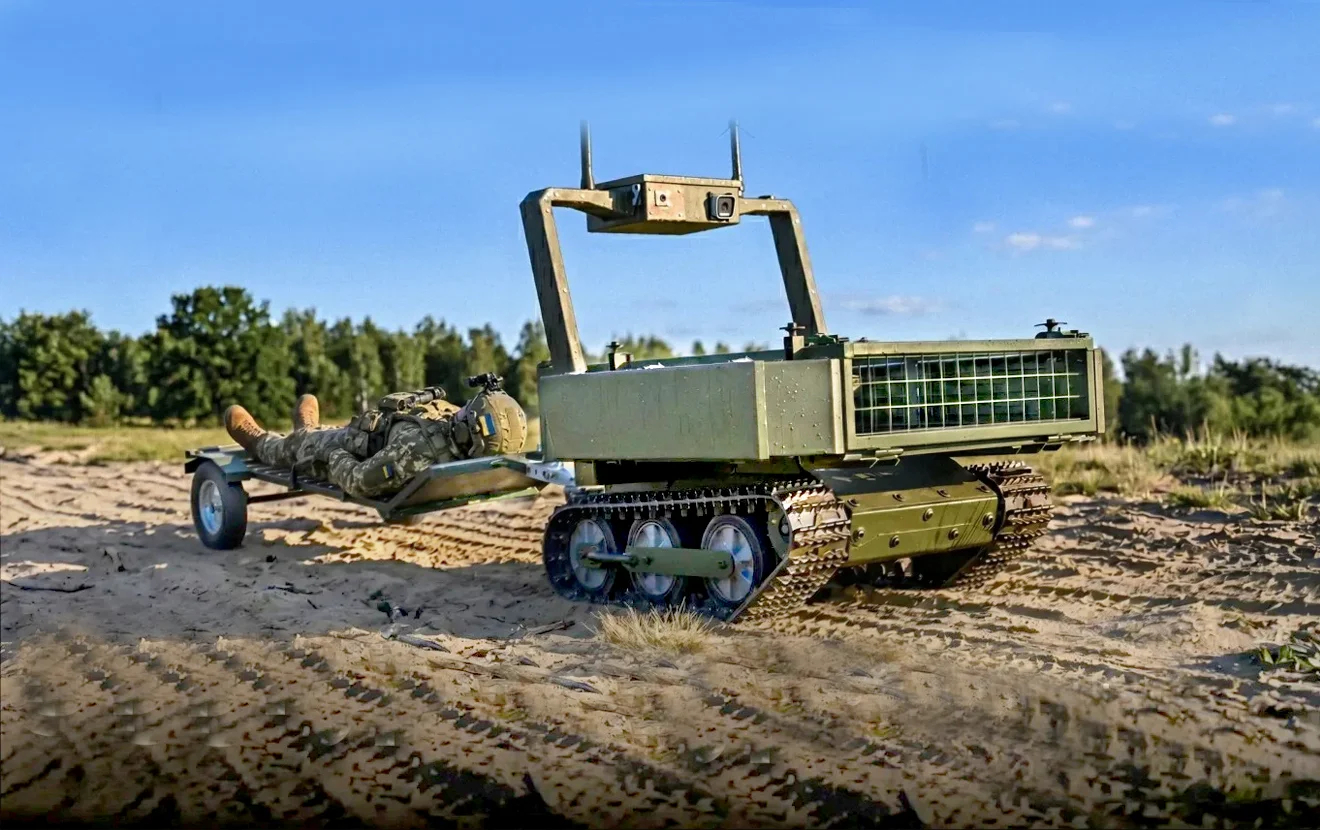
On June 3, the Ministry of Defense announced the codification of the Vepr ground robotic complex — that is, the official assignment of platform status that allows for mass procurement and contracting. The decision was made not after an exhibition, but after a year of real work on the front lines.
Why This Matters Right Now
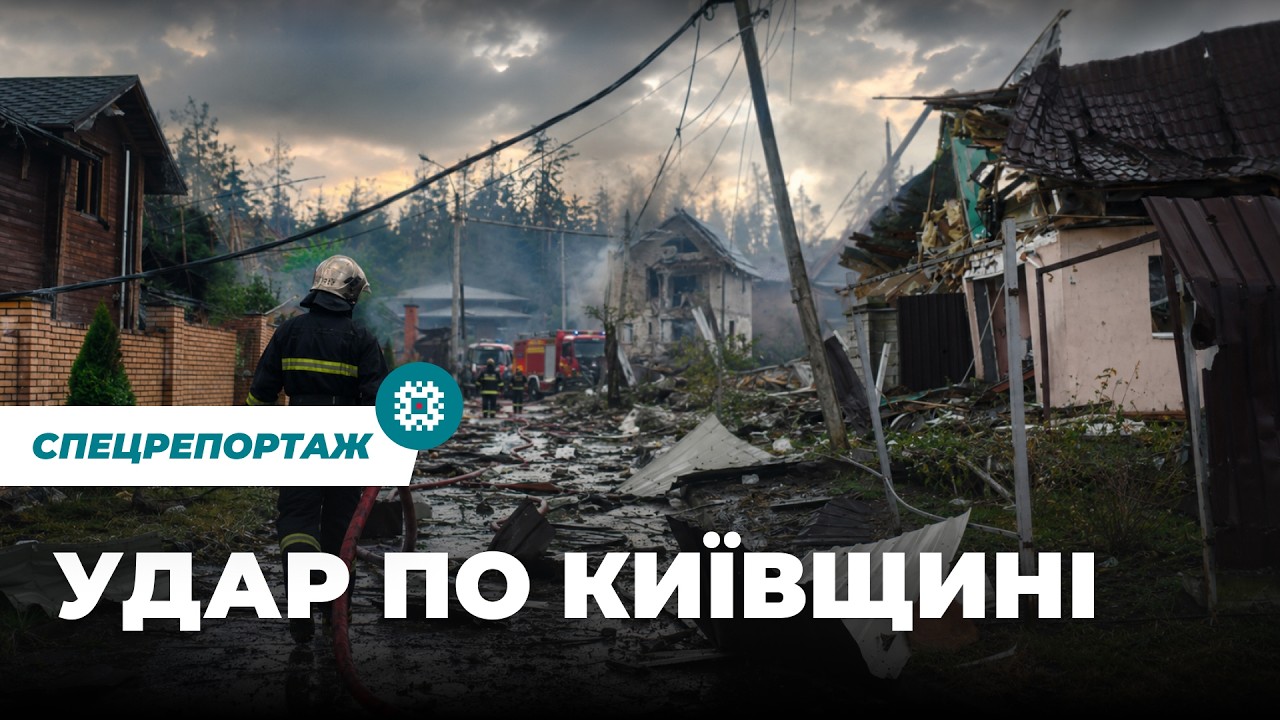
Along the line of contact, a so-called "kill-zone" has formed — a strip 10–15 km wide that is swept by FPV drones from both sides. Classic evacuation in this strip means that alongside the wounded, several other people are at risk. This is precisely the scenario for which Vepr was designed. According to the Ministry of Defense, ground robotic complexes are already performing approximately 10,000 tasks monthly on the line of contact — logistics, ammunition delivery, and evacuation.
What the Platform Can Do
Key characteristics of the codified version:
- Load capacity — up to 350 kg
- Battery range — up to 40 km
- Maximum speed — over 7.5 km/h (two electric motors at 1,500 W each)
- Evacuation of 1–2 wounded simultaneously
- Remote demining, cargo delivery, damaged GRC evacuation, kamikaze robot strike mode
Any infantryman from any unit can operate the complex: training takes minimal time, and maintenance is straightforward.
From Prototype to Codification
The first Vepr samples reached the front lines in 2024. The codified version was already upgraded — the manufacturer adapted the platform based on feedback from specific units, rather than following technical specifications in a vacuum. This is a fundamental difference: codification without combat experience is a risk of contracting something that won't survive its first mission.
"Ground robotic complexes perform approximately 10,000 evacuation and logistics tasks monthly. This saves the lives of Ukrainian service members."
Ministry of Defense of Ukraine, June 3, 2026
Scale of Procurement
Codification is not a one-time delivery. In the first half of 2026, the Ministry of Defense plans to contract over 25,000 GRCs of various types — twice as many as in all of 2025. The strategic goal declared by the ministry: to transition up to 100% of front-line logistics to unmanned ground platforms.
Commander-in-Chief of the Armed Forces of Ukraine Oleksandr Syrsky previously called the scaling of GRCs for medical evacuation a direct task — alongside improving the provision of medical units with armored vehicles.
The question that remains open: the Ministry of Defense announced a plan to contract 25,000 units by the end of the first half of the year — if the pace of contract execution lags behind the pace of announcements, actual saturation of the front with robots will be pushed to the second half of the year, and the kill-zone will go nowhere.