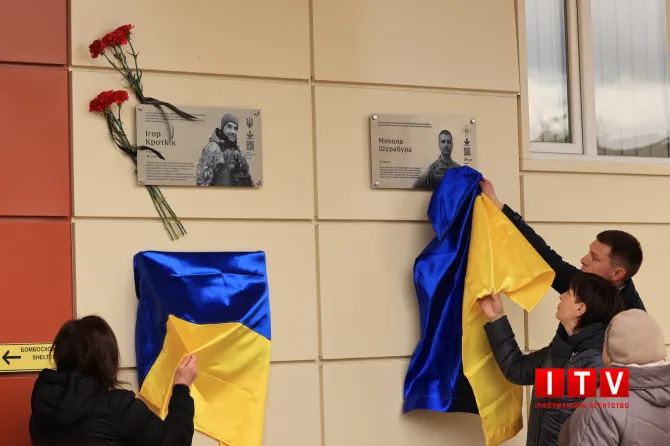
Irpin is saying goodbye again — but differently. Not at a cemetery and not at a checkpoint, but near a school facade, where a schedule and announcements once hung. At Lyceum No. 3, two memorial plaques were unveiled: in honor of fallen alumni Mykola Shurabura and Bohdan Ivanov.
The families of both Heroes, teachers, students, and residents attended the opening. First Deputy Mayor Oleksandr Paschynskyi chose a simple formula without pathos in his statement:
«This place remembers them as very young, ordinary Irpin boys with big plans and dreams for the future. From now on, their names are forever carved here as the names of those who gave their lives for Ukraine's freedom and independence».
Oleksandr Paschynskyi, First Deputy Mayor of Irpin
A city that knows the value of each name
Irpin is not an abstract symbol. The city endured occupation in spring 2022, became one of the first where Russian convoys were stopped as they approached Kyiv. Since then, the community has been burying its own regularly. The memorial website irpinmemory.org records the fallen by name — both military and civilians. In early April 2026, an alley of thuja trees was planted near the monument «On the Shield»: each tree — for a specific surname.
Memorial plaques on schools represent a different logic of remembrance. Not a cemetery and not a park, but a place where a person was still alive and ordinary: sat at a desk, ran through corridors, took exams. That is why such plaques are read differently — not as an epitaph, but as a rupture between «was here» and «did not return».
A practice becoming a system
The Volyn Regional Commission for the Commemoration of Heroes publicly established a principle back in 2024: memorial signs should appear where people studied and lived — not just on administrative buildings. Irpin is moving precisely in this direction: schools, facades, specific addresses.
- Lyceum No. 3 was opened in 1957 — a building older than independent Ukraine.
- On its facade are now two names that the school «knew» when alive.
- Paschynskyi maintains a public record of such openings — this is no longer isolated gestures, but deliberate city memory policy.
The question is not whether plaques should be installed — the answer is obvious. The question is whether Irpin will manage to record all its own before names start disappearing in administrative routine: if the register of the fallen remains without public updates and verification, plaques on facades will become a random sample, not a complete list.