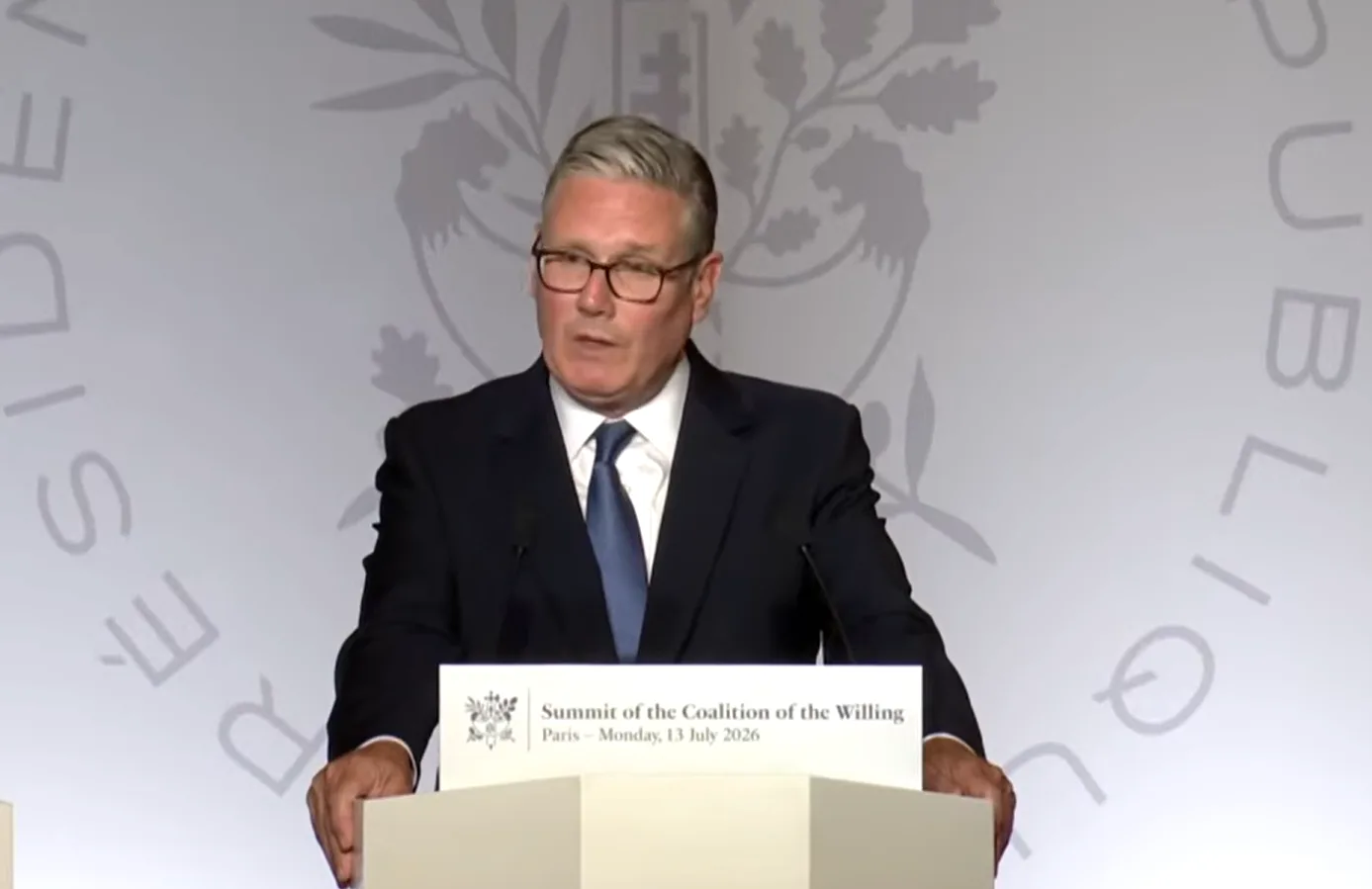
After a meeting of the "Coalition of the Willing" in Paris, British Prime Minister Keir Starmer announced that more than 25 countries are ready to deploy multinational forces in Ukraine within several days after a ceasefire takes effect. But behind the general figure lies a much more concrete architecture than the usual diplomatic rhetoric.
What was signed, not just promised
Starmer and French President Emmanuel Macron signed a declaration of intent on deploying forces in Ukraine — the first legally formalized coalition document that defines the legal framework for the presence of British, French, and allied troops on Ukrainian soil. According to Starmer, after the ceasefire, Britain and France will create military hubs throughout Ukraine and secure storage facilities for weapons and equipment.
"These security guarantees are key to ensuring that a peace agreement never means Ukraine's capitulation or a new threat to it."
Emmanuel Macron, press conference after the Paris meeting
The joint statement of 35 coalition countries also provides for a system of continuous ceasefire monitoring under American command with the participation of other allies — a detail that effectively embeds the United States in the guarantee mechanism, even if American combat units are not present on the ground.
Three levels of presence: air, sea, land
The multinational contingent — officially the Multinational Force Ukraine — covers all three domains. The coalition has also committed to providing Ukraine with "critical long-term military assistance and armaments." The command structure will be based on the CJF (Combined Joint Force) format, which has already been tested within NATO.
To understand the scale: this is a coalition of 34 states plus Ukraine — larger than the original "Coalition of the Willing" in 2003 in Iraq. Finland and Norway, as President Stubb clarified, will have a different format of participation than sending peacekeepers — due to their proximity to Russia.
What is not in the agreement
The document does not contain an automatic response mechanism in case Russia violates the ceasefire. The declaration is about intentions, not obligations under Article 5. The question of numbers also remains open: specific contingent figures have not been publicly announced. Macron acknowledged the obvious: Putin is not showing willingness to compromise, while Ukraine accepted Trump's proposal for an unconditional ceasefire back in March 2025 in Riyadh.
If Russia continues to delay the ceasefire, the coalition confirmed its readiness to increase sanctions pressure and boost weapons supplies — meaning that the very absence of peace becomes a condition for escalating support, not for freezing it.
The practical question now is just one: the declaration gains real substance only at the moment a ceasefire is signed — and if Moscow does not sign it, the entire architecture of hubs, monitoring, and guarantees remains a carefully prepared plan with no address for implementation.







