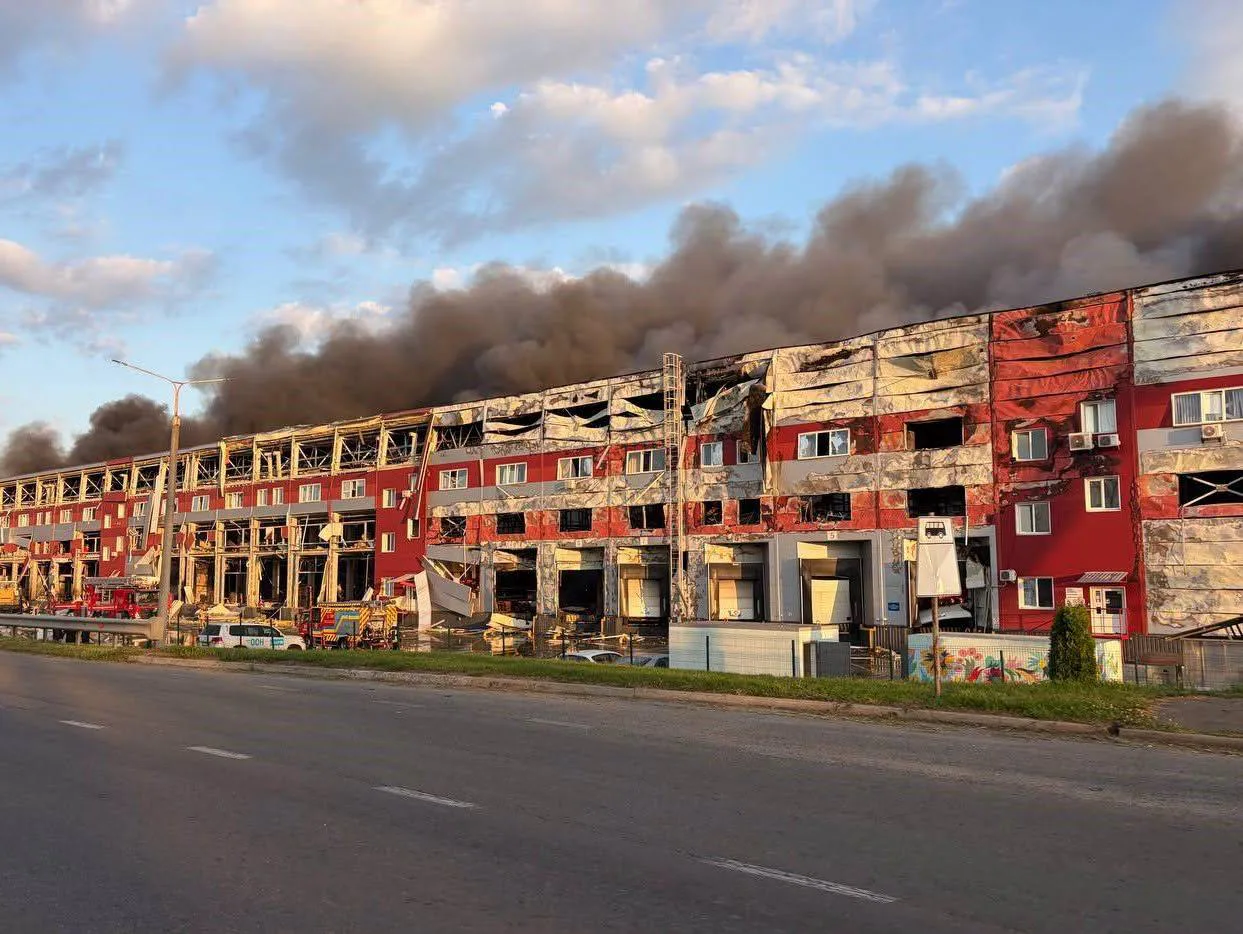
On July 19, Russia launched a massive missile strike against the Bucha district of Kyiv region. Among the affected facilities was a warehouse in the village of Bilogordka, which was used by UNICEF under contract for storing humanitarian aid. The warehouse burned down completely.
What was inside
At the time of the strike, the facility contained over 106,000 units of cargo with a total value of approximately $3.9 million. As confirmed by UNICEF in an official statement, among the destroyed items were generators, drinking water supplies, hygiene kits, and water storage tanks.
"On July 19, a warehouse in Bilogordka operating under contract with UNICEF was seriously damaged as a result of attacks by Russian armed forces, resulting in the destruction of humanitarian supplies for children and families affected by the war in Ukraine."
— UNICEF official statement
The organization specifically emphasized that these supplies were critically important for frontline communities — and especially in light of preparations for winter. According to UNICEF, an assessment of the full extent of the damage is still underway.
Context of the strike
On the night of July 19, Russia launched approximately 40 ballistic missiles at Kyiv region — Iskander-M, Zircon, and S-400 air defense missiles used as strike weapons. The same strike destroyed the Amtel logistics complex spanning over 100,000 square meters — one of the largest near Kyiv. More than 200 rescue workers, 73 pieces of equipment, and three helicopters were involved in extinguishing the fire. Two people were injured.
Ombudsman's reaction
Dmytro Lubinets, the Verkhovna Rada Commissioner for Human Rights, qualified the strike as a violation of international humanitarian law.
"Attacks on humanitarian facilities and workers of humanitarian missions are a gross violation of international humanitarian law. When those delivering aid to children and civilians come under attack, Russia is attacking not only infrastructure, but also the very possibility of saving lives."
— Dmytro Lubinets, Ukraine's Ombudsman
UNICEF has been a long-standing partner of the Ombudsman's Office. According to Lubinets, the strike on the humanitarian warehouse is a blow to those who save lives.
This is not an isolated incident
The UN Office for the Coordination of Humanitarian Affairs (OCHA) has recorded that humanitarian organizations were simultaneously providing emergency assistance following the strikes and delivering cargo to frontline communities in Kherson region. According to the UN, attacks on humanitarian infrastructure systematically complicate access to aid for those who need it most.
The warehouse in Bilogordka is not the first humanitarian facility destroyed in this war, but it is one of the largest in terms of losses from a single strike. The issue is not whether UNICEF will replenish its supplies — the organization is already conducting a damage assessment. The question is whether a new shipment of aid will reach frontline communities before the start of the heating season — if logistics hubs near Kyiv continue to be targeted.