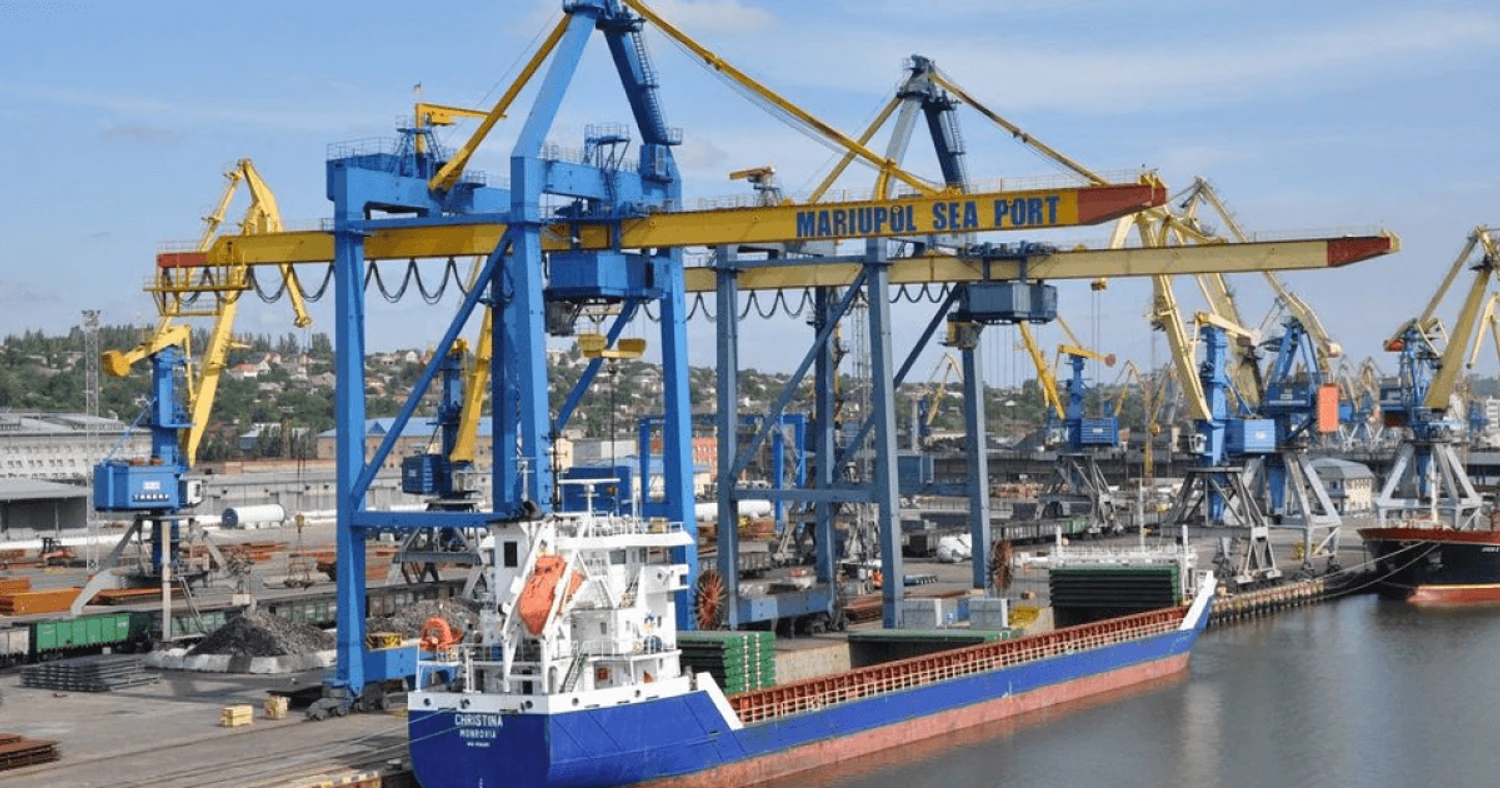
The head of the "DPR," Denis Pushilin, reported that from 2026 the "DPR" will become part of the association "Sodruzhestvo Donbass" together with the Rostov and Voronezh regions. The main focus is on the Mariupol port, which is planned to be aligned with Rostov's logistical hubs.
Analysts note that behind these words lies the de facto transfer of the port under external control of the Russian Federation. This is not just cooperation, but a real confiscation of strategic infrastructure that will enable profits to be routed to Rostov.
Closed meetings held in August confirmed intentions for the full integration of the port into Russian logistical systems. Only technical functions will remain on site, while control over finances and decision-making will pass to the Kremlin.
The port is already being used to export metal, grain and Donbass resources. There is no restoration, no investment — only systematic extraction of the region.
– Center for National Resistance
Currently the port is actively functioning to export metal, grain and other resources from Donbass, without any investment or reconstruction.
Occupying forces are conducting raids in Mariupol under the pretext of searching for migrants, which is causing concern among the population.