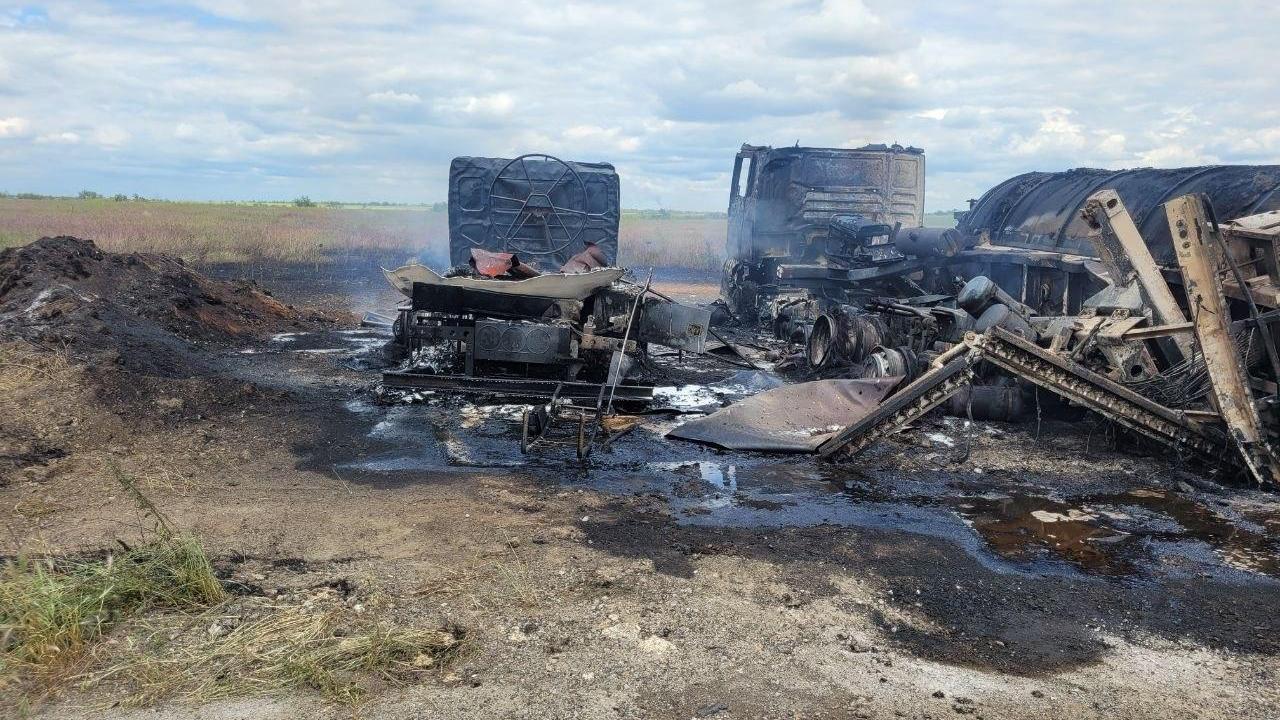
Another strike on road workers — and again with no casualties among personnel, but with zero equipment. Ten units of specialized equipment were destroyed by a single FPV drone at a location where highway repairs were underway. This was reported by the press service of the Ministry of Development of Communities and Territories.
«Road workers who were repairing highways and ensuring transport connections for communities, humanitarian deliveries, and defense needs came under attack. Since the beginning of the full-scale invasion, dozens of road industry workers have been injured while performing their work. Unfortunately, there have been fatalities as well».
— Ministry of Development of Communities and Territories of Ukraine
Road workers as a military target
The strike on a repair brigade is not a navigation error. Russia systematically attacks everything that supports transport links in frontline areas: trucks, rescue workers, repair brigades. The destruction of expensive construction equipment — asphalt pavers, rollers, trucks — has a dual effect: the road remains damaged, communities are cut off from supplies, and defense logistics are slowed down.
One strike on a concentration of equipment costs Russia little. Restoring the fleet takes months and millions of hryvnias.
The state's response: nets instead of body armor
According to ArmiyaInform, citing Defense Minister Mykhailo Fedorov, Russia deliberately uses drones as an instrument of terror against civilian vehicles, rescuers, and repair brigades near the front line. In response, the state accelerated the construction of anti-drone nets over roads.
- In February 2025, an additional 125 km of roads were covered, and 55 km of structures were restored.
- The pace of installation increased from 5 km per day in January to 12 km in February.
- By the end of 2026, 4,000 km of anti-drone protection for highways is planned.
- An additional 1.6 billion hryvnias from the budget was allocated for constructing nets in frontline areas.
A pace of 12 km per day sounds ambitious. But even if sustained, 4,000 km would take more than a year. Road workers are repairing routes right now, without protection.
The price of delayed protection
Each destroyed piece of road equipment is not just material loss. It is a delay in repairing a specific highway, which means slower rotations, complicated evacuations, failed humanitarian convoys. Road workers are essentially performing dual-purpose work — and are dying or losing equipment in conditions where they have neither body armor nor air defense coverage.
If the state is truly ramping up the pace of anti-drone protection to 20 km per day — as Fedorov announced for March — then the critical question is simple: will they manage to cover with nets those sections where active repair work is currently underway before the next strike?