When people talk about illegal coffee in Ukraine, they typically mean underground facilities near Kyiv, where in warehouse premises grains are roasted and fake Lavazza labels are glued onto packages. But this case is different.
What Happened
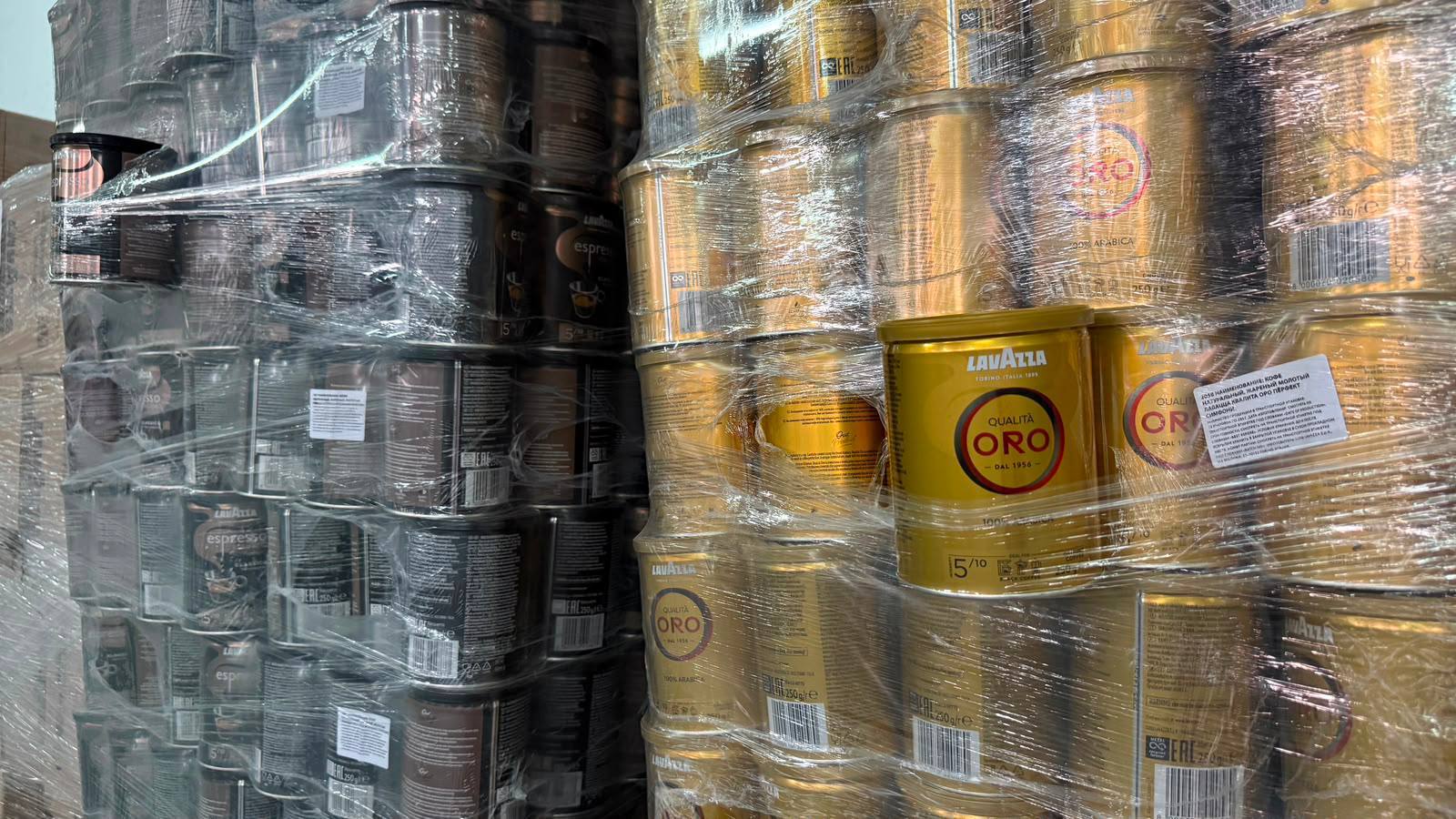
Kyiv Customs stopped a shipment that the company declared as 8.6 tons of natural roasted coffee worth 77,700 euros. During inspection, they found 12.2 tons — 3.6 tons more. The total value of the batch is approximately 12.8 million hryvnia.
There were no counterfeits. Each pallet bore factory markings from Lavazza with an order number and unique identification codes for transport packaging. These very codes became the evidence: when customs officials contacted the manufacturer, Lavazza confirmed that the batch had been stolen in the EU territory during transportation to Slovakia.
The batch has been seized. International cooperation is ongoing to identify persons involved in the cargo theft in the EU territory.
State Customs Service of Ukraine
Why "Stolen" Is Worse Than "Counterfeit"
At first glance — a paradox. Original coffee, not a fake, quality raises no doubts. But the scheme with genuine goods has its own logic:
- No production costs — only transportation and documents.
- Goods pass any quality expertise — they are genuinely original.
- The only vulnerable point is serial codes, if the manufacturer maintains their registry and is willing to cooperate with customs.
For comparison: the shadow market for coffee in Ukraine, according to industry participants' estimates, accounts for 35–40% of total consumption. The lion's share is local counterfeit production or undervalued customs prices. Stolen originals are a less common but far more difficult to trace category.
Context: Coffee as a Target for Cargo Criminals
According to Munich Re, food and beverage products consistently top the list of most frequently stolen cargo in Europe — 10% of all recorded incidents. Coffee falls into the risk category due to its compactness, high liquidity, and relative ease of sale through small retail networks.
As reported by Tive, organized criminal groups in the EMEA region increasingly use insiders in logistics chains and track cargo movements in real time — meaning the theft of a Lavazza batch somewhere between the factory and Slovakia does not look like a random crime.
What's Next
The State Customs Service emphasizes "international cooperation," but does not name either the country of origin, the specific route, or whether suspects have been identified on the EU side. The batch has been seized — but the question of who organized the theft and how the cargo ended up in the scheme of a Ukrainian importer publicly remains unanswered.
If the Ukrainian side indeed has serial codes and Lavazza confirmed the fact of theft, then European law enforcement already has a subject for investigation. Whether this case becomes the first public conviction in the chain "cargo theft in the EU → resale in Ukraine" depends on whether either side wants to bring it to court rather than stop at seizure.