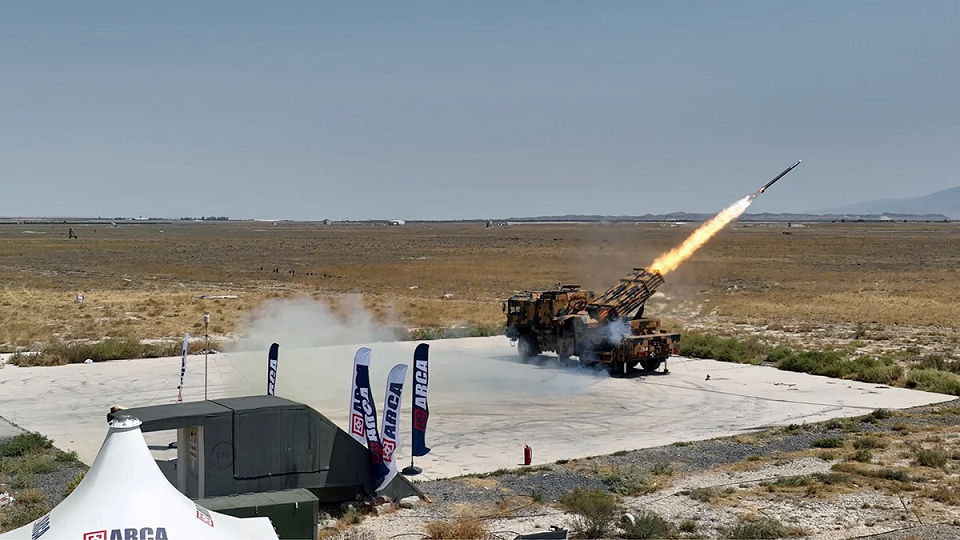
In August 2025, Estonia closed a deal that would have seemed fantastical a year ago: a Turkish defense company is building an ammunition plant in the northeast of the country — in a region where unemployment reaches 12–13%, and the local economy is still recovering from post-Soviet deindustrialization.
What Will Be Built and When
ARCA Baltics Operations OÜ — the Estonian subsidiary of Turkish holding ARCA Defence — won the tender for placement in the defense industrial zone Põhja-Kiviõli (North Kiviõli) in Ida-Virumaa County. The investment is approximately 300 million euros in own funds; the production site will occupy 1.4 million square meters. Construction has already begun. Production is scheduled to start in 2028.
The product range includes 155mm artillery shells (including extended-range variants), mortar ammunition of various calibers, and 122mm rockets. According to the Estonian Defense Investment Center (RKIK), the state will have an option to purchase ammunition directly from this plant.
"The establishment of large-caliber ammunition production is an important step in developing Estonia's defense potential. ARCA is a rapidly growing company that has formed a powerful production hub in Turkey in recent years,"
— Estonian Defense Minister Hanno Pevkur
The parent group ARCA Defence currently operates nine factories, has approximately 5,000 employees, and declared over 3 billion euros in exports last year.
What This Means for Ida-Virumaa
The plant promises up to 1,000 new jobs in a region where there are approximately 7,500 registered unemployed, and the unemployment rate consistently remains the highest in Estonia. According to local employment services, even the start of construction is already putting downward pressure on the labor market — a similar effect was observed when the Narva Industrial Park opened.
For a region where the closure of oil shale chemical industries has been pushing people away for years, these figures are concrete. The problem lies elsewhere.
A Shadow Over the Founder
Ismail Terlemez — chairman of the board and principal owner of ARCA — was detained at Brussels airport Zaventem in May 2025 based on an American warrant. He was suspected of receiving bribes while working at NATO's procurement agency (NSPA) in Luxembourg. He spent 59 days in custody in Belgium.
On July 9, 2025, the U.S. Department of Justice suddenly closed the case — without any explanation, merely stating that "continued prosecution would not be in the interests of justice." This happened shortly after Trump discussed defense industry cooperation with Erdoğan at the NATO summit, and Erdoğan himself personally opened Terlemez's plant in Ankara in 2022, according to Follow the Money.
Minister Pevkur publicly stated that he is familiar with reports of suspicions regarding ARCA's owner, but does not consider them grounds for refusal: the company passed verification as part of tender procedures. Details of this verification are not disclosed.
The Logic of the Deal
Estonia is rapidly building four defense industrial zones — in North-South Kiviõli, Ermist, Pirsalu, and Aidu. In parallel, four more companies are entering Ermist, including British Thor Industries through its Estonian subsidiary Odin Defence OÜ. The goal is not just to purchase ammunition, but to localize its production within a NATO member country.
- 155mm — NATO's standard caliber, critically in short supply since February 2022
- 2028 — start of production; the agreement will be officially signed at SAHA Expo in Turkey in early May
- 1.4 million square meters — the area of the site, making the plant one of the country's largest new industrial facilities
- 300 million euros — entirely private investment, without direct state subsidies under publicly disclosed terms
Tambet Tinisson from RKIK emphasized that ARCA's experience in rapidly building ammunition capacity and market knowledge represent a competitive advantage that outweighed alternative bids.
If the American side ever reopens Terlemez's case — or if similar investigations are launched by the European Union — will Estonia be able to maintain the agreement with a company whose owner remains a subject of a closed but not dismissed proceeding?







