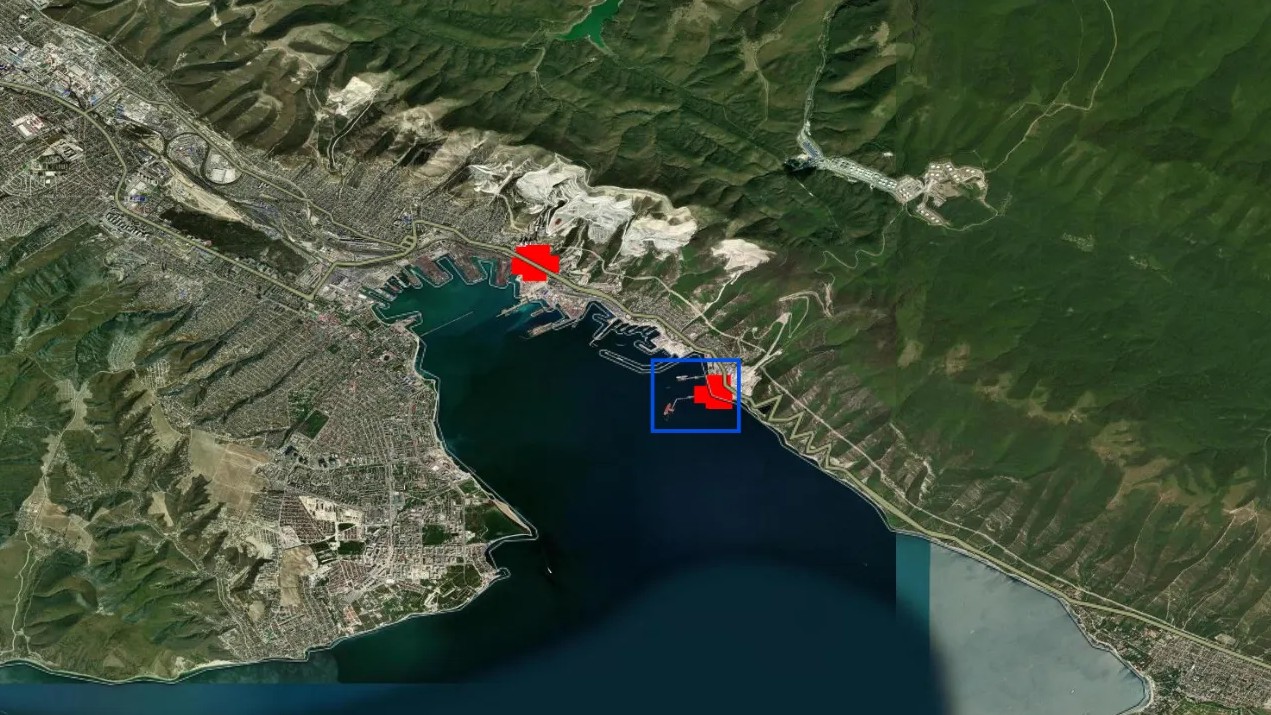
Transneft halted oil pumping to Novorossiysk following a nighttime drone attack and fire at the Sheskharis terminal—Russia's largest cargo hub in the Black Sea. Two sources familiar with the situation confirmed this to Reuters. The stoppage occurred for the second time in several months: the first strike on Sheskharis occurred in November 2025.
What is Sheskharis and why it matters
The terminal ships approximately 700,000 barrels of oil per day—primarily Urals and Siberian Light varieties, as well as Kazakhstani crude transiting through Russia. According to Reuters, in October 2025, the Port of Novorossiysk handled 3.22 million tons of oil—approximately 760,000 barrels per day. This is more than just Russian infrastructure: the stoppage affects Kazakhstan, whose oil exports depend on this corridor.
The Baltic already burned—now the Black Sea
The strike on Sheskharis occurred against the backdrop of a week of nighttime attacks on the Baltic terminals Primorsk and Ust-Luga. According to Reuters calculations, approximately 40% of Russia's combined oil export capacity—roughly 2 million barrels per day—has been simultaneously taken offline. Analysts call this the largest disruption in Russian oil logistics in modern history.
"Given export problems in the Baltic Sea, Russia will have to reduce oil production due to storage filling up"
Reuters, citing industry sources
Reducing production is not a sanctions-driven pressure, but a physical limit: if oil has nowhere to be shipped, storage facilities overflow, and wells are shut down. Redirecting flows eastward quickly is impossible: pipeline infrastructure toward China is already at capacity.
The price of the matter: who benefits from the stoppage
The paradox of the situation is that Russia cannot benefit from its own misfortune. Escalation in the Middle East pushed oil prices upward, with Brent crossing the $106 mark. But Moscow cannot profit from this: terminals are idle, and Urals prices are already constrained by the G7 price cap of $60 per barrel—which Russia systematically circumvents through its shadow fleet.
According to analytics platform Kpler, similar incidents in the past have resulted in stoppages lasting from several days to a week. But this is the first time the Baltic and Black Sea hubs have been paralyzed simultaneously.
Krasnodar Krai Governor Kondratyev acknowledged damage to six residential buildings and two private houses, with eight people injured. Regarding "enterprises"—he only stated that "drone debris was found on their territory," without specifying which ones.
The Kazakhstan factor
Kazakhstan's situation deserves separate consideration. Astana has long sought alternative routes for its oil—through Azerbaijan and Turkey, bypassing Russia. Each new Sheskharis stoppage adds arguments to those in the Kazakhstani government who insist on diversification. The question is no longer theoretical: how quickly will Astana be able to reorient volumes if attacks become regular—and will the Trans-Caspian route have sufficient capacity for this?







