From January 1, 2027, every importer of gas or oil into the EU will be required to confirm that the supplier measures and reports methane emissions according to standards equivalent to European ones. It is precisely this point — Article 28 of the Methane Regulation — that has become a stumbling block for Berlin, Budapest, Warsaw, and Bucharest.
What the regulation changes and why it hurts from 2027
EU Regulation 2024/1787 came into force back in August 2024 as part of the Fit for 55 package — the obligation to reduce greenhouse gas emissions by at least 55% by 2030. Methane is the second most potent greenhouse gas after CO₂, responsible for approximately one-third of current global warming. For domestic operators, the requirements are already in effect. But from 2027, they will extend to all imports.
Industrial lobbies have calculated the consequences. According to a Wood Mackenzie study commissioned by the industry association IOGP Europe, if the regulation is implemented "as is," 94% of globally available gas and LNG will not meet the requirements. This could leave up to 43% of the EU's gas demand uncovered — 114 billion cubic meters per year. Analysts warn of price increases to "historically unsustainable levels" and, as a result, a switch by industry to coal — with a paradoxical increase in emissions.
"This is a threat to supply" — Berlin joins the coalition
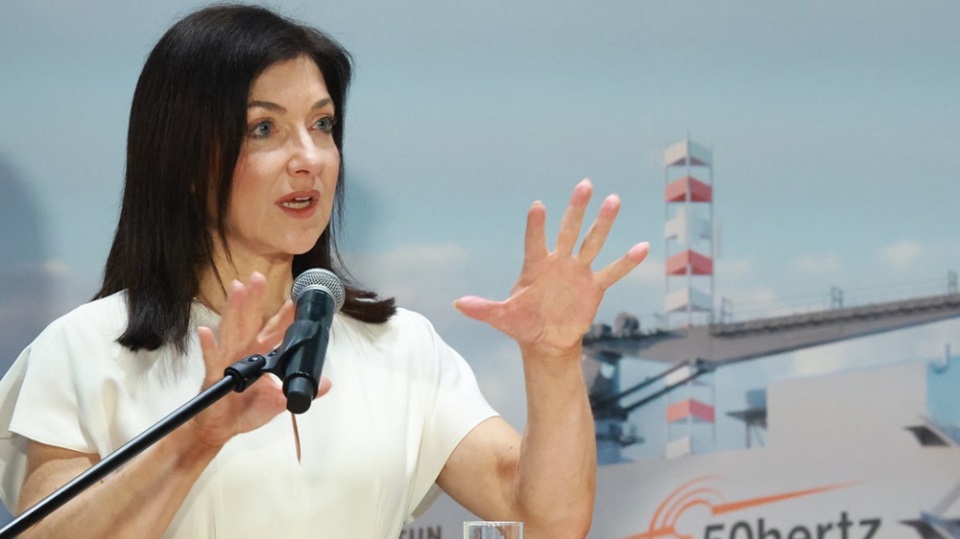
"The methane regulation will block not only gas imports to Germany but also petroleum product supplies — from 2027 onward. We cannot risk energy security if the regulation remains in its current form."
Katarina Reiche, Germany's Minister of Economy and Energy, at the EU energy ministers summit in Luxembourg
Berlin has joined member states that have long been resisting: Poland, Romania, and Hungary — which tried to include regulation mitigation in the "Omnibus" package of regulatory burden relief as early as spring. Environmentally-oriented states opposed this step at the time. Parallel to lobbying within the EU, Qatar, the United States, Nigeria, and Algeria — the main gas suppliers — sent a joint letter to bloc leaders demanding to "suspend the law and make targeted amendments," warning that importers are already buying gas for 2027 delivery, and "there is currently no realistic path to compliance."
The European Commission chooses "pragmatism" — but without changing the text
In December 2025, EU energy ministers at a Council meeting supported the European Commission's approach to "pragmatic implementation" of importer requirements. The Commission promised to quickly develop criteria for additional compliance decisions. At the same time, ministers noted: the application of national sanctions should not threaten supply disruptions.
This means: the text of the regulation is not being changed for now — only the approach to its implementation is changing. This is precisely what does not satisfy Berlin, which wants a formal review of Article 28, not flexible clarifications.
Where arguments diverge
Reiche has plenty of opponents — including among analysts. The environmental organization Environmental Defense Fund Europe commissioned its own study from Rystad Energy: according to their calculations, by 2027, the volume of LNG capable of meeting the highest reporting standard OGMP 2.0 Level 5 will more than double the entire EU demand for gas. And the global LNG market is growing at approximately 4% per year, giving Europe room to select suppliers without risk of shortages.
Critics of industrial lobbying also point to a methodological problem: the IOGP study is financed by the industry itself, and its baseline scenario deliberately chooses the strictest interpretation of the regulation. The Clean Air Task Force called such calculations "an overstatement that does not withstand expert scrutiny."
The real uncertainty lies elsewhere: the European Commission was supposed to adopt a delegated act with the methane intensity calculation methodology by August 2027. Without it, importers physically cannot perform the calculations they will be required to make from January 1 of that same year. This procedural collision is not theory but the letter of the regulation itself.
If the European Commission really succeeds in approving the methodology and equivalence criteria by the end of 2026, Berlin's argument about "threat to supply" will crumble on its own — and the question will shift from the energy dimension to a purely climate one: is Germany, which has committed to reducing methane emissions by 30% by 2030, ready to fulfill these obligations without a convenient exit through "pragmatism."