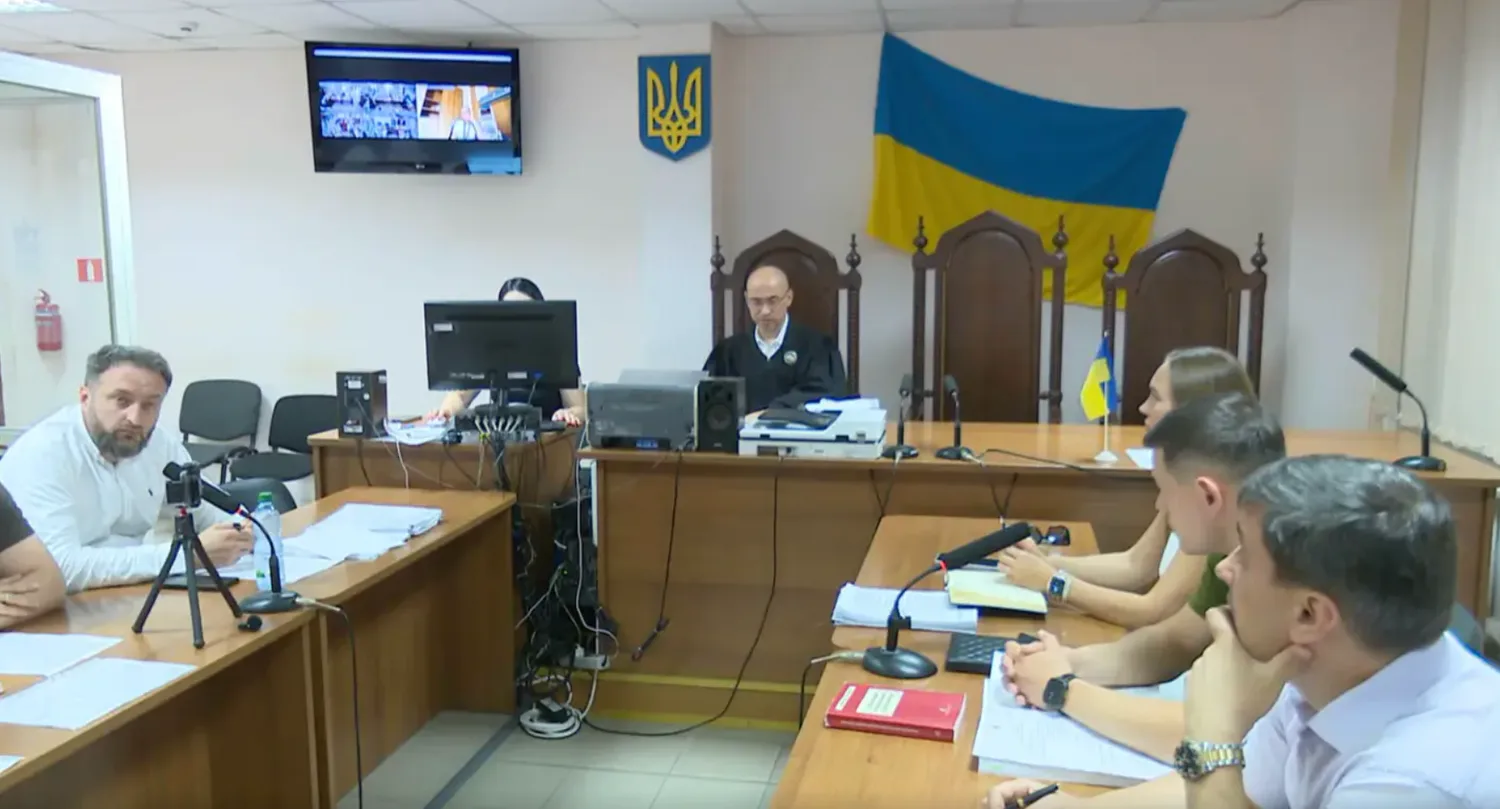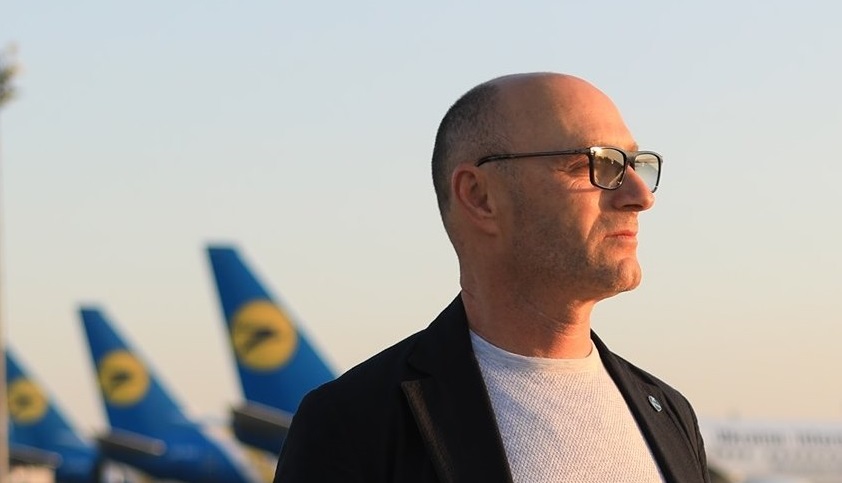
On March 30, 2025, the Appeals Chamber of the High Anti-Corruption Court partially granted the defense's appeals and amended the verdict in the case of the former acting CEO of Boryspil airport Yevheniy Dykhne: four years of imprisonment instead of five, and the amount of material damage that both convicted persons are required to jointly reimburse fell from 11 million to 1.3 million UAH. The former head of the lease relations service Olesya Levochko received three years instead of four. The court fully confirmed their guilt.
What they were convicted of
The essence of the charge is two preliminary lease agreements for premises on the third floor of Terminal D, concluded in 2016–2017 with LLC “Arteria Group” and LLC “Coffee Bar Plus” without a competitive selection and at an undervalued price. By law, state property was to be leased exclusively by the State Property Fund (SPF) through an open competition. Instead, Dykhne and Levochko, according to NABU and the Specialized Anti-Corruption Prosecutor's Office, deliberately facilitated the delay of these competitions and favored specific tenants.
The ultimate beneficiary of “Coffee Bar Plus” turned out to be Timur Mindich — a business partner of MAU shareholder Ihor Kolomoyskyi. The director of “Arteria Group” at that time was the wife of the editor-in-chief of the Obozrevatel website. Neither NABU nor the court established that Dykhne or Levochko personally enriched themselves from these agreements.
“Between 13 million and zero, Yevheniy Dykhne chose 13 million” — this is how the law firm Miller described the logic of its client’s actions: under the disputed agreements the airport and the state budget actually received about 13 million UAH in rent.
Miller Law Firm, analysis of the HACC decision
The HACC in the first instance responded like this: seven employees of the State Property Fund who were responsible for the competitions were “incompetent,” but Dykhne exploited that — for his own purposes, not in the interests of the airport. The appeal did not change this qualification.
What the appeal changed — and what it left unchanged
The one-year reduction of the sentence and the sharp decrease in the amount of damages — from 11 to 1.3 million UAH — are technically a victory for the defense. But the verdict stands in this form: guilty, with actual imprisonment. The defense from day one insisted that the preliminary lease agreements had been concluded by the airport as far back as 2012, that dozens were signed, that the price was calculated according to the same SPF formula — and that it had never previously led to a criminal case.
- First-instance verdict: 5 years (Dykhne), 4 years (Levochko), damages — 15.7 million UAH, recovery — 11 million UAH.
- Appeal decision: 4 years (Dykhne), 3 years (Levochko), damages to be recovered — 1.3 million UAH.
- Guilt under Part 2 of Article 364 of the Criminal Code (abuse of official position with grave consequences) — confirmed.
A precedent for state management
Dykhne himself said during the appeal in an interview with Pravo.ua that he considers his decision “precedential” and one that “will determine law-enforcement practice.” The flip side of this precedent — and this is the central question of the case — is not whether a particular manager violated the SPF procedure. It is what kind of behavior the anti-corruption courts effectively encourage: the director of a state enterprise who signs an agreement and fills the budget, or the director who signs nothing and waits for the State Property Fund to hold a competition in two months or in two years.
The SAP was categorical in its position: “The investigation does not assess the success of a manager. The inquiry was interested in whether the law was violated when leasing state property.” The court’s answer — they did violate it. But as to the amount of damages — the appeal revised it by almost an order of magnitude.
The next step is the Criminal Cassation Court within the Supreme Court, if the defense appeals there. This is not a rhetorical question: if the Supreme Court upholds the HACC’s logic regarding prior lease agreements of state property, it will mean that hundreds of similar agreements concluded by heads of state enterprises before and after Dykhne could potentially fall under the same article — and all responsibility would fall on the director, not on the Fund that for years failed to hold competitions.