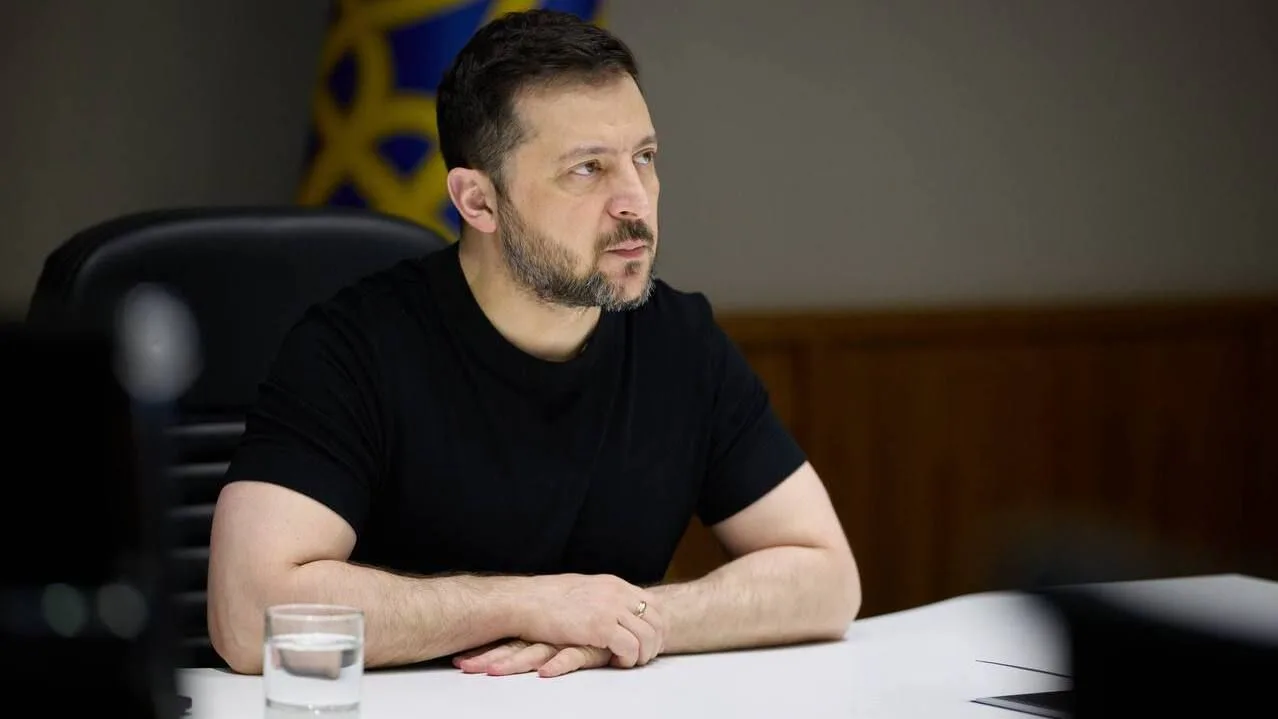
On the evening of November 20, President Volodymyr Zelensky met with the parliamentary faction of the Servant of the People party. Officially — to discuss strategic priorities for the next six months. Unofficially — to extinguish a fire: some deputies threatened to leave the faction if the head of the Presidential Office Andriy Yermak did not resign following the resonant NABU investigation as part of Operation Midas.
November as a horizon, guarantees as a condition
According to faction leader David Arakhamia and deputy Olha Vasylevska-Smagluk, the next six months should become a time of "maximum concentration and stabilization." Zelensky named the conditions under which the hot phase of the war could end: reliable security guarantees for Ukraine, steady support for the army, and compliance with IMF requirements. Neither timelines nor specific formats of guarantees were clarified at the meeting.
The president had voiced a similar position earlier in other formats. Late in 2024, in a conversation with Sky News, he allowed for the completion of the hot phase on the condition that the territory controlled by Ukraine would be under the NATO umbrella. In December 2025, a published draft peace plan with 20 points provided for security guarantees "analogous to Article 5" and preservation of an army of 800,000 personnel. In other words, the rhetoric of November 20 is not an innovation, but an internal transmission of an already existing position to his own faction.
The real agenda: Yermak and votes for the budget
According to NV citing sources in the faction, the meeting included "sensitive issues." Zelensky made clear that he would not dismiss Yermak. This decision disappointed the so-called "coalition of the resolute" — an internal group of deputies that had been pushing for personnel changes in the Presidential Office.
A parliament in wartime must be a functioning parliament. The agreement is obvious — everyone must work for Ukraine.
— Zelensky, evening address of November 20
In parallel, another issue was smoldering: the faction lacked votes for the 2026 budget. According to LB.ua, deputies disagreed on wage reform and IMF conditions. "IMF markers are what we receive all other money under. The program itself is not that large, seven-plus billion, but if it is implemented — all other funds follow," explained one of the parliamentarians after a faction meeting with the government.
Context that went unspoken
The meeting took place at a moment when the "single majority" is de facto no longer a majority. As "Ukrainian Pravda" described in detail, the faction began to crumble in summer 2025 — after the Presidential Office lost its clash with anti-corruption bodies. Moreover, some parliamentarians openly dream of resigning their mandates and are waiting for the end of their term. Arakhamia continues to restrain these processes, assuring that everything will be resolved "soon."
In this context, talk of "six months of stabilization" and the November horizon is simultaneously both a strategic message to partners and an attempt to give his own faction a temporary benchmark to prevent it from falling apart.
- Security guarantees — the key condition for Zelensky to end the hot phase, but their specific format has yet to be agreed with allies.
- Army support — steady support for the Armed Forces is named as priority №1 alongside the diplomatic process.
- IMF requirements — compliance with the program is presented as a condition for maintaining the entire external financial flow, not just the Fund's tranches.
- Yermak remains — despite pressure from the "coalition of the resolute," the head of the Presidential Office retained his position, complicating internal faction unity.
If by the end of November the Servant of the People does not find votes to pass the 2026 budget within the timeframe acceptable to the IMF, the "stabilization" horizon that Zelensky outlined at the meeting risks becoming yet another domestic political deadline fiction — this time documented by the faction itself.