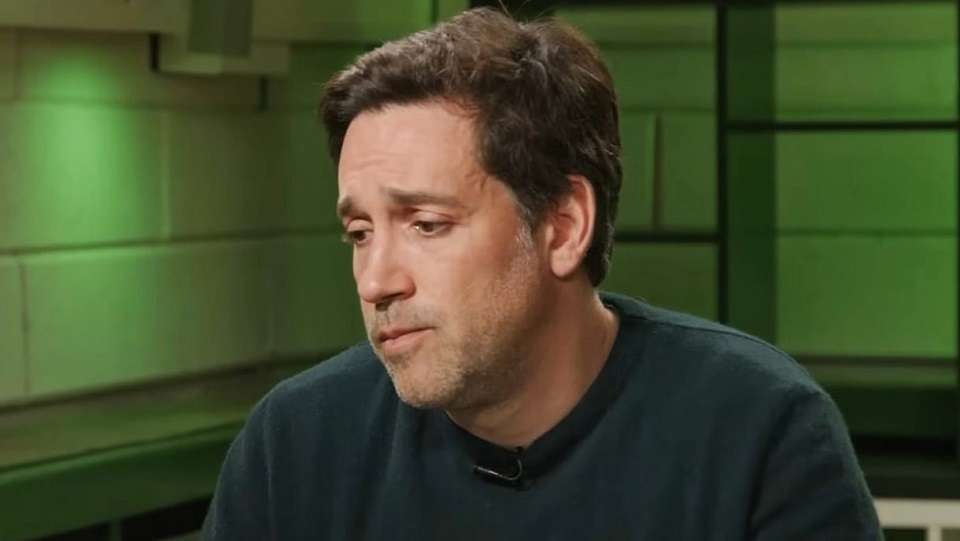
Hungarian police have launched an investigation against companies owned by Gyula Balash — a media magnate whose business effectively served the state propaganda apparatus of Viktor Orban's government for more than a decade. Accounts were frozen on April 27, with an official police statement appearing the following day after Balash himself publicly offered to hand over his companies to the new authorities.
From zero to 150 contracts per year
The scale of the scheme is evident in the numbers: according to Hungary's Corruption Research Center (CRCB), the number of government contracts awarded to Balash's companies grew from zero to 150 per year during Orban's rule from 2012 to 2025. By Transparency International's calculations, in 2019-2021 alone, three key companies of the magnate — Lounge Design, New Land Media, and Media Dynamics — received contracts from the National Communication Office worth 295 billion forints, equivalent to approximately 960 million dollars.
These same companies developed Orban's anti-Ukrainian election campaign in 2025 — with the message about "a choice between war and peace" — as well as his long-standing anti-immigration campaigns.
The logic of "voluntary" transfer
Balash announced his willingness to hand over his business to the state before police publicly disclosed the investigation. He explained his decision as follows:
"Not because there is something to hide, or because we did something illegal or improper."
Gyula Balash, owner of Lounge Group
However, the timeline undermines this narrative: accounts were frozen on April 27, Prime Minister Peter Madar publicly stated on April 28 that tax authorities had blocked attempts by people close to Orban to move funds abroad — and only after that did the "voluntary" offer emerge.
Investigation without a suspect
The police's wording is telling: the investigation was launched "against an unidentified person" on suspicion of misappropriation of funds and money laundering. Separately, "contracts with inflated prices" are being examined. This is a standard procedural construct that allows evidence to be gathered without publicly naming a suspect — and which can easily transform into specific charges.
The Balash case unfolds against the backdrop of a broader process: following his party's electoral defeat, Orban's associates began urgently moving assets abroad, forcing the new authorities to respond swiftly.
Lounge Group did not respond to Reuters' inquiry.
The key question for the coming weeks: whether the investigation "against an unidentified person" will transform into a case with a named defendant — and whether subpoenas will follow for the National Communication Office itself, which distributed the contracts.







