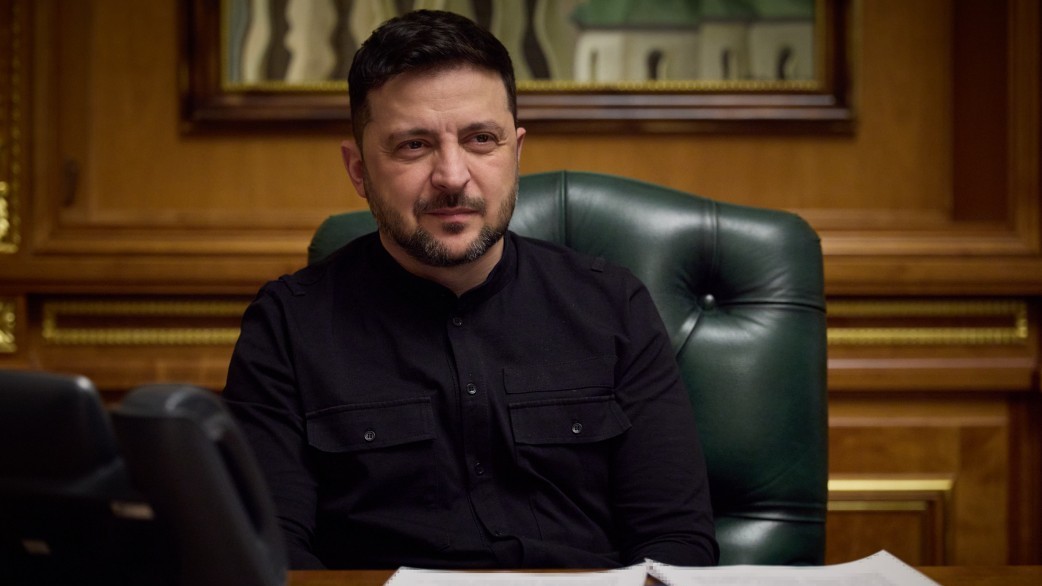
On the evening of May 6, President Volodymyr Zelensky announced that Ukraine will develop and adopt a law on private military companies this year, in 2026. According to the president, Ukrainian military personnel have accumulated unprecedented combat experience, which should become the foundation for "security export."
"The whole world sees that the Ukrainian soldier is truly strong, truly experienced. Our security export — after this war and for veterans — should be a real business opportunity."
Volodymyr Zelensky, evening address, May 6
Not a new idea, but with new weight
The idea of legalizing PMCs has been discussed in Ukraine since at least 2024. Draft law No. 11214 on "international defense companies" was registered in the Verkhovna Rada long ago and has been under review by the Committee on National Security and Defense — but has never reached a vote. The Defense Ministry formally supported the document, but with significant reservations: according to the ministry's conclusion, certain provisions contradict the Constitution of Ukraine and international treaties. The ministry proposed establishing a working group to finalize the draft.
Now, following the president's direct instruction, the issue has gained new political momentum. According to Hromadske, the PMC topic began being discussed "at the highest level" after Russia demanded the "dissolution of nationalist formations" in its negotiation requirements. Zelensky responded: Ukraine has no private armies — but may create a legal framework for them.
What legalization provides and who benefits
The problem the draft law attempts to solve is concrete: according to the Ministry of Veterans Affairs estimates, after the war ends, veterans and their close relatives will comprise up to one-sixth of the country's population — approximately six million people. For a significant portion of them, the civilian labor market is not a natural environment.
- Veteran employment — a legal channel for people with combat training, an alternative to chaotic migration to foreign conflicts.
- Weapons control — a legal structure reduces the risks of uncontrolled weapons circulation after demobilization.
- Budget revenues — taxes and licensing fees from PMCs as a new source of state income.
- Geopolitical tool — the presence of Ukrainian specialists in Africa, Asia, embassy protection, weapons convoy escort: areas currently dominated by British, American, and French structures.
As the Kyiv Independent notes, citing MP Kebkalo, Ukrainian specialists could take over embassy security functions and weapons cargo convoys — tasks currently performed by the state security forces of allies.
Risks not mentioned in official addresses
Critics point to fundamental complexity: private militarized structures operating in "gray zones" pose a potential security threat — both to the countries where they operate and to Ukraine itself. Military analyst at NAKO Alexander Saenko draws attention even to terminology: the name "international defense companies" in the draft law blurs legal status and differs from the internationally accepted concept of PMCs.
A separate factor is Article 447 of Ukraine's Criminal Code, which still qualifies mercenary activities as a crime. Without its amendment or clear delineation, any law on PMCs will remain legally vulnerable.
It is noteworthy that the previous draft law from a representative of the "monoparliamentary majority" failed to gain support in the Rada without any public vote — it quietly stalled in committee. The presidential push changes the political situation, but does not resolve technical contradictions.
If the law is adopted without a clear state oversight mechanism and without alignment with the Criminal Code — Ukraine will get not an "export of security," but a legal gray zone in its own legislation. Whether the Rada will resolve constitutional conflicts by the end of the year depends on whether there will be public discussion, or the issue will again be decided in a "working group" without broad public debate.





