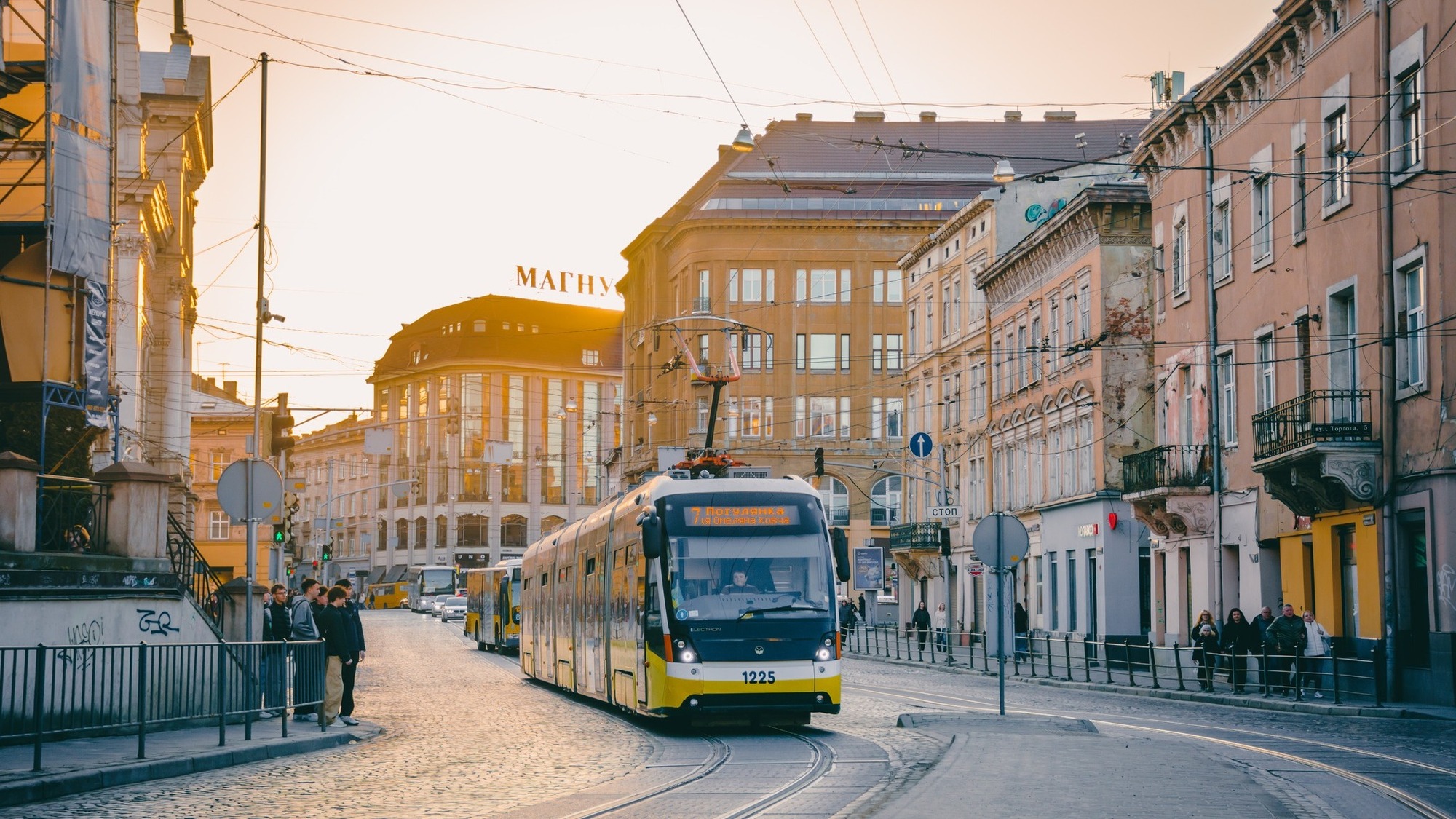
The Executive Committee of Lviv City Council on May 30 adopted a decision to increase cashless fares for public transport. From June 1, 2025, one trip with a LeoCard costs 17 hrn instead of 15, with a bank card — 20 hrn instead of 18. The cash price of 25 hrn remains unchanged. The fine for fare evasion has increased from 300 to 400 hrn.
Why 17 is not the end
According to Oleh Zabarilo, director of the Department of City Mobility, carriers demanded fare increases to 32 hrn at the beginning of spring, with some private route operators even demanding 50 hrn. The city council disagreed, but the figures documented a real gap. As calculated by Varianty, the average cost of one trip in Lviv is currently 31.98 hrn, while the LeoCard fare is 17 hrn. The city covers the difference.
«Carriers preliminarily calculated the fare at 42 hryvnias. But we do not agree with this»
Oleh Zabarilo, director of the Department of City Mobility of Lviv City Council
In spring, fuel prices became the main argument for fare review: according to Zabarilo, sharp price increases raised the expenses of the municipal transport company ATP-1 to cover the cost difference by 16 million hrn in March and another 23 million hrn in April.
What changes in practice
- LeoCard: 17 hrn per trip (student fare — 8.50 hrn)
- Bank card: 20 hrn
- Cash: 25 hrn (unchanged)
- Monthly pass from July 1: 900 hrn for 30 days — unlimited trips; student pass — 450 hrn
According to city council calculations, a 900 hrn monthly pass is equivalent to 53 trips with LeoCard or 36 trips with cash. It pays for itself with daily transport use starting around the 27th day of the month — if calculated at the LeoCard rate.
Context across Ukraine
Lviv is not an exception. According to Dyvys.info, in Odesa a bus trip already costs 20 hrn, in Dnipro — 18–20 hrn depending on the route. Kyiv and Ternopil have also launched regulatory procedures to review fares. According to Espreso Zakhid, the average fare across Ukraine is currently 11.09 hrn, while in Lviv region it is 16.96 hrn. In other words, the city is already in the upper price bracket.
At the same time, the executive committee supported the increase on one condition: within two weeks, carriers must report on concrete plans to improve service quality. According to Zabarilo, in 2025 private carriers are to renew 55 units of rolling stock — low-floor buses with air conditioning.
If carriers' report does not appear or is merely formal — the city will get a fare increase without quality obligations: this will become the real test of whether the executive committee's condition works as a mechanism or merely as a formal phrase.







