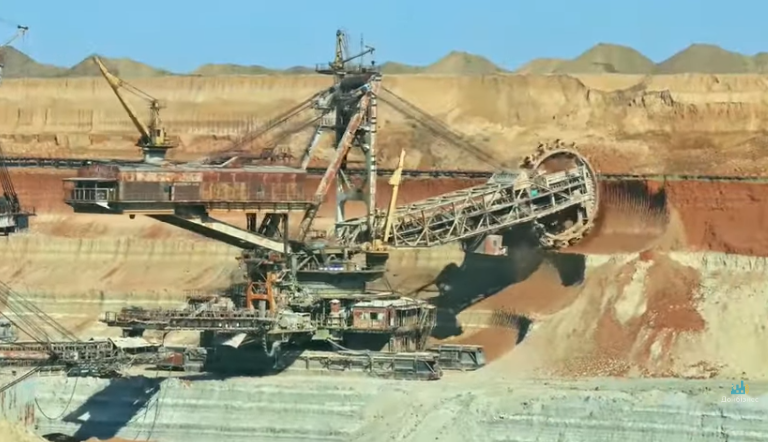
In February 2026, the company "Reale Engineering Invest" received a license from Russian regulators for exploration and extraction of minerals at the Velyka-Tokmachka manganese deposit in Zaporizhzhia region. In April, Rostekhnadzor confirmed that geological exploration work was already underway. According to Kommersant, the company's structure includes an asset linked to state corporation Rostec.
Velyka-Tokmachka is not just one of many deposits. Together with the Nikopol district, it forms the Nikopol manganese basin — one of the world's largest in terms of ore reserves (2.1 billion tons). By 2022, Ukraine was in the top 10 global manganese producers and was a significant supplier of this raw material to Europe.
License as a tool of annexation
What is happening in Zaporizhzhia is not spontaneous private business activity. As noted by the Stockholm International Peace Research Institute (SIPRI), Russia's "Strategy for the Development of the Mineral and Raw Materials Base" of 2024 directly provides for "integration of mineral-resource complexes of Zaporizhzhia and other occupied regions into the Russian economy" — including manganese ore deposits.
"Such economic integration is a key method of annexing Ukrainian territories — their direct inclusion in state industrial strategies"
SIPRI, May 2025
The issuance of a license to a front company with a Rostec connection is not a corruption scheme for quick profit. It is the legal formalization of property rights to subsoil resources that Russia expects to retain for itself in any future negotiation scenario.
What "industrial development" means
Geological exploration is the first, but critical step. It provides the basis for further extraction licenses, attracting investment, and importantly, for including the deposit in Russia's official balance sheet reporting of mineral reserves. After this, manganese from occupied Zaporizhzhia can legally appear in Rostec export contracts.
Manganese is a critical raw material for steel and battery production. By 2022, Ukraine provided a significant share of Europe's needs for this metal. Now those same deposits potentially become a source for filling Russia's military-industrial complex or re-export through third countries in circumvention of sanctions.
- Nikopol manganese basin — reserves of 2.1 billion tons, manganese content 8–34%
- Velyka-Tokmachka district fully occupied since 2022
- Rostekhnadzor confirmed the conduct of work in April 2025
- Rostec is present in the licensee's structure despite sanctions restrictions
US-Ukraine mineral agreement: parallel context
On April 30, 2025, Washington and Kyiv signed an agreement on the joint use of Ukrainian mineral resources. According to SIPRI's assessment, the extraction of Ukrainian graphite, manganese, and titanium "is and will remain important for reducing the vulnerability of Western supply chains." However, the agreement does not contain a mechanism for the return of occupied deposits — and therefore, Velyka-Tokmachka exists in it only as a hypothetical asset.
Russia, meanwhile, is turning this hypothesis into established fact: the license has been issued, drilling operations are underway, Rostec is in the structure. The more Moscow manages to legalize before any negotiations, the higher the price of de-occupation becomes — not only militarily, but also legally.
If peace negotiations resume without an explicit condition to cancel all licenses issued by Russia in occupied territories, the Velyka-Tokmachka deposit could end up in a "gray zone" — where Rostec's actual control competes with Ukraine's formal sovereignty.







