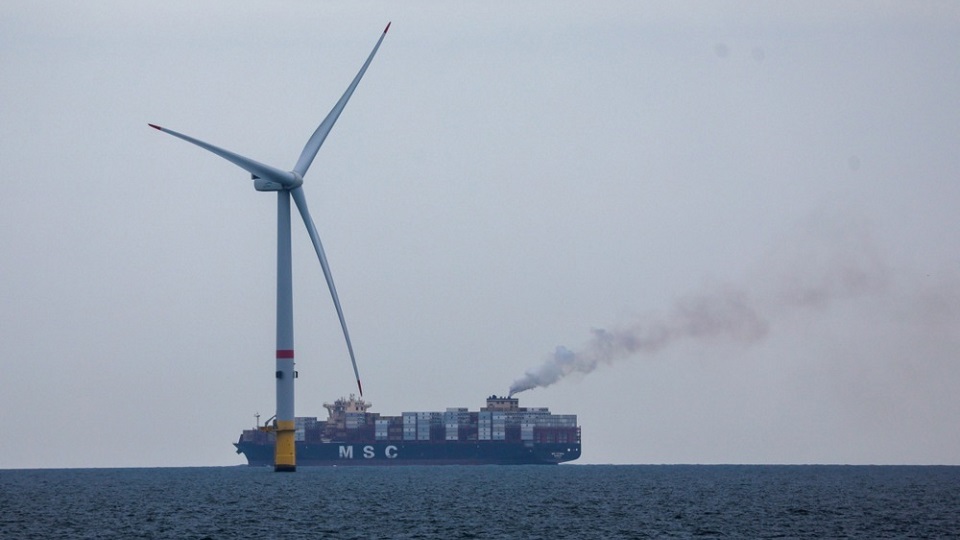
Shell has engaged Rothschild & Co. and PJT Partners to sell its portfolio of offshore wind farms — a deal valued by Bloomberg at more than $1 billion. The process is set to begin in late 2026, with closure expected in 2027. The company declined to comment. But the context speaks volumes.
This is not disappointment in wind — it is disappointment in its own business model
Shell began exiting offshore wind in 2024: it returned licenses for floating wind farms MarramWind and CampionWind to the Scottish Crown Estate and froze new developments. Meanwhile, the company is merging its oil and gas assets in the North Sea with Norwegian Equinor into a joint venture — the region's largest independent producer. Wind and oil are competing for the same management resources, and Shell made its choice.
BP did the same. As Fortune notes, its CEO Murray Auchincloss acknowledged that the company went into green energy "too far and too fast." BP is cutting its renewable budget from over $5 billion to $1.5–2 billion annually, selling wind and solar assets. Offshore wind turned out to be too capital-intensive and too slow for shareholders accustomed to oil-industry returns on investment.
Sellers are exiting — but the market is not emptying
The paradox: offshore wind is now most attractive precisely to those who don't think in quarterly reports. Sovereign wealth funds, pension funds, and infrastructure investors — Brookfield, JERA, potentially Asian state structures — are seeking stable long-term cash flows. Offshore wind with a 20–25-year operating horizon does exactly that.
"Shell is divesting assets where its competitive advantage is minimal — in project development. The buyers will be those whose advantage lies precisely in patient capital."
— Tamarindo Energy analysis
There is a precedent: BP transferred most of its offshore portfolio to Japan's JERA through the joint venture JERA Nex BP with a total capacity of 13 GW. Buyers were found immediately. Google, meanwhile, signed a PPA with Shell on a Dutch wind farm — precisely to ensure its continued operation after the term expires.
What Shell is keeping for itself
Shell is not exiting green energy entirely — it is narrowing its focus to electricity trading and retail sales. This is less capital-intensive but more profitable: the company buys and resells electricity rather than building turbines. Production risk falls on the buyer of the assets.
- What is being sold: a portfolio of operating offshore wind farms valued at over $1 billion
- Who is handling the deal: Rothschild & Co. and PJT Partners as financial advisors
- Timing: process launch — late 2026, closure — 2027
- What remains: electricity trading and retail, LNG, oil and gas
The global offshore wind market is projected by Future Market Insights to grow from $64 billion in 2025 to $250 billion by 2035. Shell is selling an asset on a growing market — simply because someone else can monetize it more effectively.
If among the buyers are Asian sovereign funds or Chinese energy players — this will reframe not only Shell's deal but also the question of Europe's energy sovereignty: is the EU ready to allow strategic infrastructure to pass into hands outside its jurisdiction?







